Mountain landscape — History & Facts
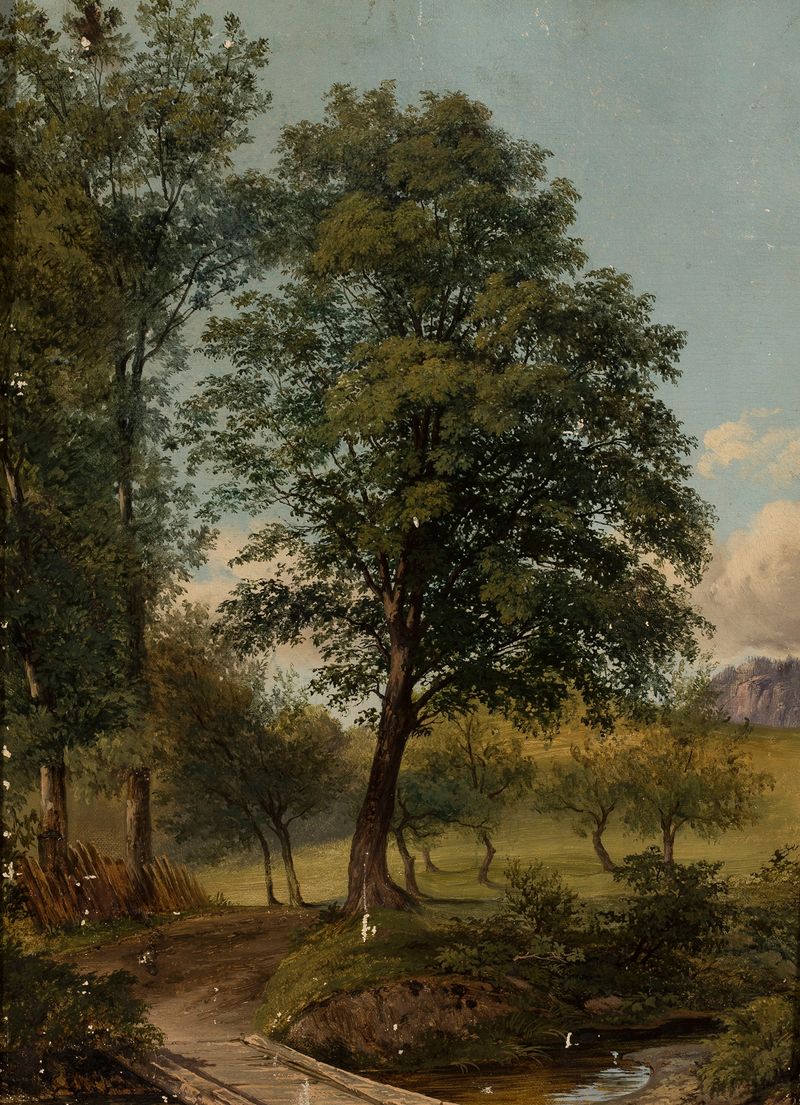
Can beauty exist without sorrow? In the reverent embrace of nature’s majesty, a poignant stillness resonates within Mountain landscape. Look to the foreground, where verdant greens and rich earth tones converge to cradle a serene pathway. The undulating hills rise majestically into a cascade of cool blues and grays, guiding your eye upward toward the distant peaks. Notice how the brushstrokes blend seamlessly, creating texture that suggests both the solidity of stone and the ethereal nature of clouds drifting lazily above.
The brilliant sunlight pierces the scene, casting playful shadows that dance across the canvas, infusing life into the tranquil tableau. Hidden within this picturesque serenity lies an emotional tension between the beauty and the potential for upheaval. The towering mountains symbolize not just grandeur, but the challenges that lie ahead, representing both obstacles and the promise of rebirth. The delicate balance between light and shadow hints at the duality of existence — joy intertwined with struggle, hope emerging from despair. Painted in 1840, during a period of personal reflection for Jan Nepomucen Glowacki, this work emerged as he navigated the complexities of an evolving art world.
At that time, Romanticism was gaining momentum, emphasizing emotion and the sublime in nature. The artist deftly captured the essence of this movement, merging his personal experiences with the broader cultural shifts that propelled art into new realms of expression and exploration.