Submontane landscape – Ogrodzieniec — History & Facts
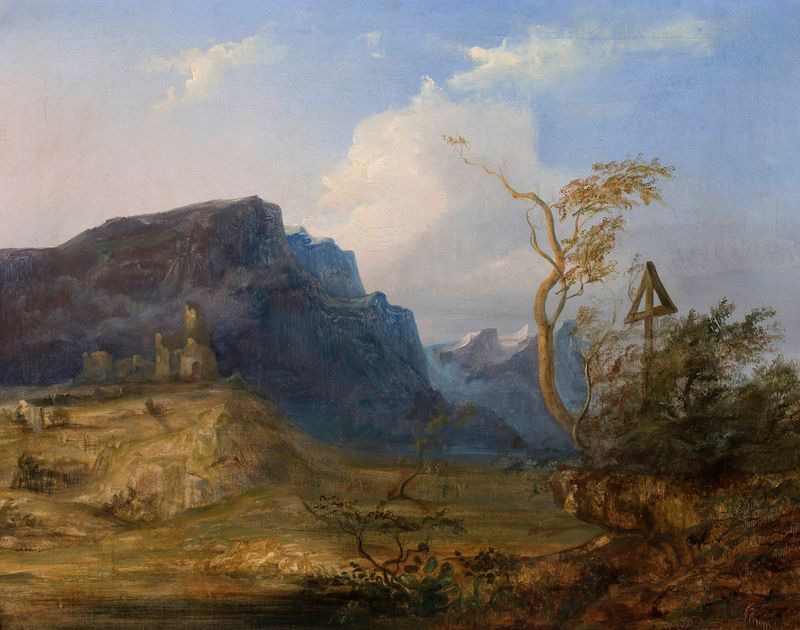
Is this a mirror — or a memory? The vast expanse of Submontane landscape – Ogrodzieniec invites viewers to ponder the depths of absence and nostalgia that linger within its serene composition. Focus on the horizon line where soft, muted greens meet a pale sky, creating an almost dreamlike quality. The gentle undulations of the hills draw the eye across the canvas, while the subtle light falling upon the landscape evokes a sense of calm yet hints at a deeper yearning. Notice the sparse trees, their branches stretching outwards like the silent fingers of a lost past, shaping the narrative of solitude that permeates this scene. Delving into the details, the interplay of light and shadow reveals a poignant contrast between the beauty of nature and the empty spaces that dominate the composition.
The patches of unoccupied land suggest abandonment, whispering stories of what once was, while the distant castle-like structures remind us of human connection and history. This tension between presence and absence transforms the landscape into a metaphor for memory itself, evoking emotions ranging from peace to profound melancholy. In 1846, while creating this work, the artist was immersed in the Romantic movement, which celebrated nature and emotion. Working in Poland, Glowacki sought to capture the essence of his surroundings amid a changing artistic landscape.
This period of his life was marked by a growing interest in the natural world, reflecting the broader societal shifts towards introspection and a connection to the landscapes that define human experience.