Tyrolean (Or Bavarian) Landscape — History & Facts
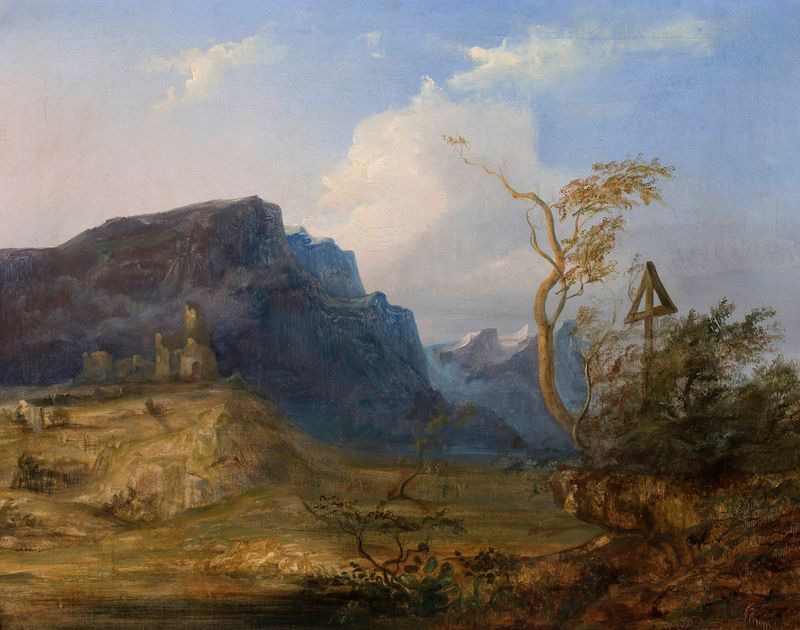
This thought lingers as one gazes upon a world where vibrant hues meet the subtle whispers of nature. It beckons the viewer to uncover the layers of emotion entwined within the landscape, an invitation to delve into an obsession with the sublime. Focus first on the rolling hills, painted in rich greens and ochres, a testament to the artist's meticulous attention to the interplay of light and shadow. Notice how the brushstrokes vary in intensity, creating a rhythmic flow that guides the eye across the canvas.
The foreground bursts with wildflowers, their bright colors juxtaposing the tranquil blue sky, while distant mountains linger in soft focus, evoking a sense of both comfort and longing. Within the seemingly serene composition lies a tension between the idyllic and the vastness of nature. A solitary figure, barely noticeable, stands at the canvas's edge, embodying human fragility amidst the grandeur. This small detail speaks volumes about the artist’s contemplation of existence, revealing an obsession with the relationship between man and the extraordinary forces of the natural world.
The juxtaposition of vibrant flora against the muted sky amplifies feelings of isolation and connection, as if the landscape both embraces and challenges the viewer. Created in 1835, this piece emerged during a period when Jan Nepomucen Glowacki was exploring the picturesque landscapes of Europe. Living in Poland and influenced by the Romantic movement, he was drawn to the beauty of his surroundings, reflecting both personal sentiments and the broader artistic discourse of the time. The work encapsulates a moment of introspective exploration, revealing not just a physical landscape, but also the emotional terrain of the artist’s psyche.