View with a bridge over a creek — History & Facts
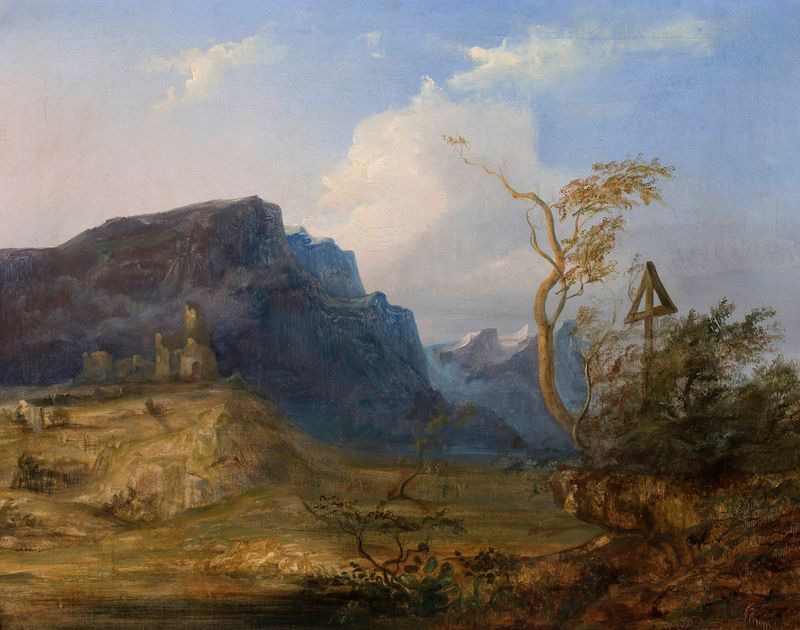
What secret hides in the quiet of the canvas? Beneath the serene surface of a creek, a disquieting tension simmers, beckoning us to peer deeper into the artist’s mind. Look to the left, where the gentle curve of the bridge elegantly spans the water, inviting your gaze to trace its reflection in the cool, clear surface below. Notice the interplay of light filtering through the trees, splashing dappled patterns of sunlight onto the rocks and water, creating a harmonious balance between natural beauty and the disquieting shadows that lurk just beyond. The delicate brushwork emphasizes the tranquility of the scene while hinting at an underlying unrest that seems poised to disrupt this idyllic moment. As you engage with the details, consider how the sturdy bridge, while a symbol of connection, could also represent the fragility of sanity.
The juxtaposition of the calm creek with the looming trees creates an emotional tension—serenity on one side, potential chaos on the other. This duality invites the viewer to contemplate the madness that can lie just beneath the surface of stillness, poking through the fabric of everyday life. In 1833, Jan Nepomucen Glowacki painted this piece during a time of personal and artistic exploration. Settled in Poland, he was influenced by Romanticism's embrace of emotion and nature.
Amidst the burgeoning cultural shifts of the era, his works reflected both the beauty of the landscape and the complexity of human experience, revealing the fine line between peace and turmoil that defines our existence.