Mountain Laurel — History & Facts
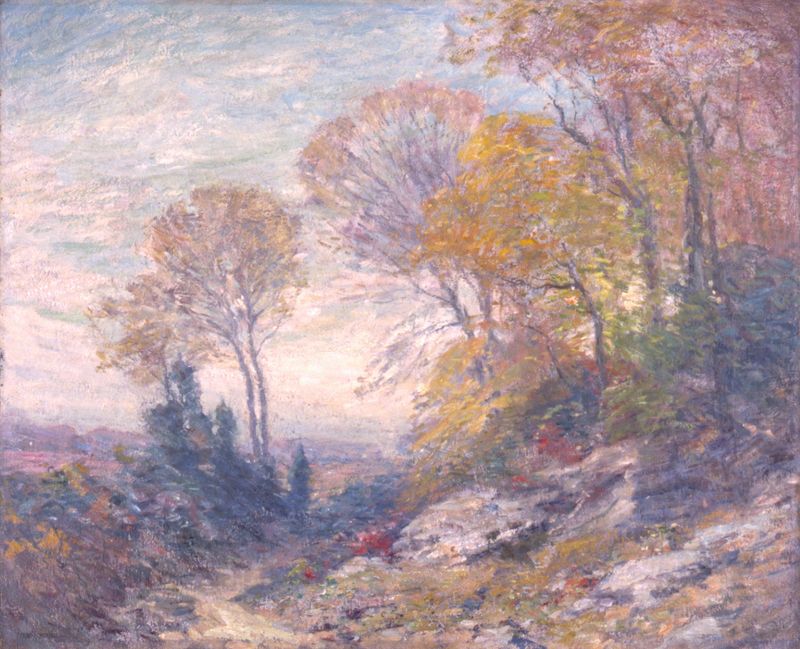
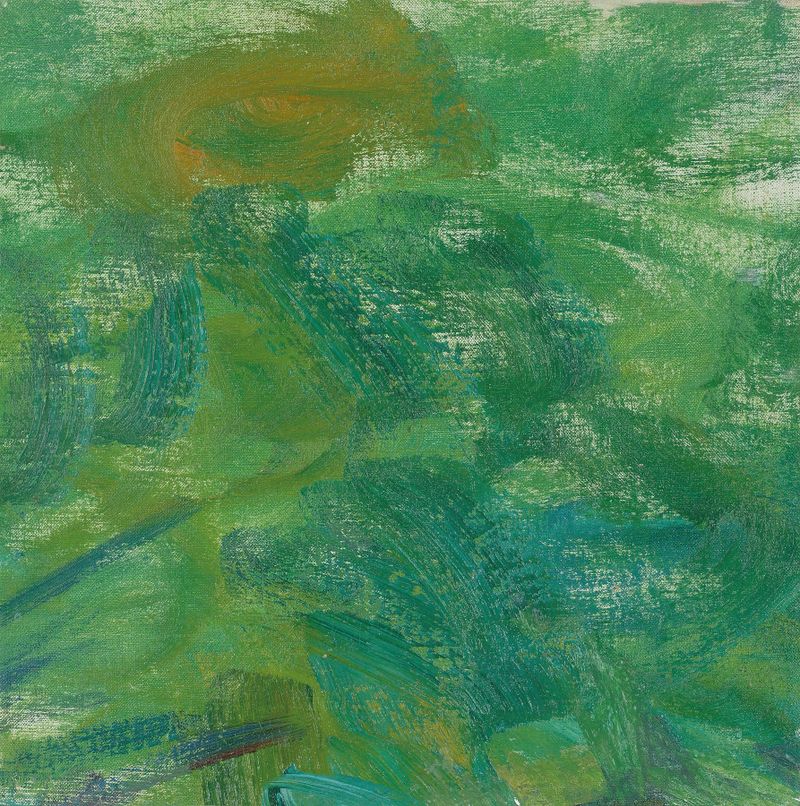
When did color learn to lie? In Frank Alfred Bicknell’s Mountain Laurel, vibrant hues dance with a deceptive grace, inviting the viewer to explore the fluid interplay between reality and emotion. The painting captures a sense of movement, as if nature itself is whispering secrets through its blossoms. Look to the left at the cascading flowers, their delicate petals unfurling in a riot of purples and whites. Notice how the brushstrokes meld together, creating an illusion of breezy movement, as if the laurel blooms are gently swaying in an unseen wind.
The background, a wash of greens and earth tones, serves as a contrasting backdrop that accentuates the flowers’ vibrancy, drawing your eye to the vivacious central figures and emphasizing their ephemeral beauty. In this work, the tension between stillness and dynamism is palpable. The texture of the paint reveals the artist’s struggle to capture the essence of fleeting moments, inviting viewers to reflect on the transitory nature of beauty itself. The interplay of light across the laurel blossoms suggests a narrative beyond mere depiction; it hints at life’s constant motion, even within the serene confines of still life.
The contrasting shades not only delineate form but also evoke deeper emotional responses, perhaps a longing for moments that, while breathtaking, are destined to fade. Bicknell painted Mountain Laurel in 1903, during a period when American artists were increasingly inspired by the natural world around them. Living in a time of rapid industrialization and change, he sought solace in nature’s beauty, channeling the spirit of the Arts and Crafts movement. This era emphasized craftsmanship and a connection to the environment, allowing Bicknell to explore and express his profound appreciation for the delicate intricacies of floral life.