October Morning — History & Facts
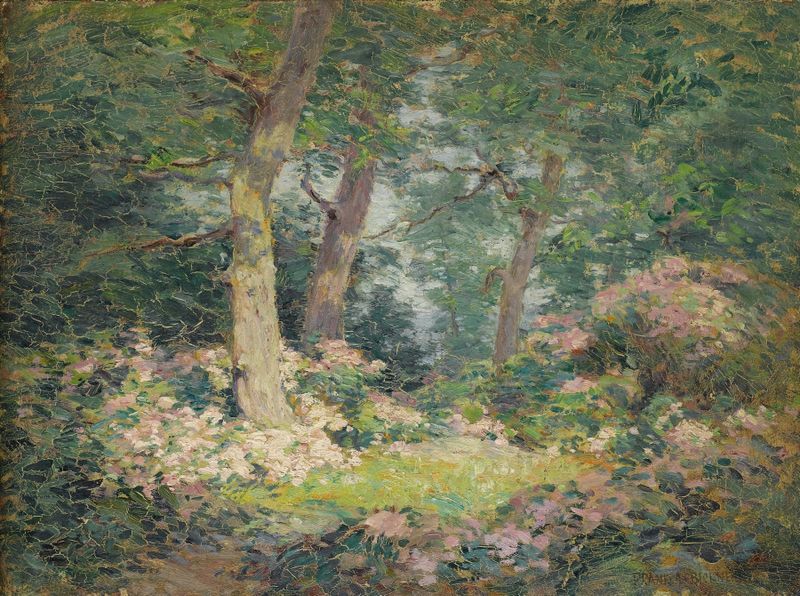
Could beauty survive in a century of chaos? October Morning encapsulates the divine serenity found in nature's embrace, an antidote to the tumult of the early 20th century. Look to the center where the sun breaks through the soft canopy of leaves, casting a golden hue across the tranquil landscape. The painter employs a gentle palette of warm yellows and soft greens, inviting the viewer into a moment suspended in time. Each brushstroke echoes the tender caress of the morning light, guiding your gaze through the dappled shadows that dance upon the ground.
You can almost feel the crisp autumn air and hear the faint rustle of leaves, a reminder of nature's quiet strength. Yet beneath this idyllic surface lies a contrasting tension—the looming uncertainty of the era. The juxtaposition between the warmth of the sunlit grove and the cool shadows hints at the duality of existence. Every detail, from the delicate branches to the stillness of the water, reflects not only the beauty of the moment but also the fragility of peace amidst the chaos that surrounds it.
The scene invites contemplation on the impermanence of such beauty, suggesting a divine presence in nature that persists even in dark times. In 1910, the artist created this work during a period marked by significant change in both his life and the broader art world. Bicknell was immersed in the American Impressionist movement, which sought to capture the fleeting effects of light and color. This painting reflects his engagement with the natural world, as he navigated personal challenges while showcasing the transformative power of art amid societal upheaval.