
Mountainous landscape — History & Facts
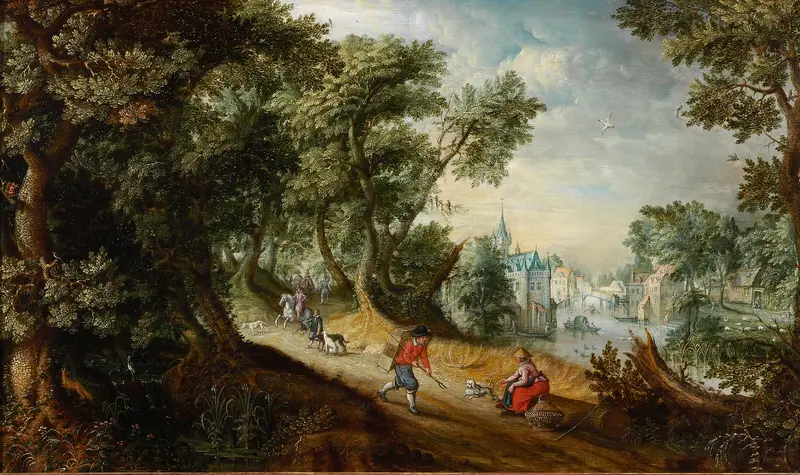
A shaft of clear light slices through the dense, tangled forest, catching on the spears and hats of a group of hunters as they pause on a winding path. The eye is drawn first to these figures, their presence both dwarfed and dramatized by the towering trees and the fallen trunk that arches across the foreground like a stage prop. The dogs at their feet, alert and ready, signal the moment’s tension: this is a world on the cusp of action, but suspended in a hush.
To the right, the forest yields to a riverbank where clustered houses nestle, their thatched roofs catching the pale blue of the sky—a glimpse of human order at the edge of wildness. Every detail, from the moss trailing off branches to the distant rider vanishing into shadow, is placed to lead the viewer deeper into the painted woods. Painted by Adriaen van Stalbemt in the early decades of the seventeenth century, Mountainous landscape belongs to a tradition that flourished in the Low Countries: the landscape as a stage for human stories, both grand and everyday. In this era, such scenes were prized by collectors eager to display both the beauty of nature and the pursuits of country life—hunting, travel, the quiet drama of rural existence.
The houses hidden among the trees and the riverside dwellings speak to a world where boundaries between civilization and wilderness were porous and charged with meaning. While the particulars of this painting’s journey through history remain obscure, its presence in the Rijksmuseum today invites us to lose ourselves in its depths, following the hunters’ path into the heart of the forest.
More Artworks by Adriaen van Stalbemt

Countryside landscape with staffage
Adriaen van Stalbemt
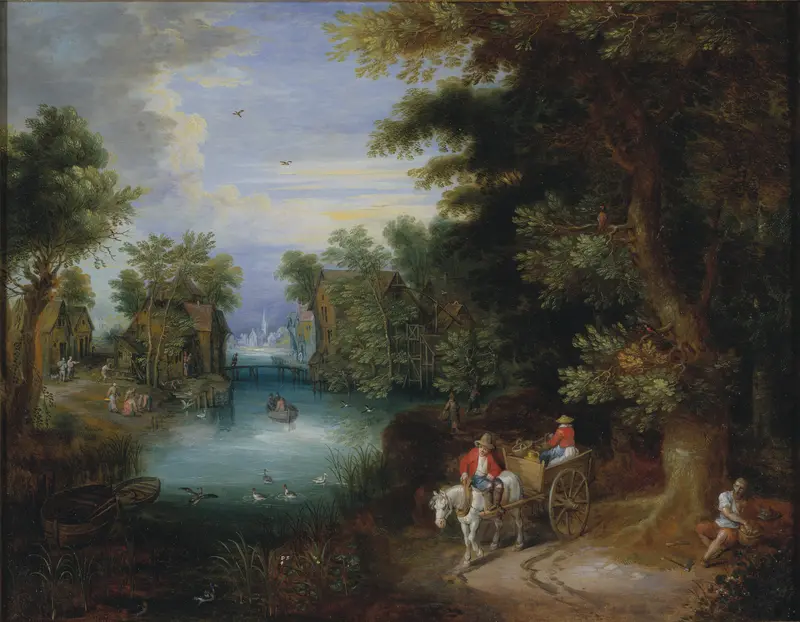
River Landscape with Peasants
Adriaen van Stalbemt
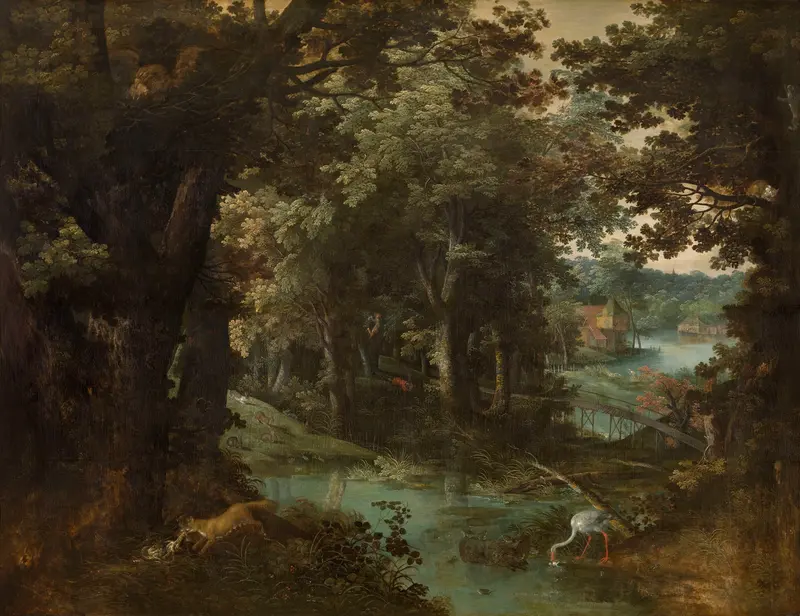
Landscape with Beast Fables
Adriaen van Stalbemt
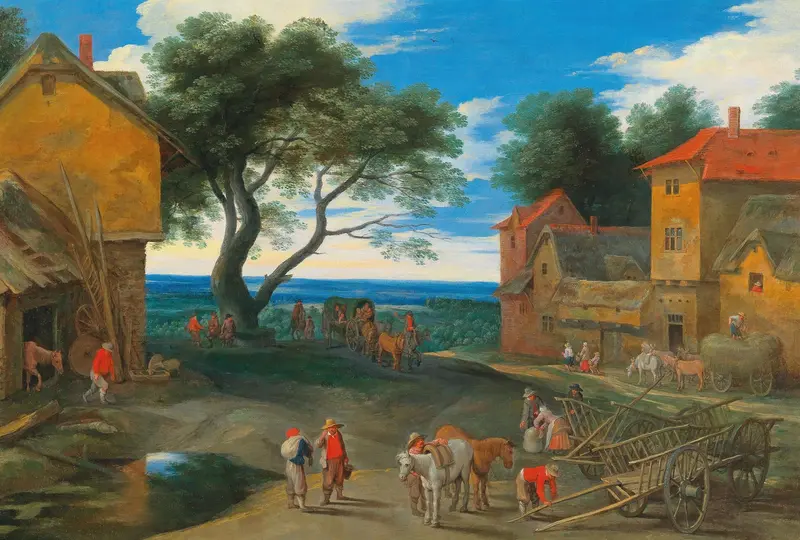
Travellers in a landscape with buildings
Adriaen van Stalbemt
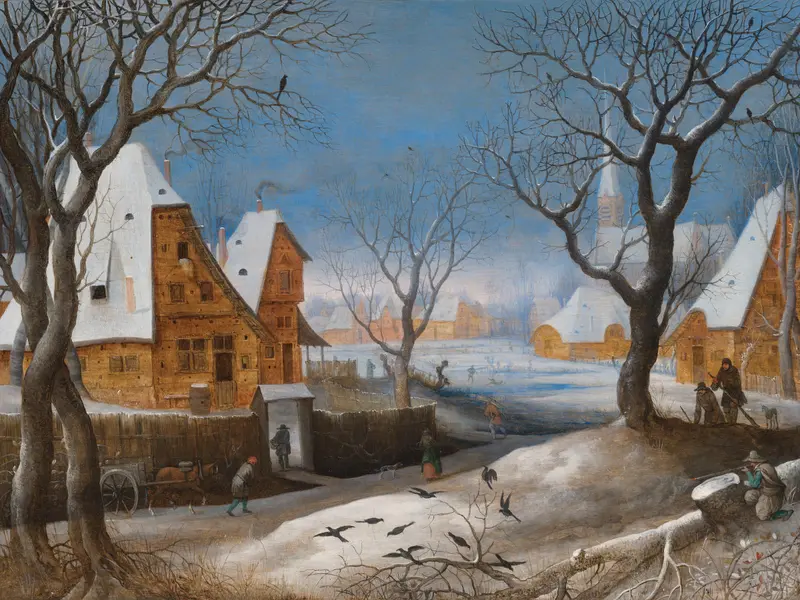
A winter landscape, with figures in a village
Adriaen van Stalbemt
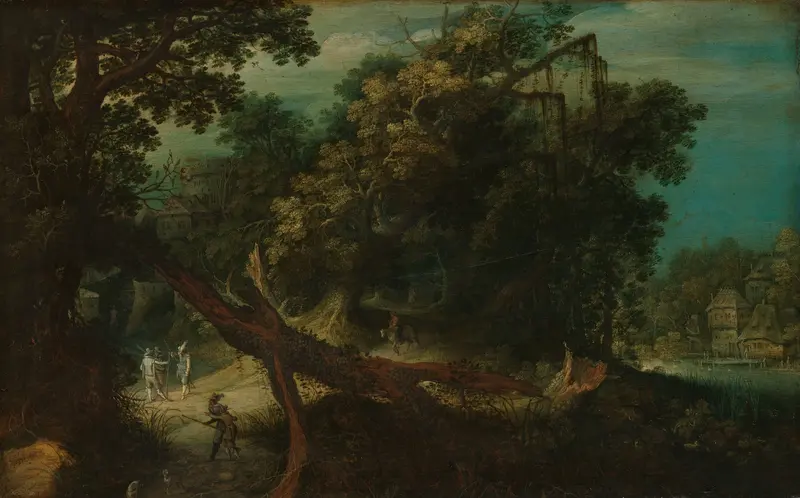
Shooters in a Forest Glade
Adriaen van Stalbemt
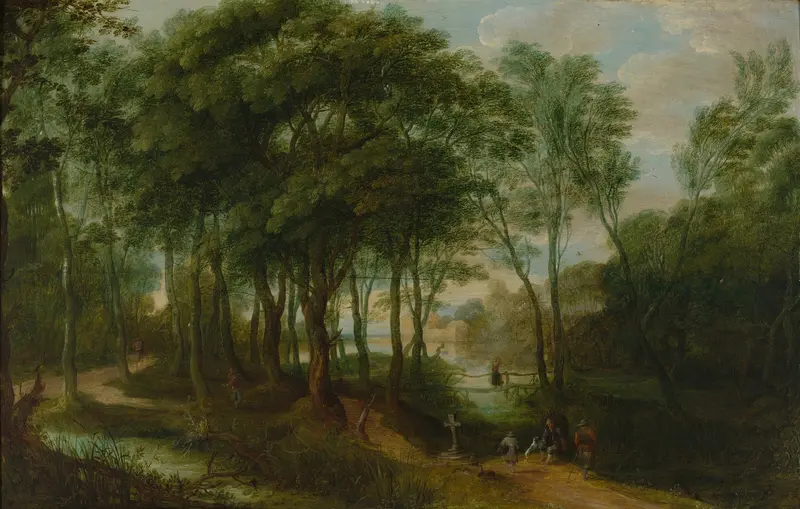
Figures On A Wooded Path, With A Building Behind
Adriaen van Stalbemt
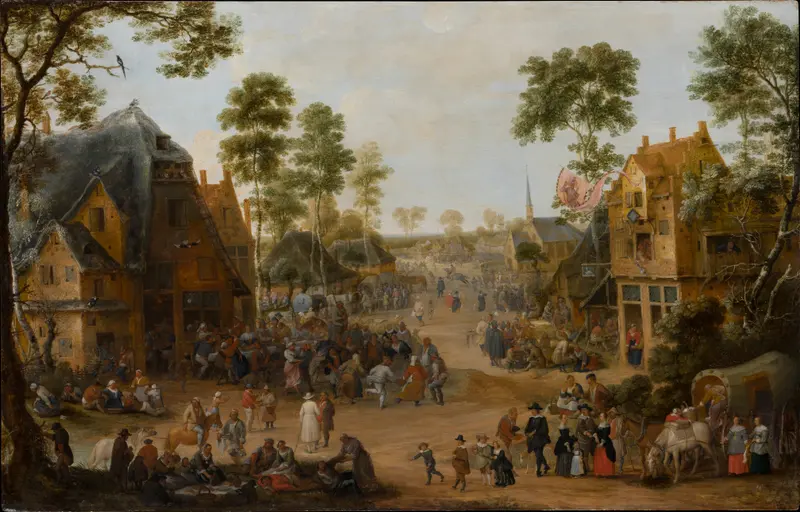
Village Church Festival
Adriaen van Stalbemt
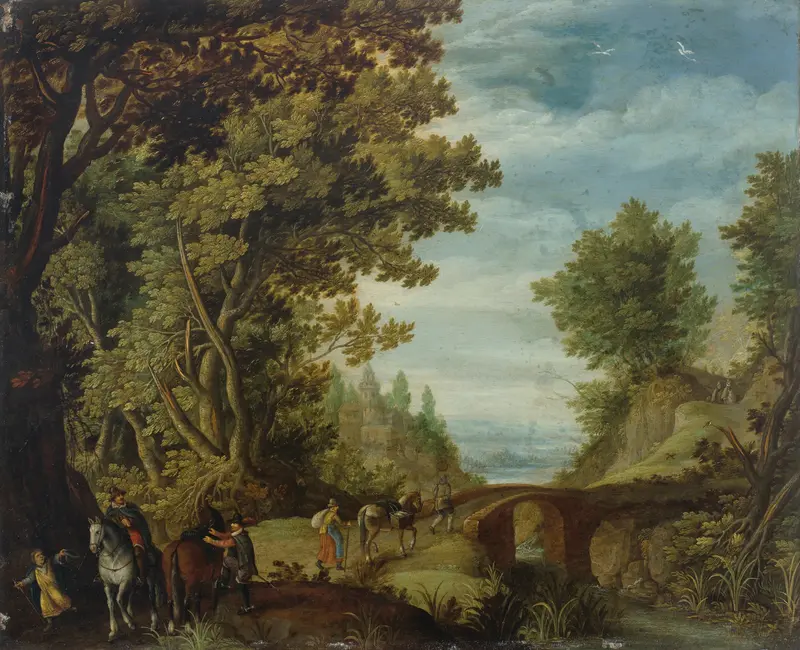
A wooded landscape with travelers crossing a bridge
Adriaen van Stalbemt
Landschap met rivier
Adriaen van Stalbemt
More Landscape Art

The Starry Night
Vincent van Gogh

View of Delft
Johannes Vermeer

Water Lilies
Claude Monet

The Grand Canal, Venice, looking north-west from the Ca' Corner to the Ca' Contarini degli Scrigni, with the campanile of Santa Maria della Carità
Canaletto

Windsor Castle
Canaletto

The Grand Canal looking North-East from the Palazzo Dolfin-Manin to the Rialto Bridge
Canaletto