
Mountainous Landscape with a Monastery — History & Facts
A shaft of light breaks through the brooding sky, drawing the eye to the heart of the scene where a winding path leads toward a distant monastery. The drama of the landscape is not in its action, but in its sense of pause: travelers and animals move quietly along the rocky foreground, dwarfed by the towering trees and looming architecture. The painter, Abraham Genoels II, orchestrates the composition so that every element—the curve of the road, the angled trunks, the play of shadow—guides the viewer deeper into the mysterious valley.
The building’s silhouette, half-hidden among trees, suggests both sanctuary and seclusion, while the figures below animate the wilderness with hints of daily life. Works like this, created between 1655 and 1723, belong to a period when landscape painting flourished across Europe, often serving as both meditation and display of artistic skill. Artists such as Genoels drew on the traditions of the Dutch and Flemish schools, blending real observation with idealized forms to appeal to collectors who sought scenes of nature as both escape and status. The presence of a monastery hints at the era’s fascination with solitude and spiritual retreat, themes that resonated with patrons in a rapidly changing world.
Now held in the collection at http://collection.smk.dk, this painting invites us to wander its winding paths and imagine the quiet stories unfolding beneath ancient trees.
More Artworks by Abraham Genoels II

Landscape with Old Tree and Figures
Abraham Genoels II
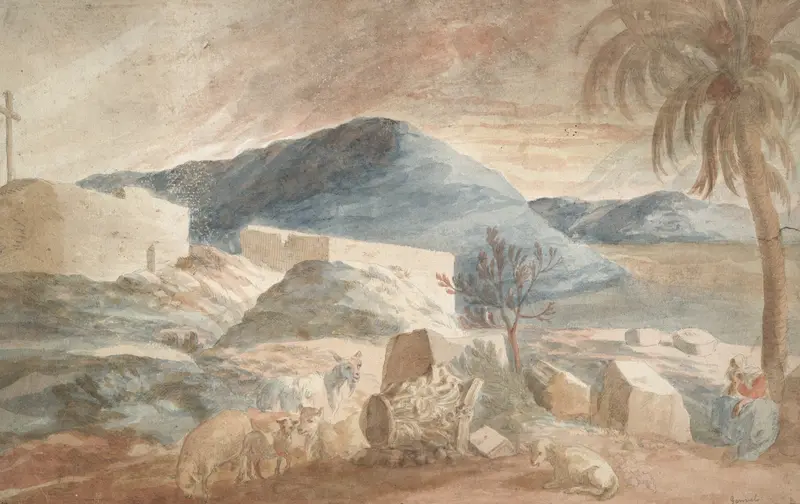
Arcadian Landscape
Abraham Genoels II
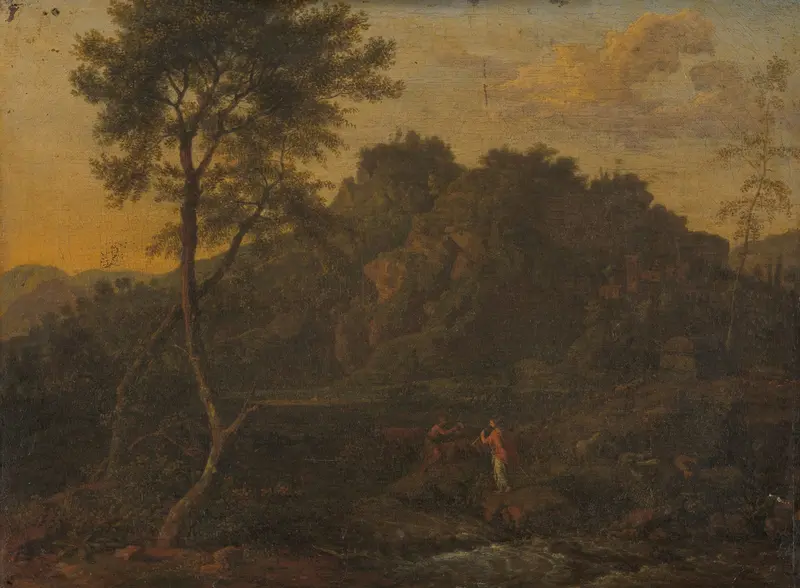
Nymph and Shepherd Making Music in a Landscape
Abraham Genoels II
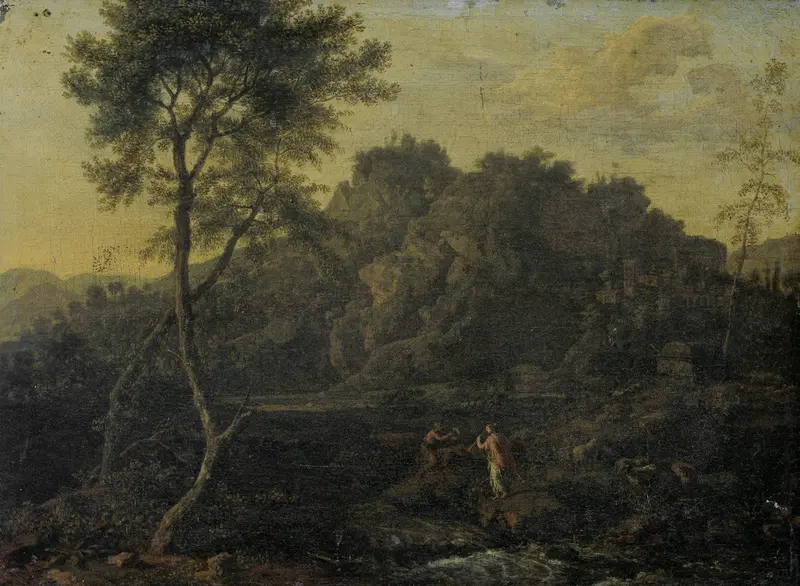
Landscape with Diana and Calliope
Abraham Genoels II
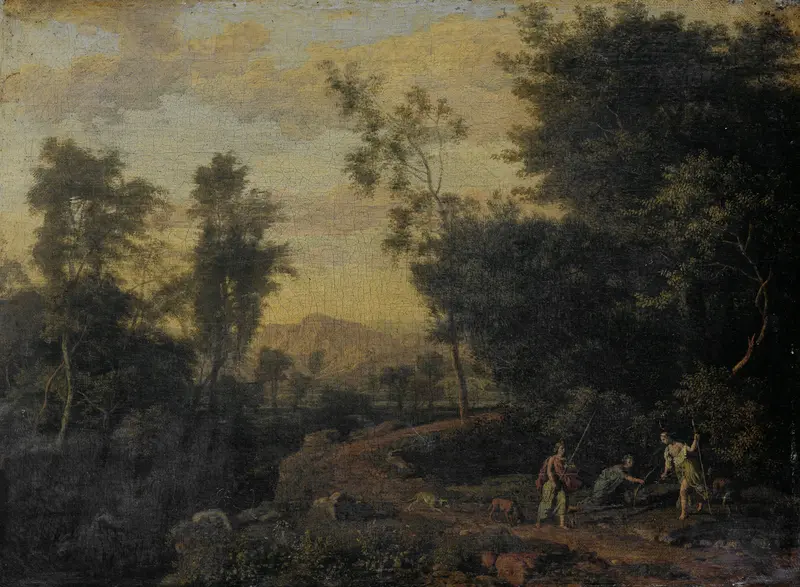
Landscape with Diana Hunting
Abraham Genoels II
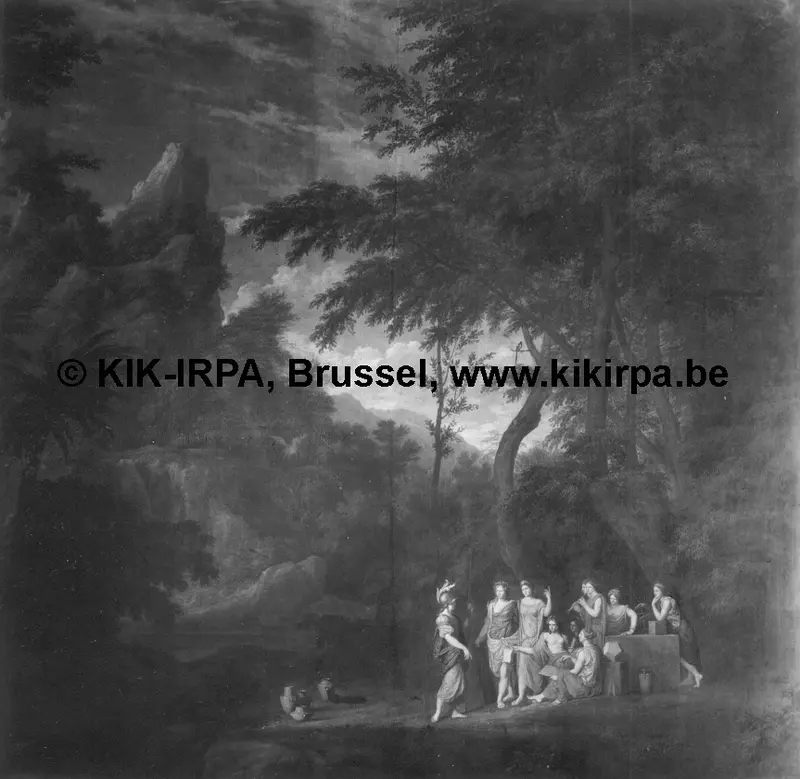
Minerva and the Muses in a Landscape
Abraham Genoels II
More Landscape Art

The Starry Night
Vincent van Gogh

View of Delft
Johannes Vermeer

Water Lilies
Claude Monet

The Grand Canal, Venice, looking north-west from the Ca' Corner to the Ca' Contarini degli Scrigni, with the campanile of Santa Maria della Carità
Canaletto

Windsor Castle
Canaletto

The Grand Canal looking North-East from the Palazzo Dolfin-Manin to the Rialto Bridge
Canaletto