
Landscape with Diana Hunting — History & Facts
What draws the eye first in Landscape with Diana Hunting is not the goddess herself, but the hush that seems to settle over the entire scene. The golden light of dusk or dawn filters through a screen of tall, slender trees, their silhouettes dissolving into a sky heavy with layered clouds. In the foreground, Diana and her two nymphs, bows in hand and hounds at their feet, are caught in a moment of poised anticipation, their gestures and stances suggesting both readiness and camaraderie.
The figures are small, almost secondary to the vastness of the landscape, which stretches away in gentle hills and shadowed woods—a world that feels both inviting and untamed. This painting, dated 1685 and now in the Rijksmuseum, belongs to a tradition that flourished in late seventeenth-century Europe, when mythological scenes were often set within sweeping, idealized landscapes. Such works were prized by collectors who sought not just stories from antiquity, but also the sense of order and harmony that these imagined vistas could provide. Abraham Genoels II was among those artists who brought the grandeur of classical myth into dialogue with the natural world, weaving together narrative and environment.
History has kept few traces of this particular canvas’s early journey, but its pairing with a companion piece featuring Apollo and Calliope hints at a larger decorative scheme—inviting us to linger, to trace the path of Diana’s hunt, and to lose ourselves in the painted woods.
More Artworks by Abraham Genoels II

Landscape with Old Tree and Figures
Abraham Genoels II
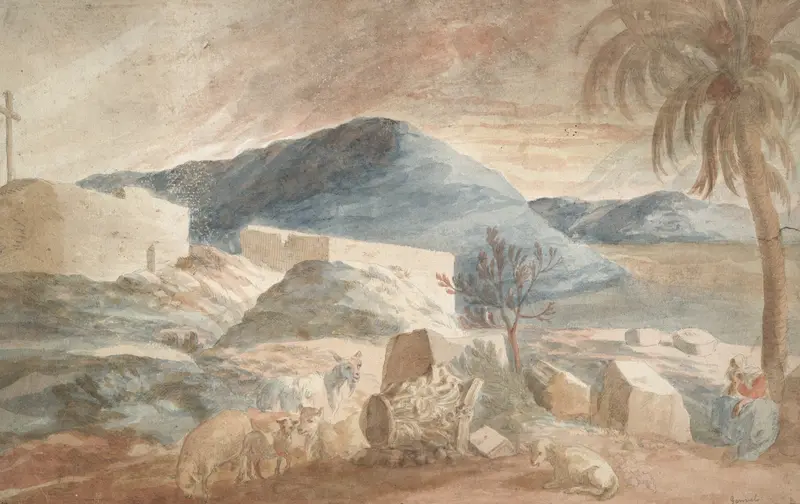
Arcadian Landscape
Abraham Genoels II
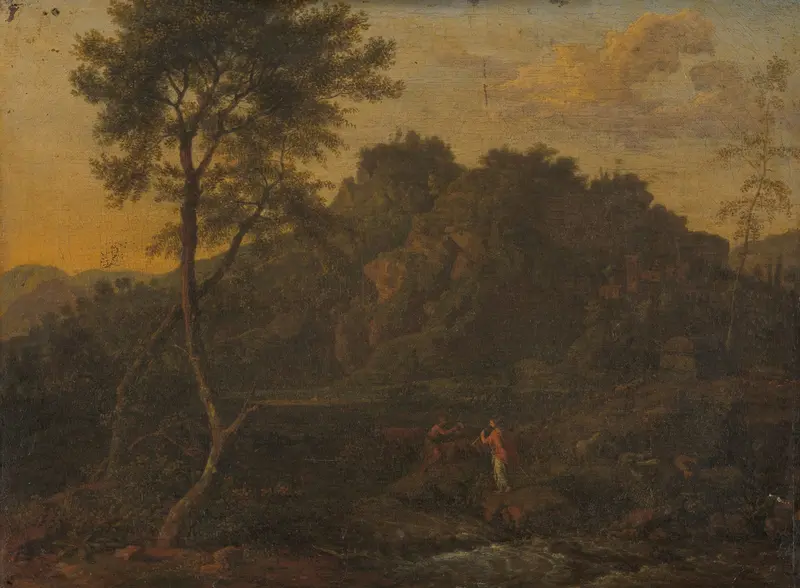
Nymph and Shepherd Making Music in a Landscape
Abraham Genoels II
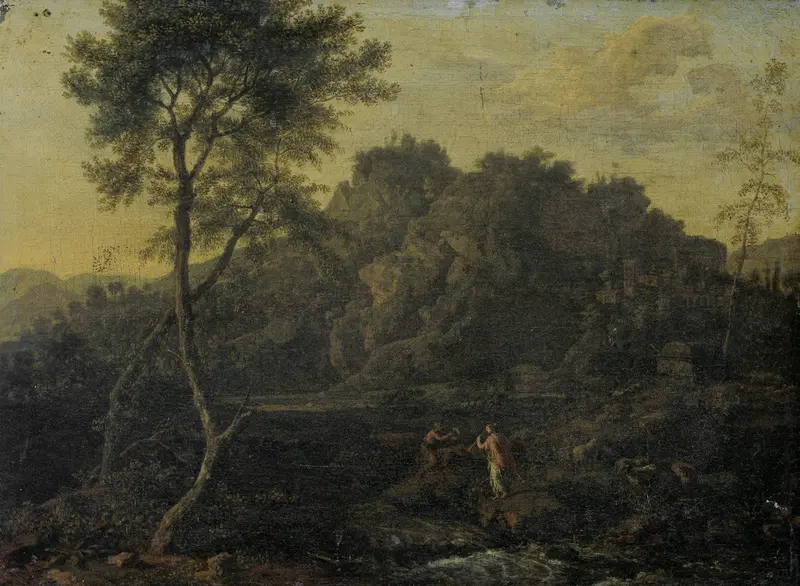
Landscape with Diana and Calliope
Abraham Genoels II
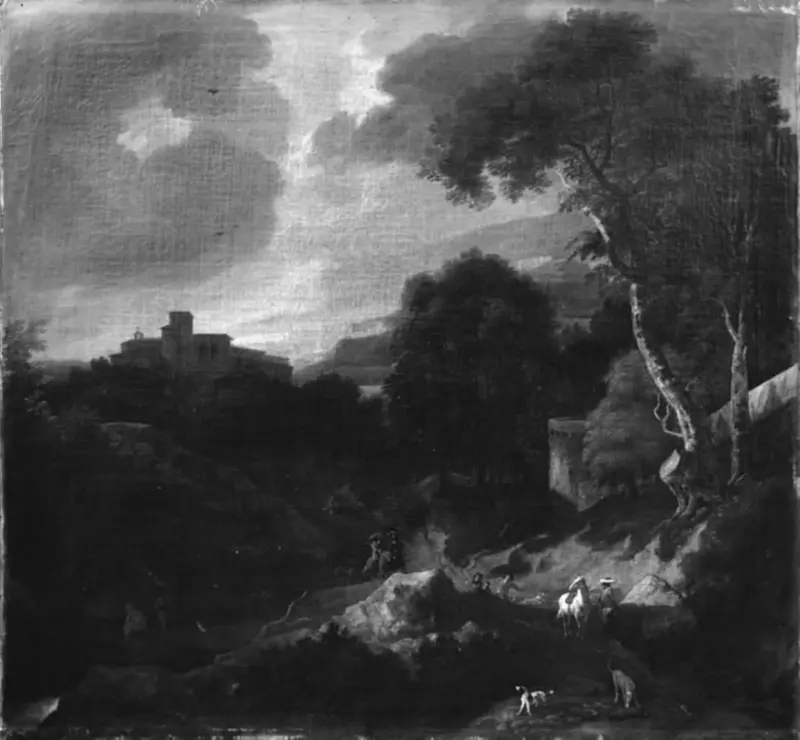
Mountainous Landscape with a Monastery
Abraham Genoels II
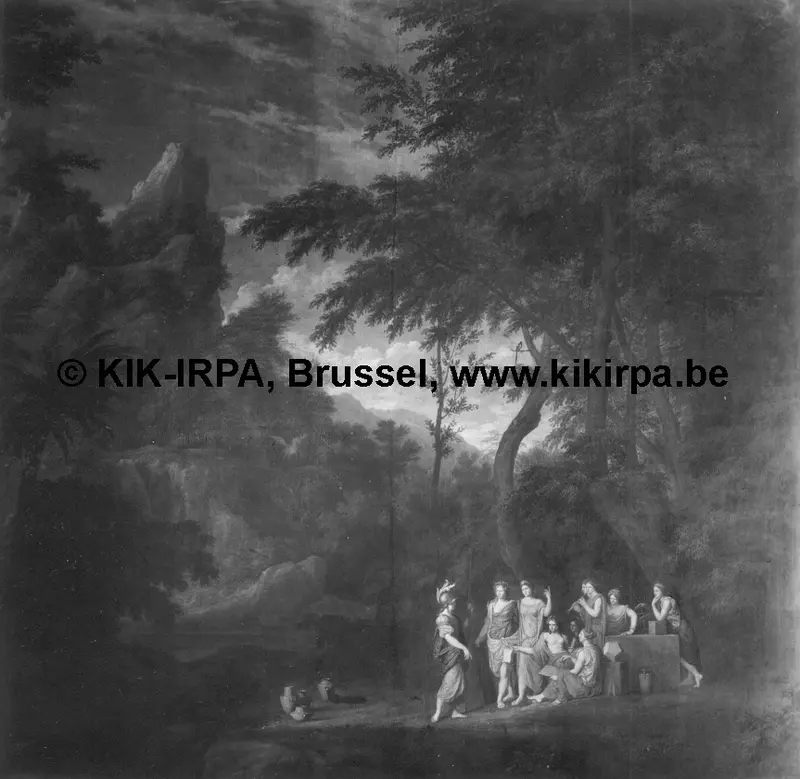
Minerva and the Muses in a Landscape
Abraham Genoels II





