
Murnauer Landschaft — History & Facts
A path bends and rises, swept along by bands of color that seem to pulse with their own energy. In Murnauer Landschaft, the eye is drawn first to the bold sweep of pinkish road, flanked by fields of green and yellow that feel almost sculpted, then up to the trees—each one a patch of color, outlined in thick, decisive strokes. The shadows on the path are not gray but a deep violet, as if the landscape itself refuses to settle for realism.
The sky glows a pale turquoise, pressed up against distant blue hills, while the trees lean inward, guiding the viewer deeper into the scene. The entire composition feels as if it is tilting forward, inviting you to follow the road and discover what lies beyond the bend. Painted in 1909, this work belongs to a moment when artists like Alexej von Jawlensky were breaking away from tradition, searching for a new language of form and color. In the small Bavarian town of Murnau, Jawlensky and his contemporaries experimented with ways to capture the spirit of a place rather than its literal appearance.
This kind of landscape was not made for a patron’s estate or a grand salon, but as part of a personal quest to express inner feeling through the outer world. The Lenbachhaus collection in Munich, which now houses this painting, preserves not only the image but the restless, searching energy of an era when the boundaries of painting were being redrawn. Stand before it and let your eye wander—the path is still open.
More Artworks by Alexej von Jawlensky

Murnau
Alexej von Jawlensky
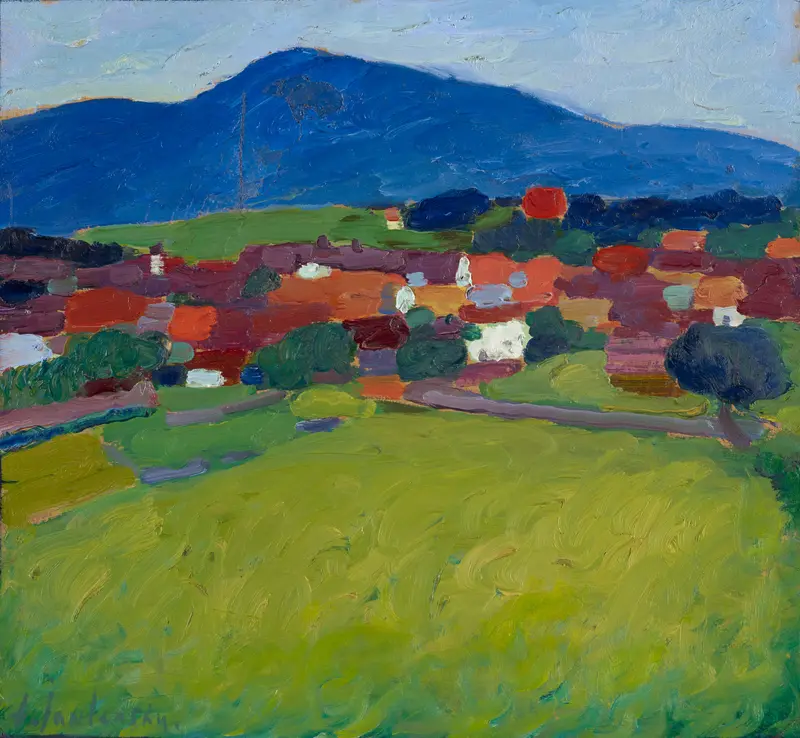
The Village Of Murnau
Alexej von Jawlensky
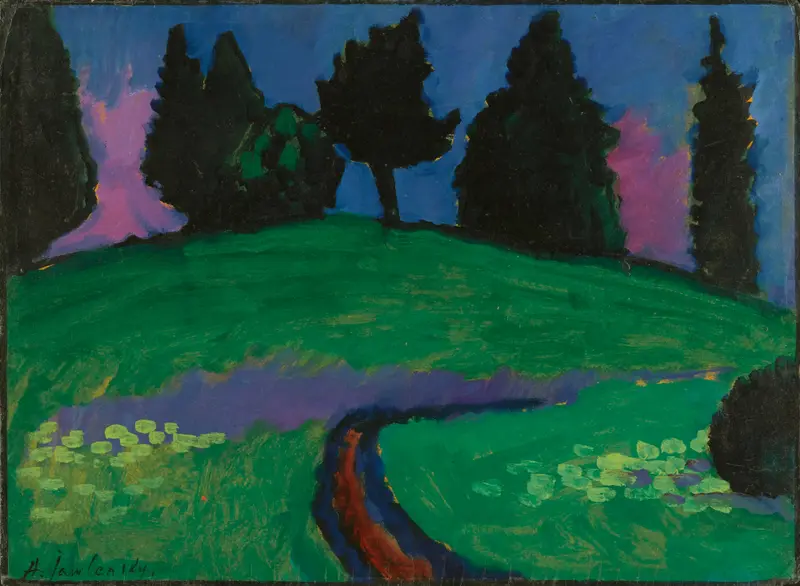
Dunkle Bäume über Grünem Hang (Dark Trees Over Green Slope)
Alexej von Jawlensky
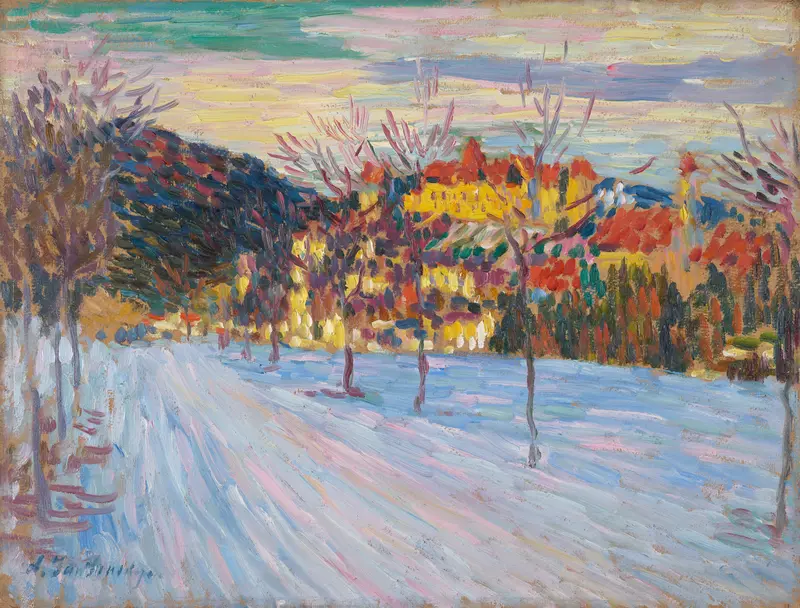
Füssen
Alexej von Jawlensky
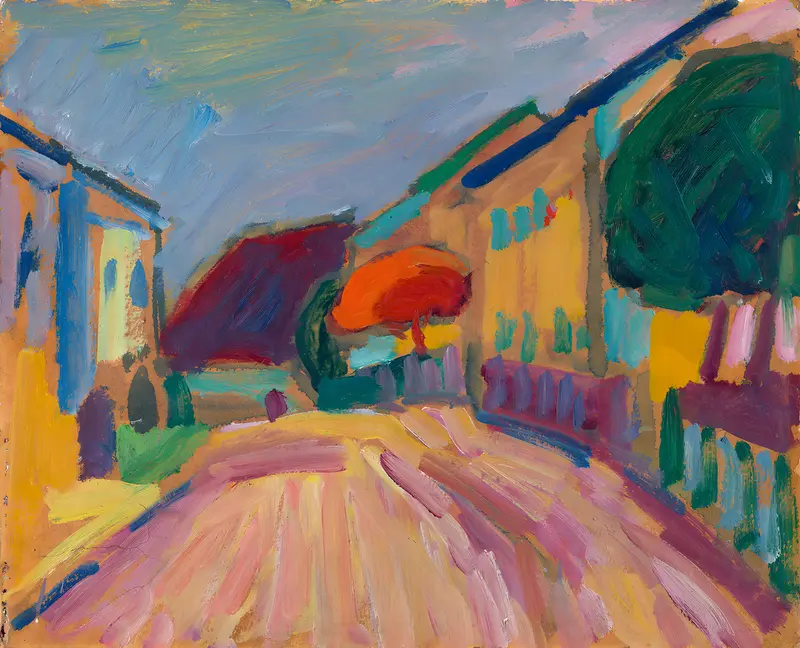
Sketch from Murnau
Alexej von Jawlensky
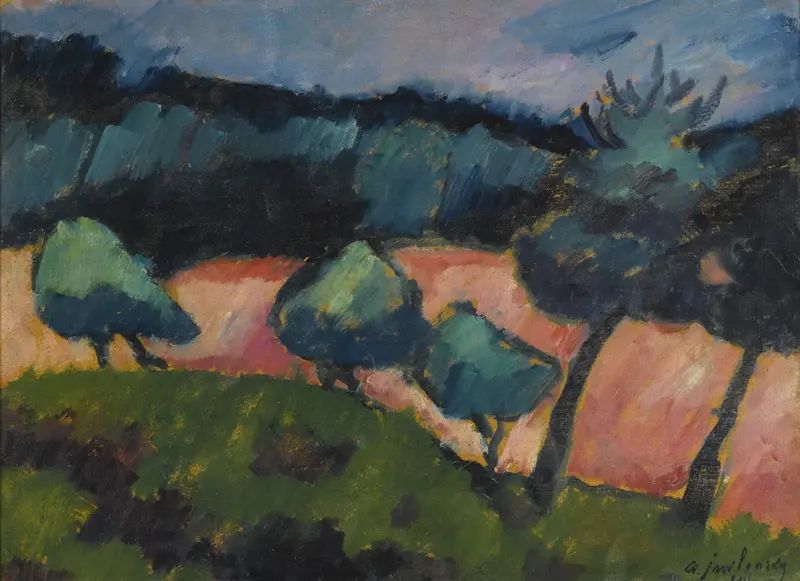
Bäume und Dünen in Prerow (Trees and dunes in Prerow)
Alexej von Jawlensky
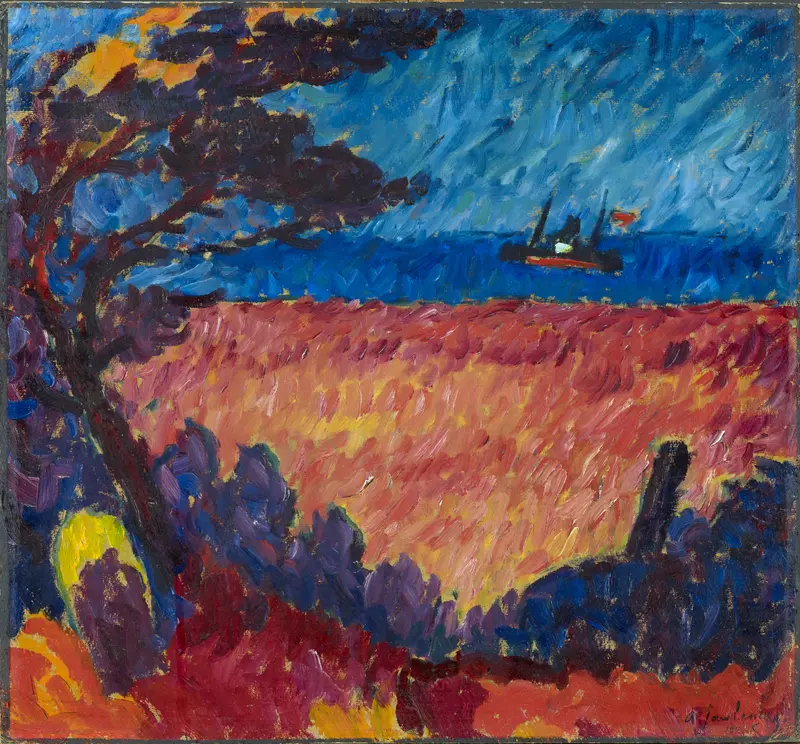
At The Baltic Sea
Alexej von Jawlensky
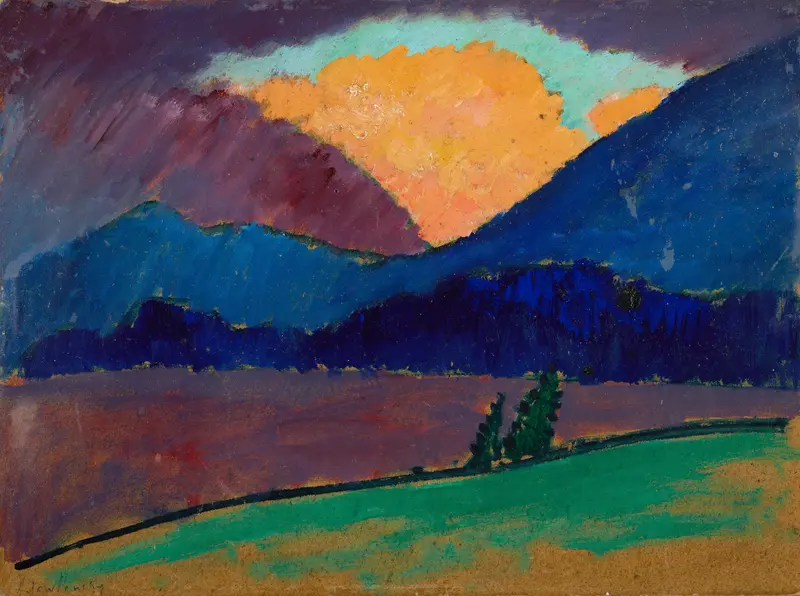
Summer evening in Murnau
Alexej von Jawlensky
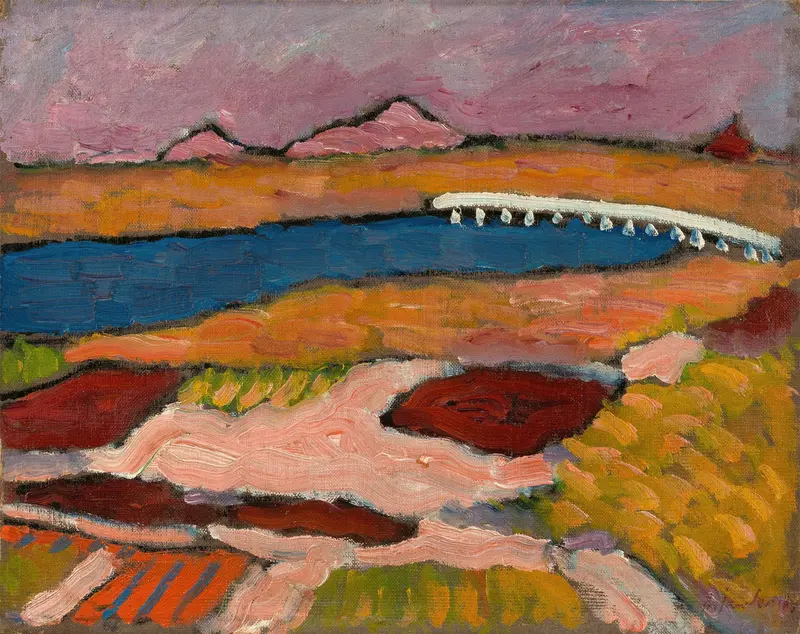
Prerow (Darß), Pommern
Alexej von Jawlensky
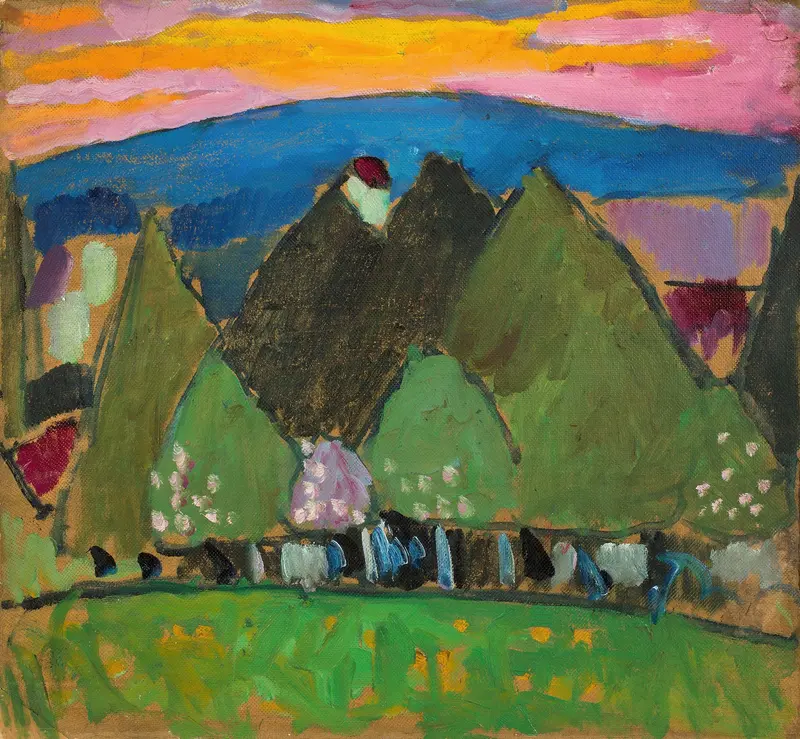
Landschaft mit Bäumen
Alexej von Jawlensky
More Landscape Art

The Starry Night
Vincent van Gogh

View of Delft
Johannes Vermeer

Water Lilies
Claude Monet

The Grand Canal, Venice, looking north-west from the Ca' Corner to the Ca' Contarini degli Scrigni, with the campanile of Santa Maria della Carità
Canaletto

Windsor Castle
Canaletto

The Grand Canal looking North-East from the Palazzo Dolfin-Manin to the Rialto Bridge
Canaletto