Mysterious song — History & Facts
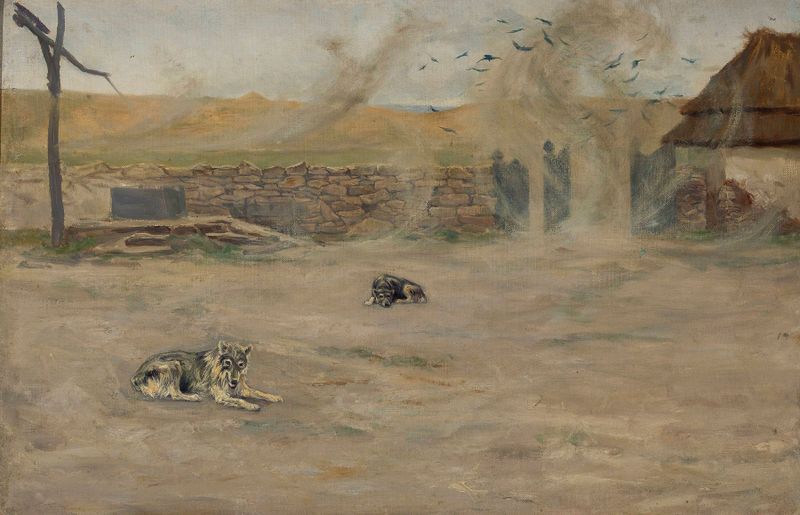
Could beauty survive in a century of chaos? In Mysterious Song, the essence of rebirth weaves through every brushstroke, echoing the resilience of art against tumultuous times. Look to the center of the canvas, where an ethereal figure emerges, swathed in a cascade of vibrant colors. The interplay between soft pastels and bold hues creates a dreamlike quality, inviting the viewer to linger. Notice how the light dances around the figure, casting gentle shadows that add depth and intrigue.
The surrounding abstract shapes seem to vibrate with energy, emphasizing the subject's presence while hinting at unseen forces at play. Beneath the surface, this work speaks of contrasts: chaos and serenity, clarity and obscurity. The figure, though radiant, is partially obscured by swirling forms, symbolizing the struggle between emerging hope and the lingering shadows of despair. Each brushstroke conveys emotion, suggesting a vital connection between the individual and the broader tapestry of existence, where beauty can triumph even amid uncertainty. In 1921, Henryk Weyssenhoff resided in Poland, amid the aftermath of World War I.
This period marked a significant shift in the art world as artists sought to express new realities and emotions through abstraction and symbolism. As society grappled with the scars of war, he turned to his canvas to explore themes of vitality and renewal, ultimately encapsulating the spirit of resilience in Mysterious Song.