Winter landscape — History & Facts
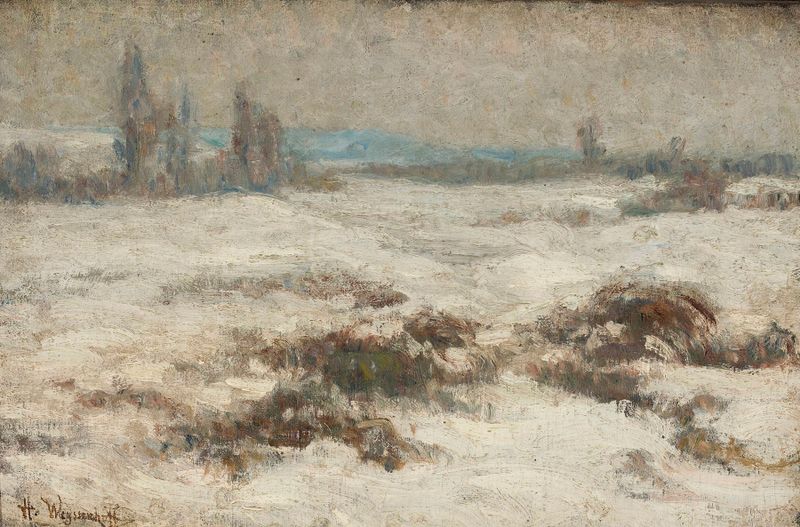
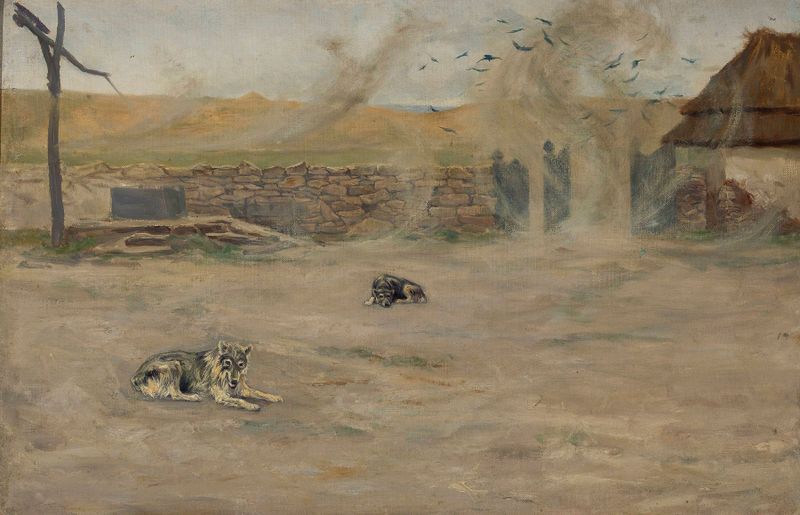
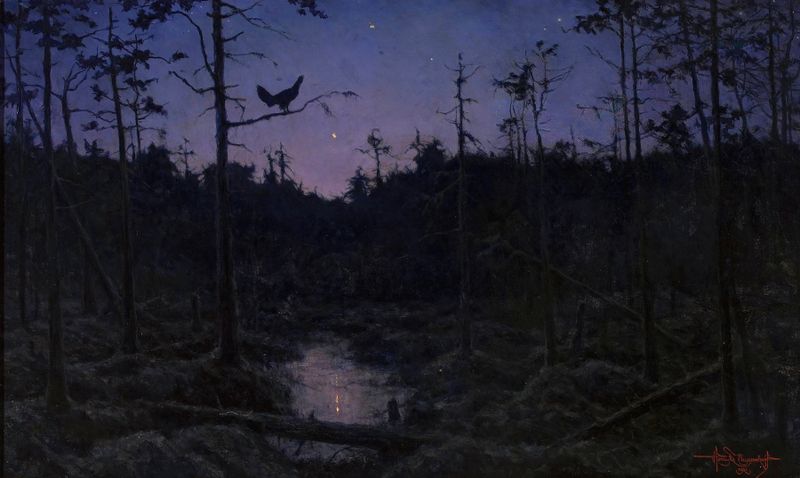
Is this a mirror — or a memory? In the stillness of winter, a landscape unfolds, inviting contemplation on the nature of destiny and the passage of time. Focus first on the horizon, where gently rolling hills meet a sky brushed with muted grays and soft whites. The composition captures a serene expanse, with delicate snow covering the earth like a shroud, merging the ground and air into one ethereal realm. Notice how the light plays against the snow, creating subtle glimmers that suggest both warmth and cold, beauty and barrenness, evoking an emotional tension that pulses beneath the surface. In the foreground, the bare trees stand as silent sentinels, their stark branches weaving intricate patterns against the subdued atmosphere.
They seem to symbolize resilience amidst the chill, inviting viewers to ponder their own struggles against the biting winds of fate. The careful rendering of shadows adds depth, revealing the interplay between light and dark — a metaphor for the duality of life itself. Henryk Weyssenhoff painted Winter Landscape between 1903 and 1904 during a period of artistic exploration in Poland. At this time, the country was undergoing social and political changes, which likely influenced his focus on nature as a reflection of human experience.
This work showcases his mastery in evoking emotion through landscape, marking him as an artist attuned to the deeper currents of life and environment.