Spleen — History & Facts
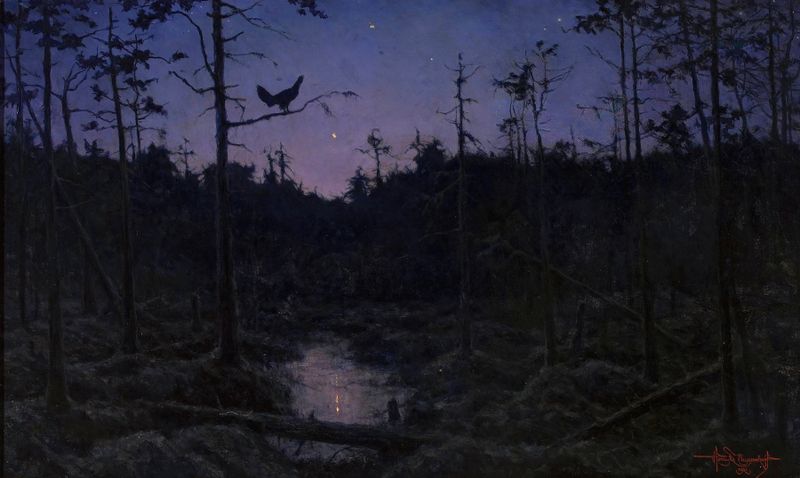
Can beauty exist without sorrow? In Spleen, the artist invites us to explore this profound question, presenting a visual symphony of melancholy intertwined with nostalgia. Look closely at the central figure, draped in shadowy hues, seated in contemplative isolation. Notice how the muted palette of rich browns and deep greens envelops the space, creating a cloak of introspection. The soft brushstrokes lend a dreamlike quality, pulling the viewer into the depths of the subject's emotional state.
As the light dances along the edges, it reveals a delicate tension between the figure's serene posture and the swirling chaos of the unseen thoughts that haunt them. Delving deeper, one can discern layers of meaning woven into the composition. The figure's gaze, directed downward, evokes a sense of introspection and loss, hinting at unexpressed grief or unfulfilled desires. The surrounding environment, though undefined, amplifies this feeling of isolation.
It suggests a world that is both familiar and distant, echoing the bittersweet pang of nostalgia that accompanies memories of what once was. Here, beauty is inextricably linked to the shadows of sorrow, creating a poignant dialogue between joy and despair. Henryk Weyssenhoff painted Spleen in 1890 during a period marked by artistic exploration in post-impressionism. Living in Poland, he was influenced by the broader European artistic movements that sought to capture emotion over realism.
This work reflects his personal struggles and contemplation, as well as the prevailing sentiments of an era grappling with identity and existential reflection.