Water lilies — History & Facts
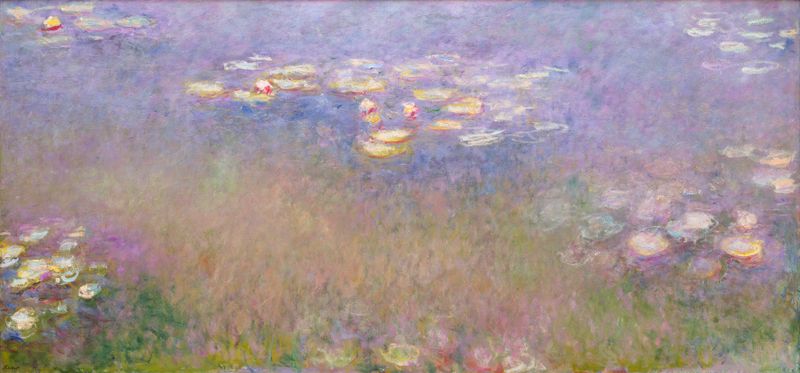
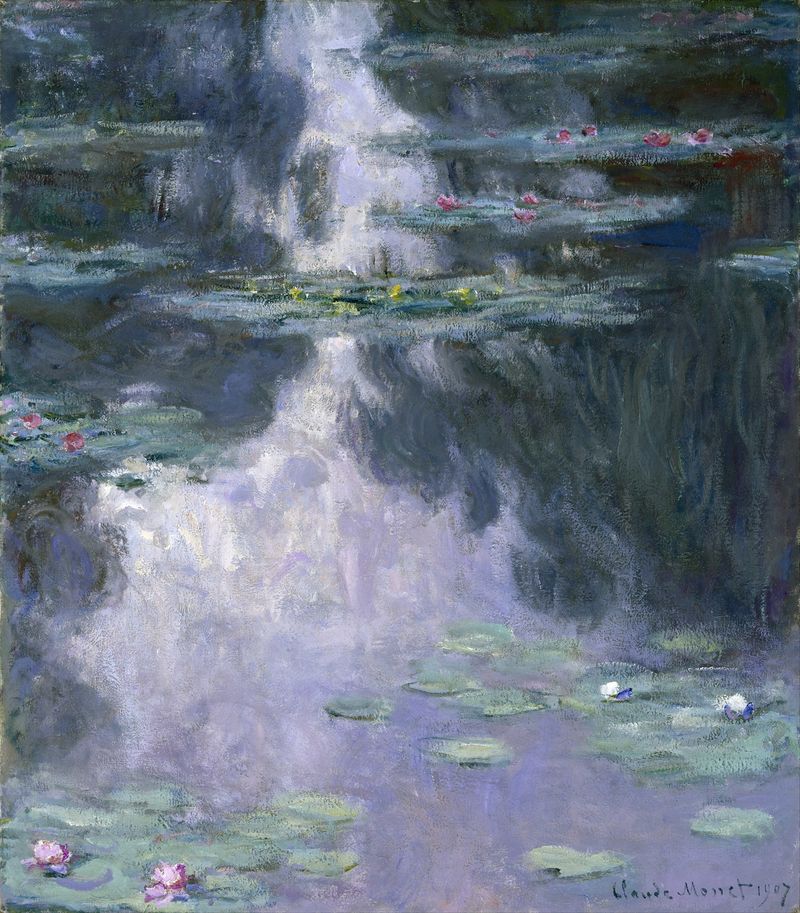
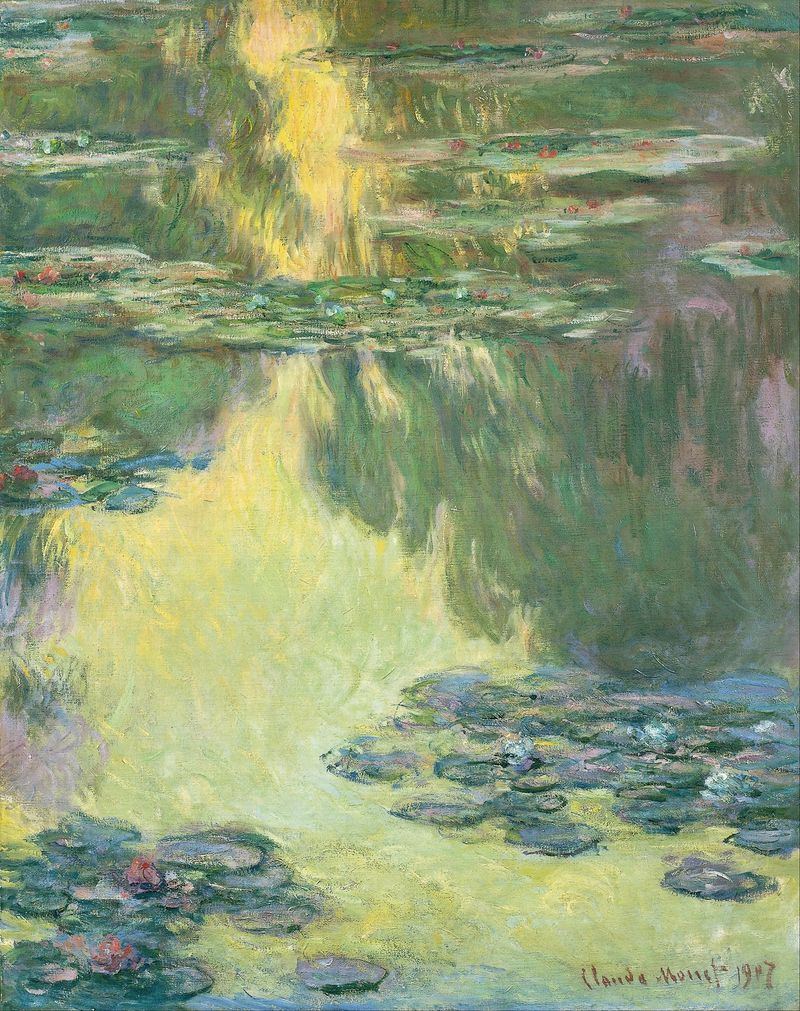
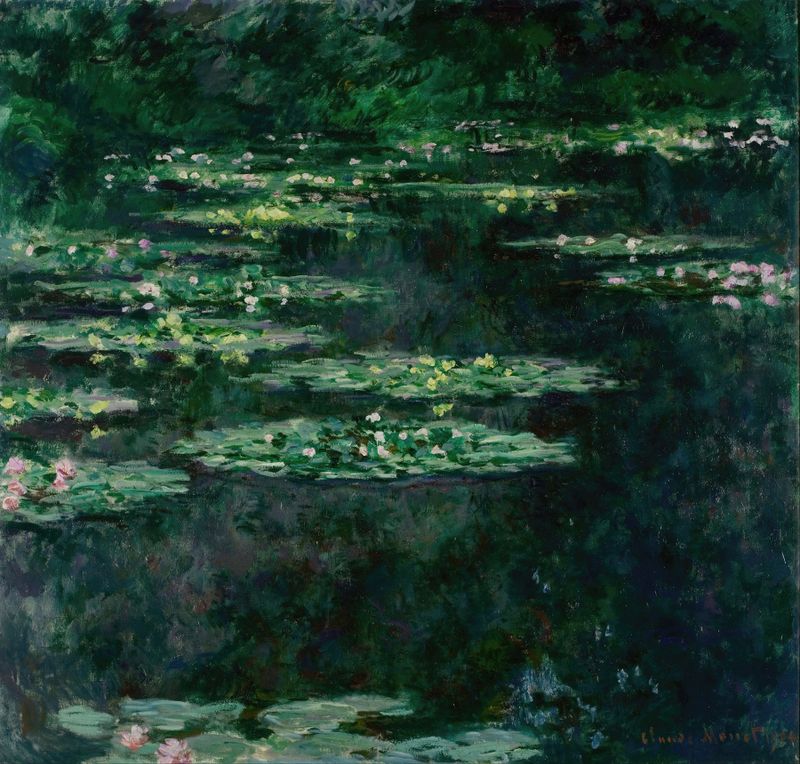
In the stillness of Water Lilies, shadows weave through reflections, hinting at the quiet stories hidden beneath the surface. This masterpiece invites the observer to contemplate the unspoken weight of nature's delicate balance and the quiet truths it holds. Look to the lower right at the vibrant blossoms floating gracefully atop the water, their rich colors contrasting with the deep greens and blues of the lily pads. Notice how the light dances across the surface, creating a shimmering effect that blurs the boundaries between reality and reflection.
The brushstrokes are soft and fluid, suggesting movement while simultaneously evoking tranquility. The composition draws the eye inward, encouraging a deeper exploration of both the painted scene and the emotions it invokes. Beneath the serene beauty lies a complex interplay of light and shadow, reflecting the dualities of life and existence. Each flower can be seen as a symbol of fleeting moments, their ephemeral nature captured in a state of quiet contemplation.
The shadows cast by the leaves speak of the hidden depths of emotion, hinting at the mysteries that lie just below the still surface. This contrast between light and dark resonates with the viewer, evoking a sense of introspection and connection to the natural world. At the turn of the 20th century, Henryk Weyssenhoff created Water Lilies during a time of personal exploration and artistic endeavor in Poland. His work emerged amidst the Symbolist movement, where artists sought to capture the intangible and express deeper truths.
This period in his life was marked by a quest for beauty and meaning, as he sought to convey the essence of nature in a way that transcended mere representation.