
Near San Francisco, Mexico — History & Facts
In the vivid interplay of color and light, echoes of violence lurk beneath the surface, waiting to be unearthed. Look to the horizon, where the sun spills a golden hue over the rugged landscape, casting long shadows that dance across the undulating hills. The bold, sweeping strokes of blue and green draw the eye toward the striking mountains, their majestic forms rising as silent sentinels. Notice how the clouds gather like whispers of conflict, hinting at a tempestuous past that looms just beyond the frame, unsettling yet captivating. Hidden within this serene panorama lies a tension between tranquility and turmoil.
The contrast between the stillness of the foreground and the stormy sky suggests a history laden with violence—of land claimed, battles fought, and lives altered. Each brushstroke seems to pulse with the weight of memory, inviting viewers to ponder the stories etched into the very fabric of the landscape. The vibrant colors carry a duality: they invoke beauty while simultaneously revealing the scars of conflict and change. In 1883, the artist found himself amid a transformational period in American art, as the demand for landscapes burgeoned in response to a rapidly changing nation.
Moran, a member of the Hudson River School, was deeply invested in capturing the American wilderness, while also bearing witness to its tumultuous history. His work not only represents the grandeur of nature but also serves as a poignant reminder of the violent struggles that accompanied the westward expansion.
More Artworks by Thomas Moran
Browse all →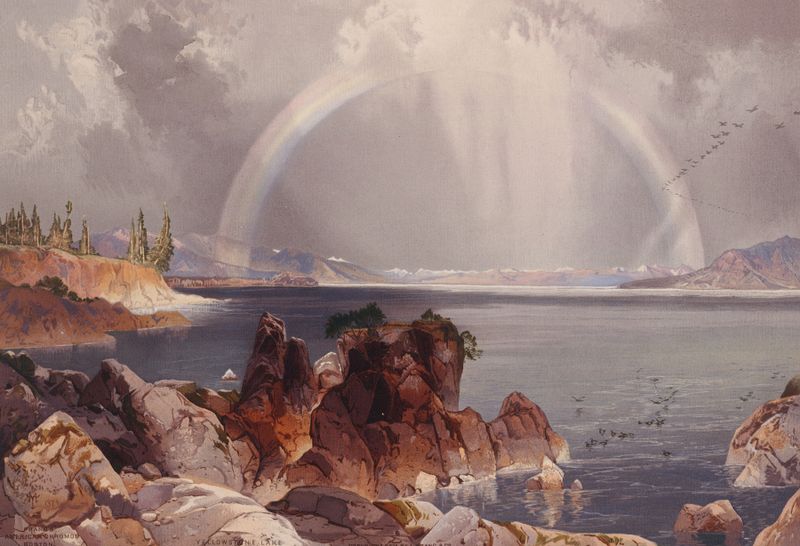
Yellowstone Lake
Thomas Moran

Grand Canyon of the Colorado River
Thomas Moran

Grand Canyon, Colorado River
Thomas Moran

The Towers of Tower Falls, Yellowstone
Thomas Moran
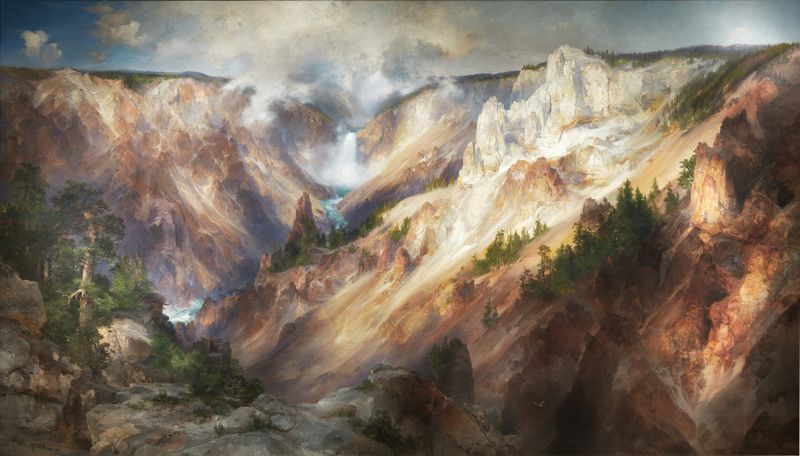
The Grand Canyon Of The Yellowstone
Thomas Moran

Mountain of the Holy Cross
Thomas Moran

Cliffs Of The Upper Colorado River, Wyoming Territory
Thomas Moran
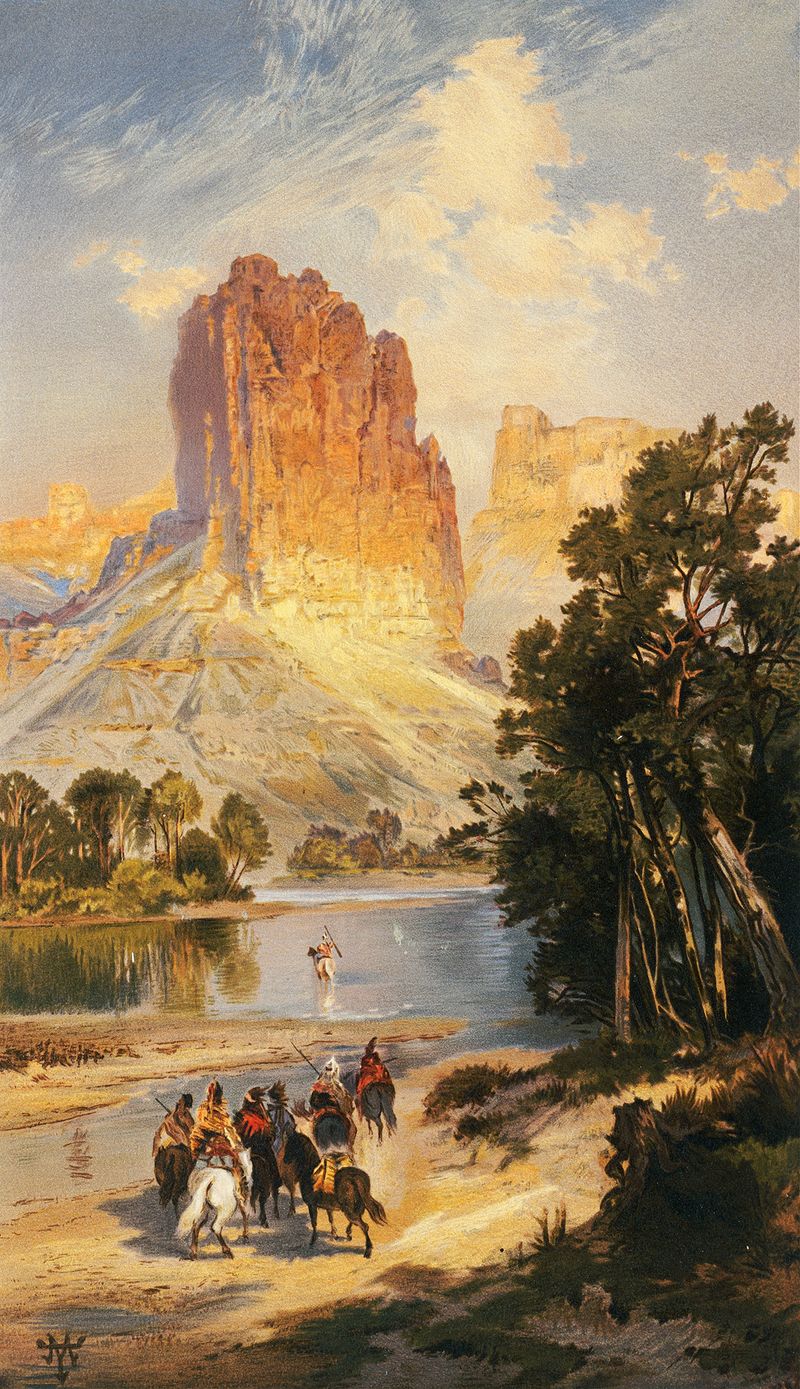
Cliffs of the Upper Colorado River, Wyoming Territory
Thomas Moran

Mammoth Hot Springs, Yellowstone
Thomas Moran
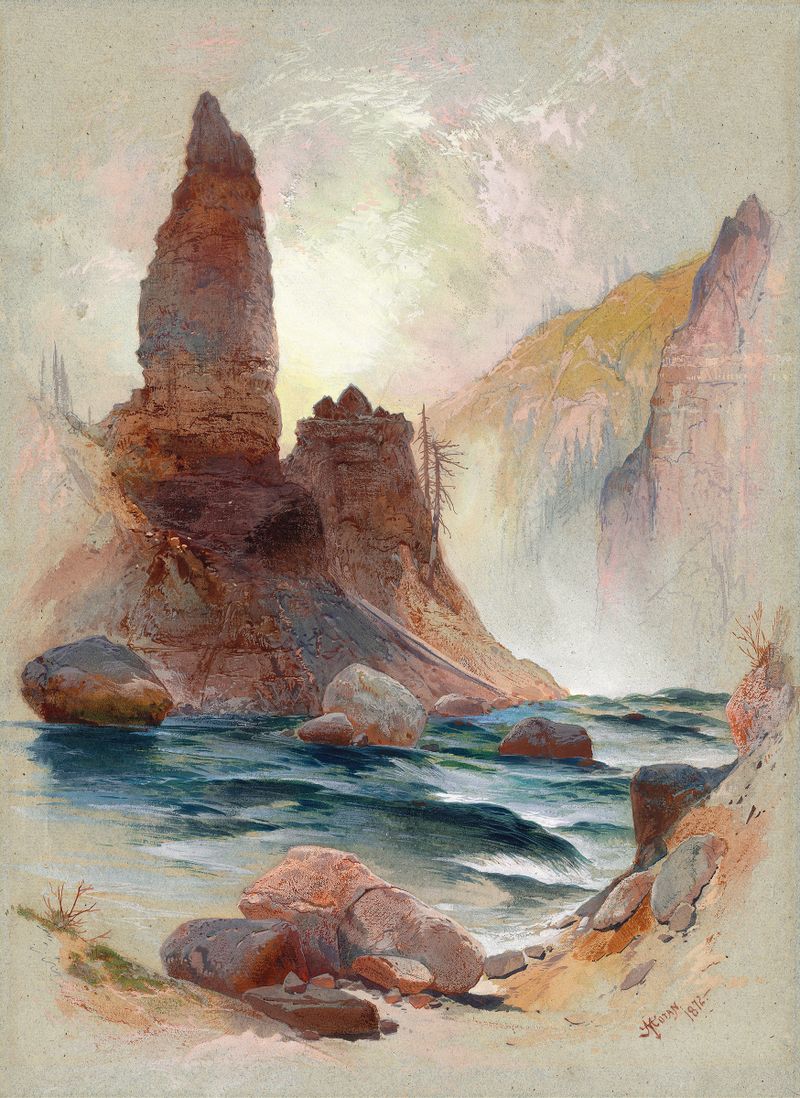
Tower at Tower Falls, Yellowstone
Thomas Moran





