
New England Barnyard — History & Facts
Could beauty survive in a century of chaos? In New England Barnyard, the essence of tranquility stands as a testament to resilience, as soft light spills over the rural landscape, inviting contemplation and solace. Focus on the brilliant interplay of light and shadow that bathes the scene, illuminating rustic wooden barns and the surrounding verdant fields. The palette, composed of gentle greens and warm browns, creates harmony, drawing the viewer’s eye towards the serene animals that inhabit this pastoral world. Notice how the sunlight dances on the hay, evoking a sense of warmth and comfort, while the faint outlines of distant trees establish depth that beckons exploration. Beneath the surface, the painting whispers of a delicate balance between nature and man.
The animals, though grounded in their stillness, seem to embody both peace and vulnerability, a reflection of a world on the brink of change. There’s an unsettling calm, as if the idyllic setting is a fragile sanctuary amidst the turbulent currents of the early 20th century, hinting at the underlying tension of an era grappling with modernization and upheaval. Created in the late 19th to early 20th century during his time in Connecticut, the artist captured a moment of rural life when American art was striving for a distinct identity. Weir, influenced by Impressionism, sought to reflect the beauty of American landscapes while connecting them to broader themes of transformation and preservation.
His work emerged in a period marked by industrial growth and social change, urging viewers to pause and appreciate the simplicity that might otherwise be lost.
More Artworks by Julian Alden Weir
Browse all →
My Back Yard no. 1
Julian Alden Weir
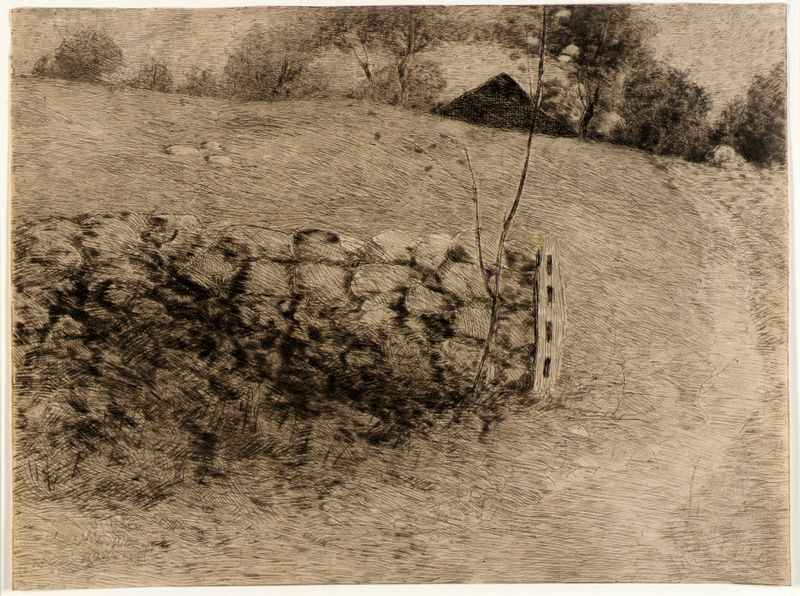
The Barn Lot
Julian Alden Weir

The Webb Farm
Julian Alden Weir
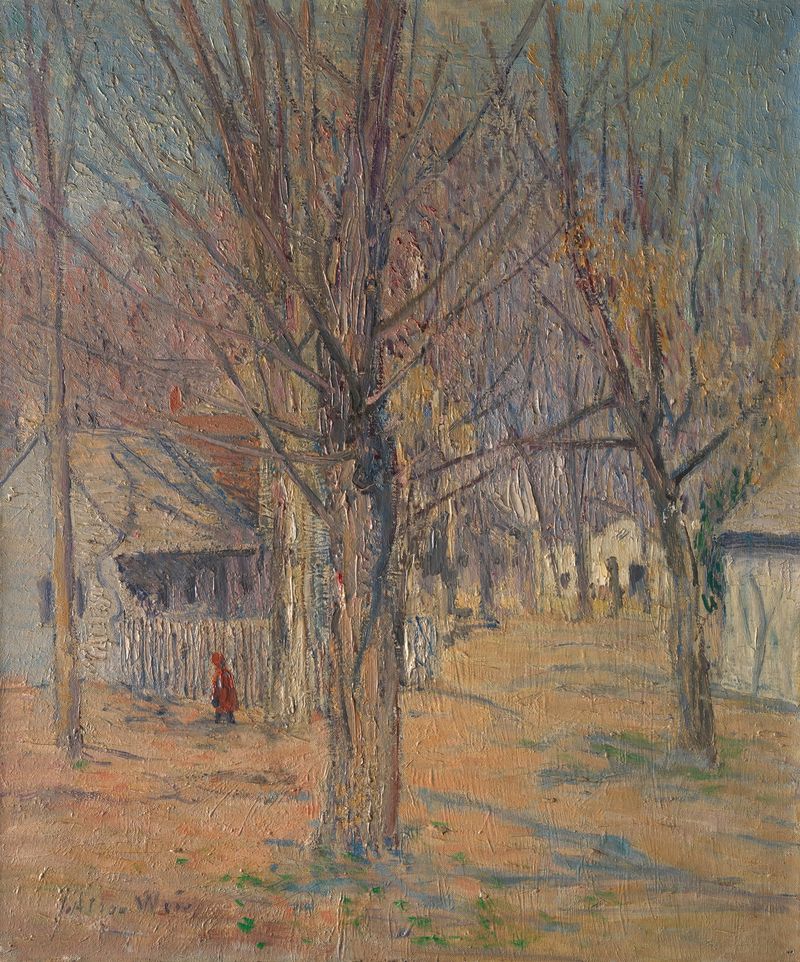
Connecticut Village (Going to School)
Julian Alden Weir

The Stone Bridge
Julian Alden Weir

The Webb Farm 2
Julian Alden Weir
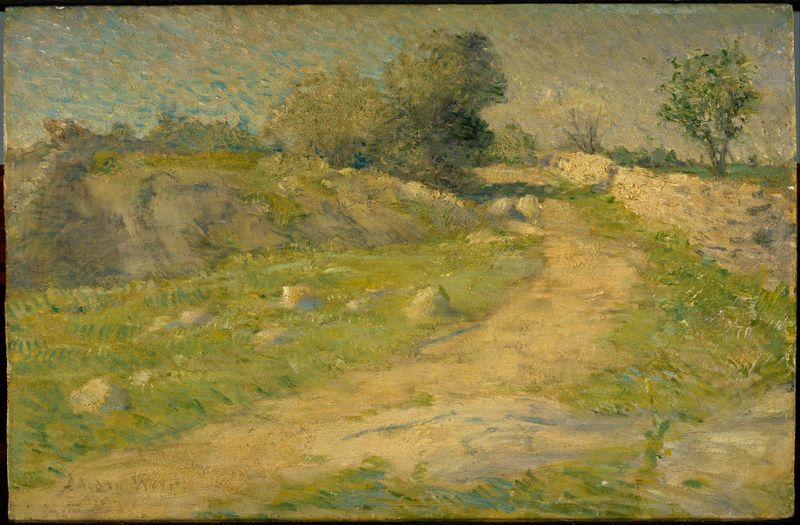
The Lane
Julian Alden Weir
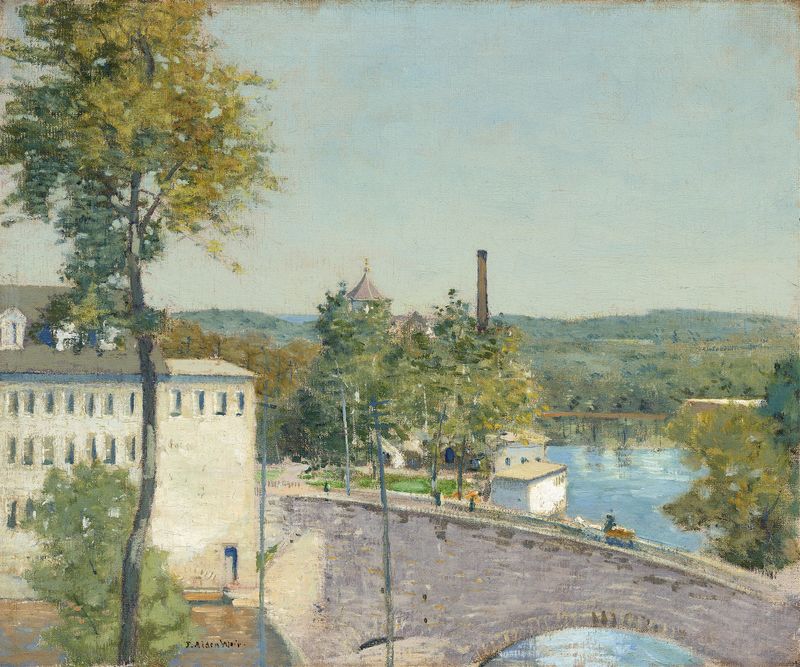
U.S. Thread Company Mills,Willimantic,Connecticut
Julian Alden Weir

Neighboring Farm
Julian Alden Weir

Coon Alley
Julian Alden Weir





