
Nishigori Takekiyo Painting — History & Facts
In Nishigori Takekiyo Painting, vibrant colors dominate the scene, showcasing a historical figure in traditional attire. The background features a serene landscape, enhancing the focus on the central character. The use of reds and blues creates a striking contrast, drawing the viewer's attention.
Intricate details in the clothing and setting reflect the artist's skill in capturing the essence of the moment. This artwork is a woodblock print, a popular medium in the Ukiyo-e style. The dimensions are approximately 30 x 45 cm, making it a manageable size for display. The print technique allows for fine details and vibrant colors, which are hallmarks of Yoshitoshi's work.
The composition is carefully arranged, leading the eye through the various elements of the scene. Tsukioka Yoshitoshi was a prominent figure in the Ukiyo-e movement, known for his dramatic and expressive works. This painting is part of his later career, where he focused on historical subjects and narratives. An interesting fact about this piece is that it reflects Yoshitoshi's interest in the samurai culture of Japan, showcasing the blend of art and history.
His works often served as a commentary on the changing times in Japan during the Meiji era.
More Artworks by Tsukioka Yoshitoshi

Frost fills the air and the autumn air is still/lines of returning geese cross the moon in the third hour-Kenshin, from the series Twelve Aspects of the Moon
Tsukioka Yoshitoshi
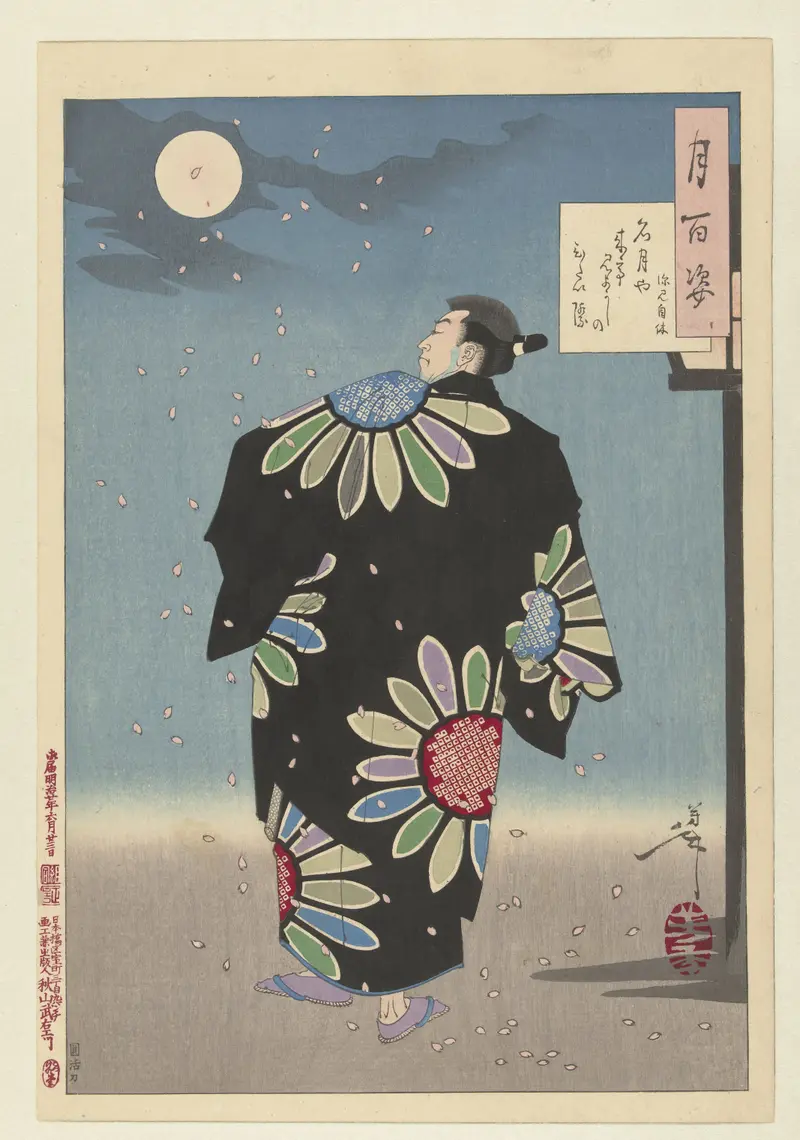
Fukami Jikyu in maanlicht
Tsukioka Yoshitoshi
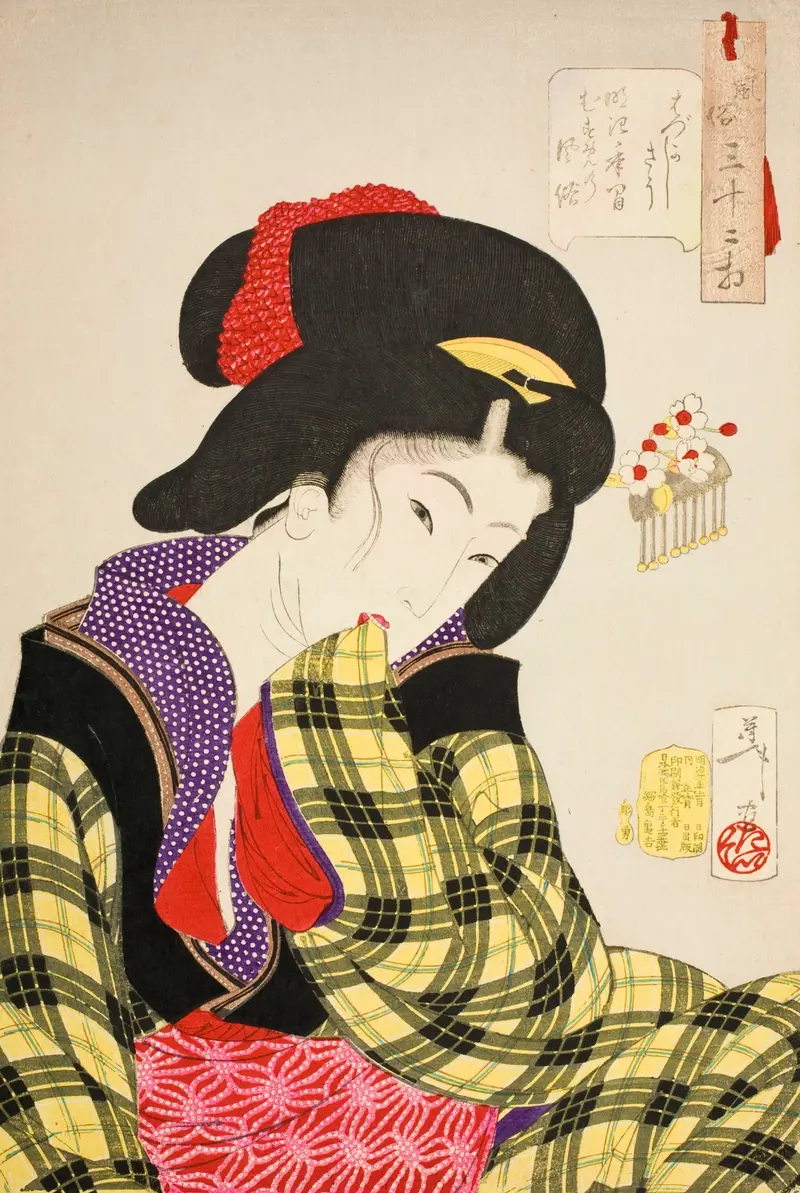
Looking Shy; The Manners of a Young Girl of the Meiji Era
Tsukioka Yoshitoshi
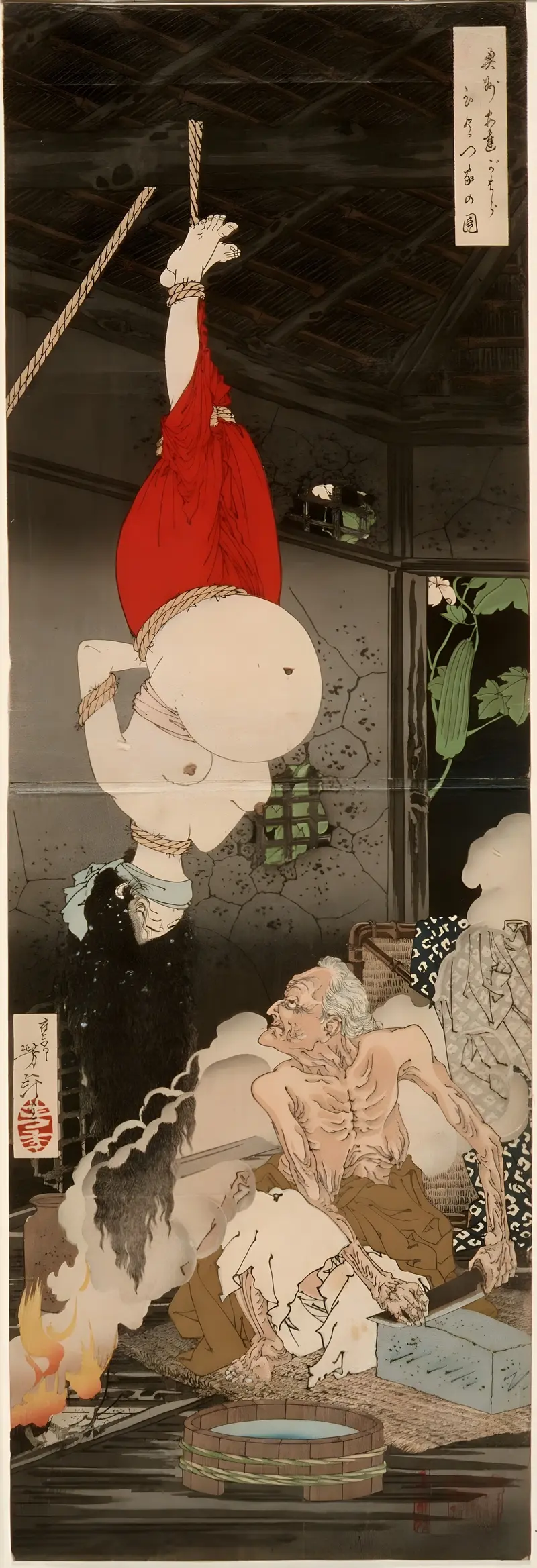
The Lonely House on Adachi Moor in Northern Japan
Tsukioka Yoshitoshi
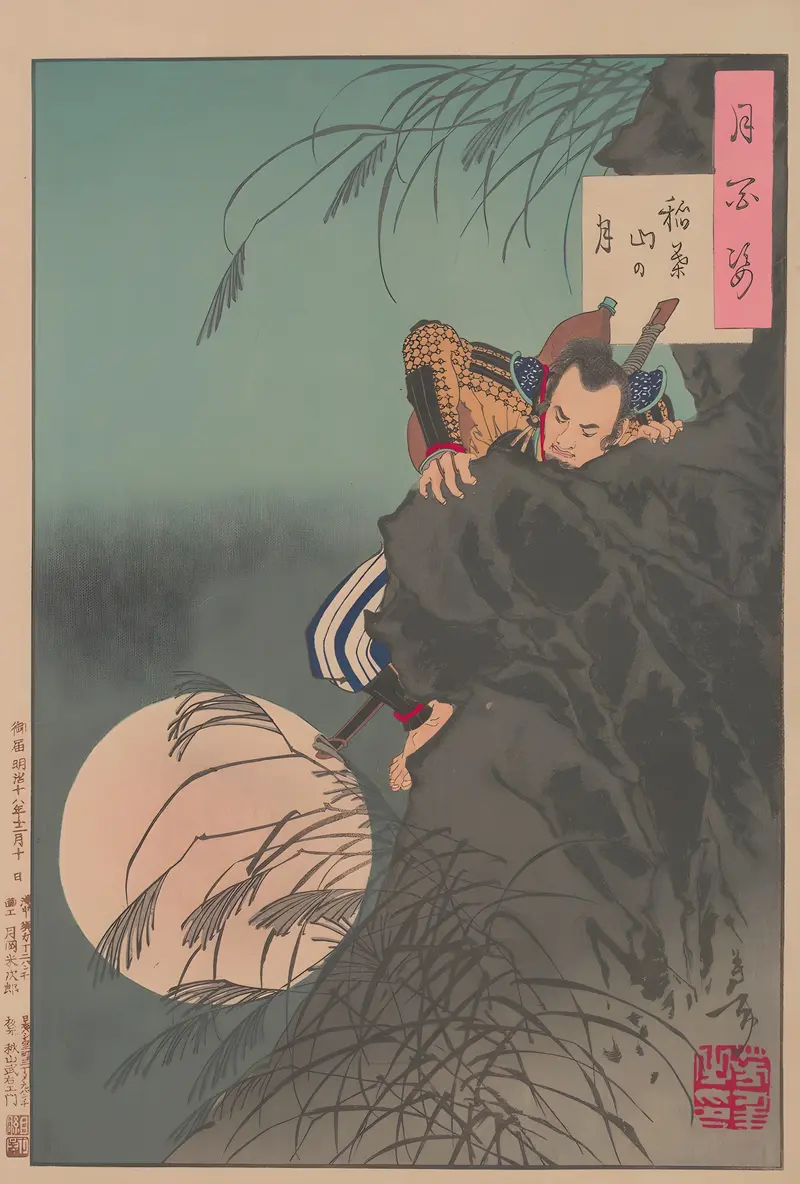
Inaba Mountain moon (Inabayama no tsuki)
Tsukioka Yoshitoshi
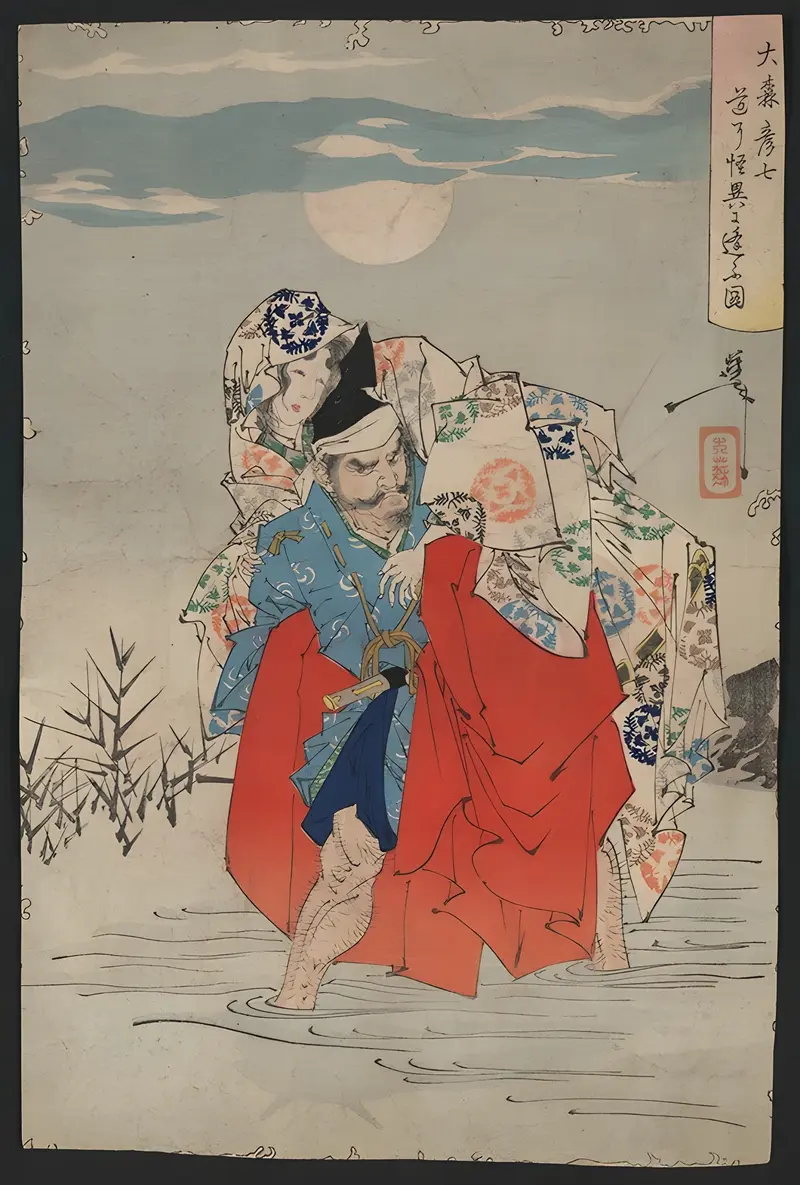
Omori Hikoshichi
Tsukioka Yoshitoshi
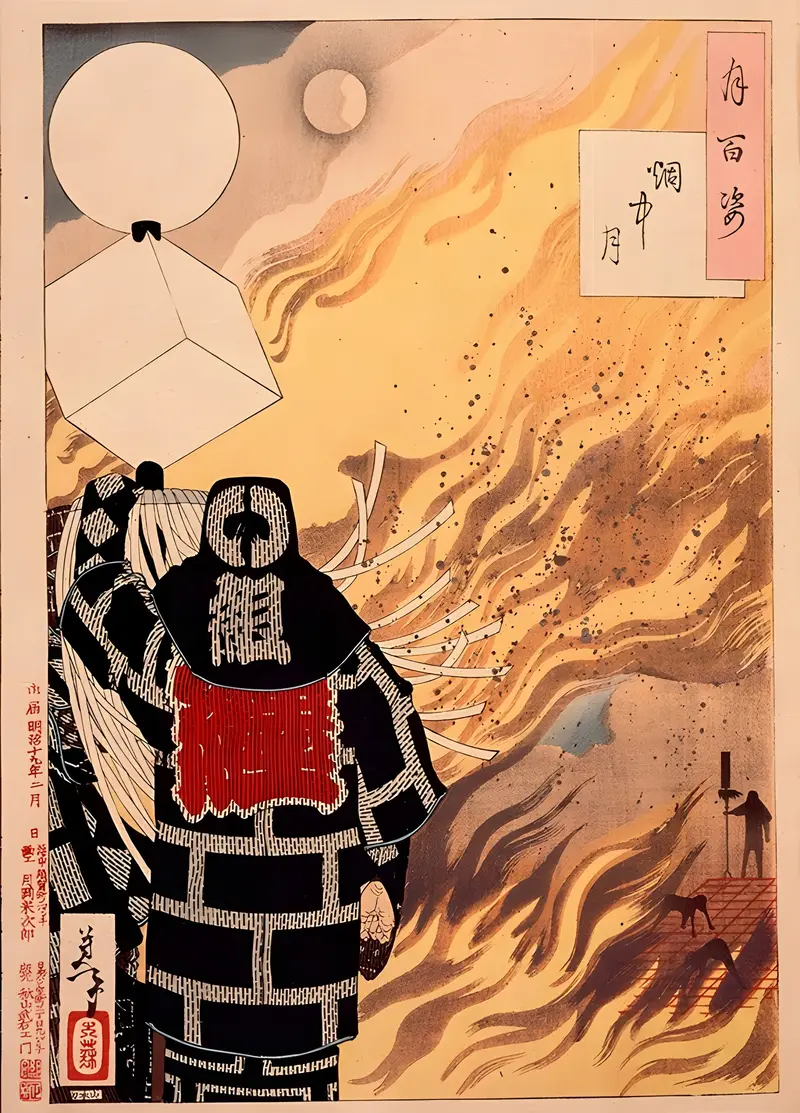
One Hundred Aspects of the Moon
Tsukioka Yoshitoshi
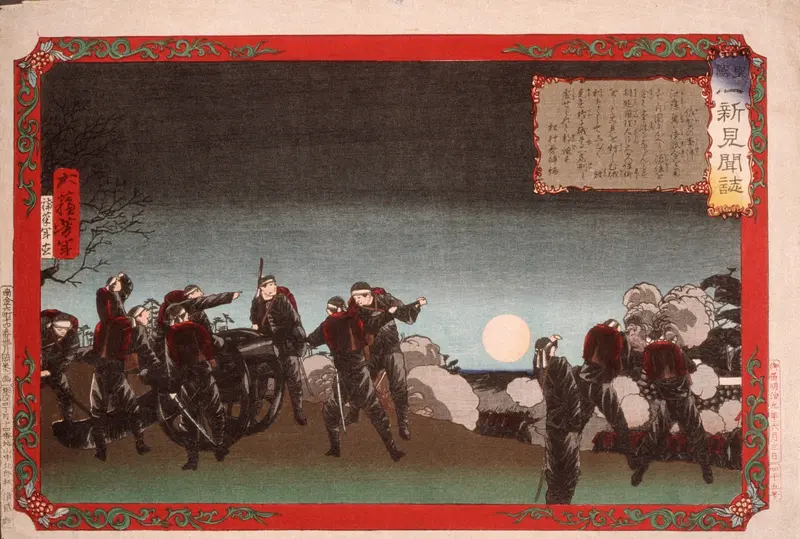
The Saga Incident
Tsukioka Yoshitoshi
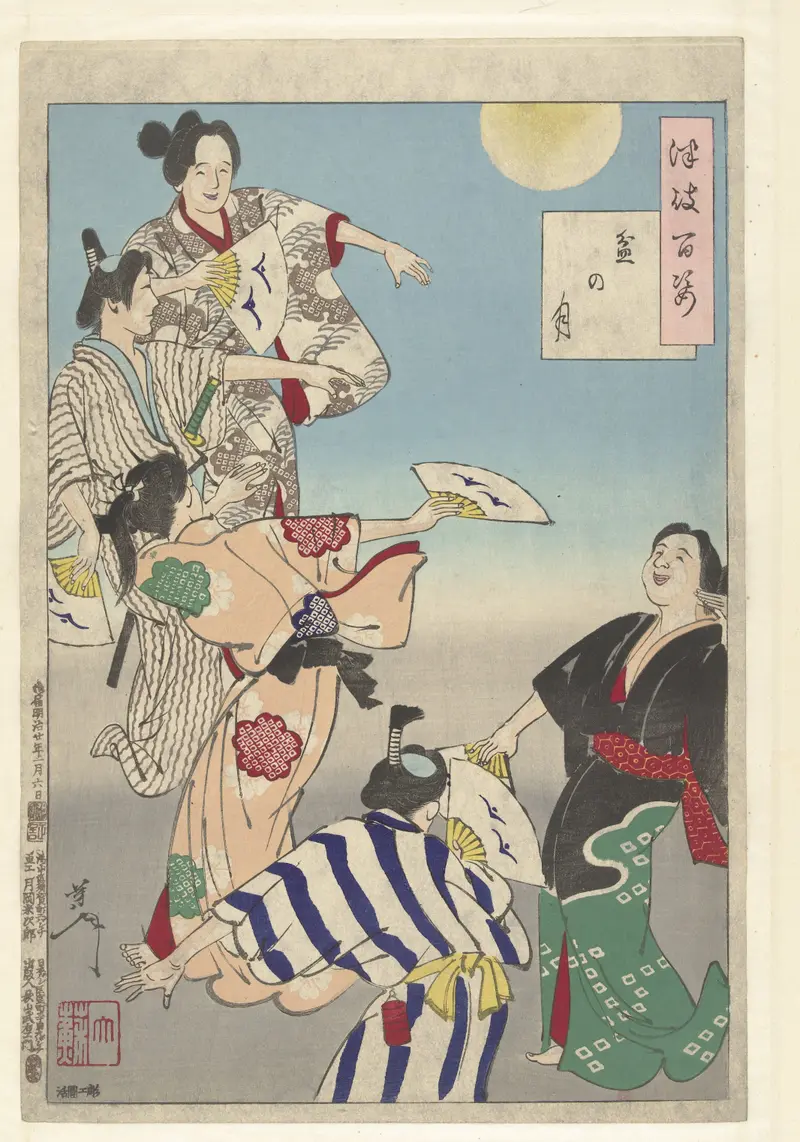
Bon Festival Moon (Bon no tsuki)
Tsukioka Yoshitoshi
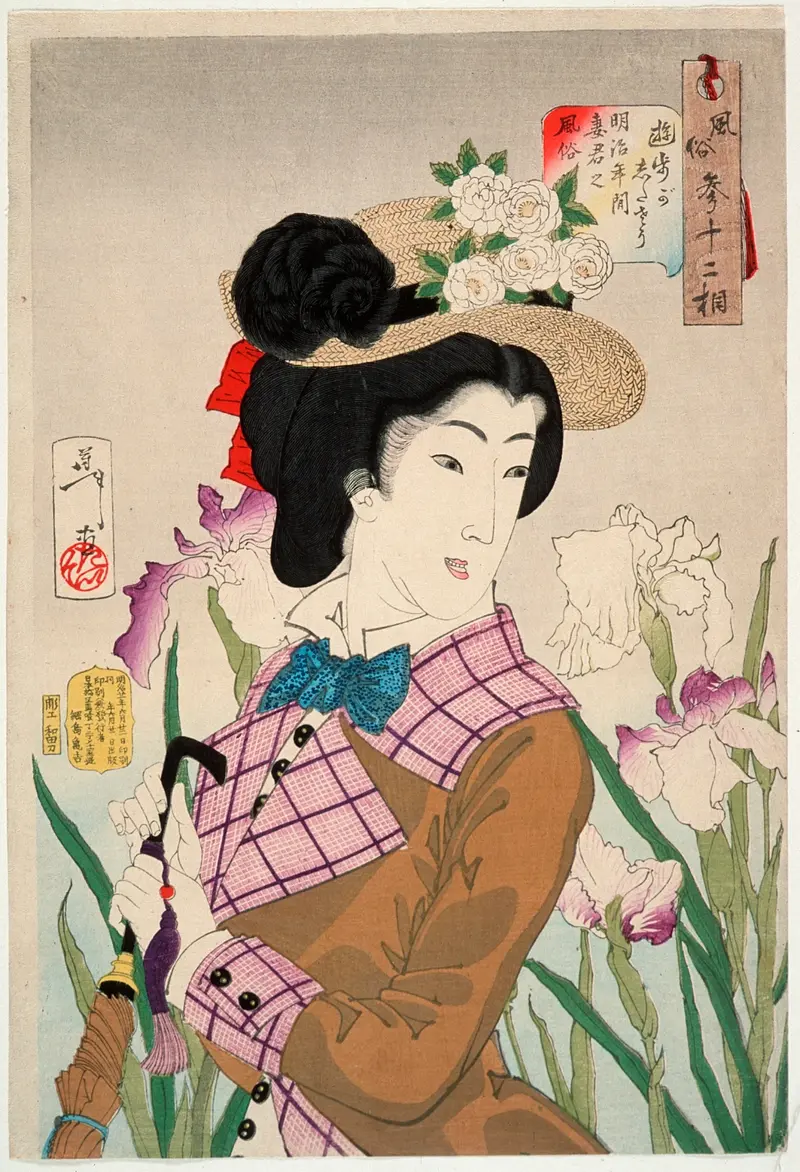
Preparing to Take a Stroll; The Wife of a Nobleman of the Meiji Period
Tsukioka Yoshitoshi



