
Noon under the Trees — History & Facts
Did the painter know this moment would outlive them? In Noon under the Trees, a serene stillness envelops a moment suspended in time, inviting viewers to reflect on the nature of memory and existence. Look to the lower right, where a dappled patch of sunlight dances upon the ground, illuminating the figures of two women seated on the grass. The gentle play of light creates a striking contrast against the cool greens and browns of the forest, drawing the eye deeper into the calm embrace of the landscape. Notice how the artist uses textured brushstrokes to evoke the soft rustle of leaves, allowing the viewer to almost hear the whisper of nature in this peaceful haven. This painting embodies a profound tension between the fleeting nature of life and the enduring quality of memory.
The women, lost in conversation, represent fleeting moments of connection, yet their presence anchors the scene in stillness, highlighting the contrast between the vibrant life of the forest and the quiet intimacy shared. The interplay of light and shadow evokes both warmth and nostalgia, prompting reflections on the passage of time and the layers of experience that shape our lives. In 1890, Auguste Louis Lepère painted Noon under the Trees during a period of artistic exploration and innovation in France. At this time, he was deeply influenced by the Impressionist movement, seeking to capture the essence of everyday life through his prints and paintings.
This period marked a turning point in his career, as he began to embrace the nuances of light and atmosphere, allowing him to connect with nature and his memories in a profound and enduring way.
More Artworks by Auguste Louis Lepère
Browse all →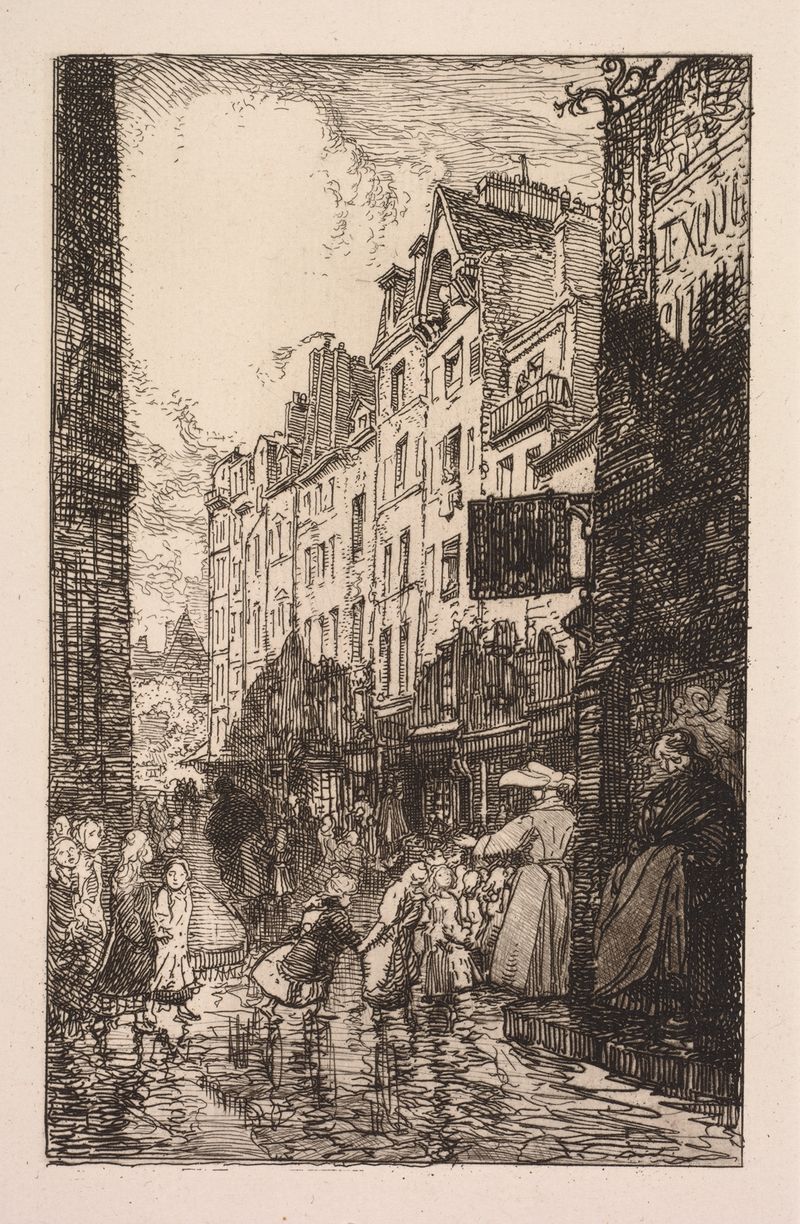
La Rue des Prêtres Saint-Séverin
Auguste Louis Lepère
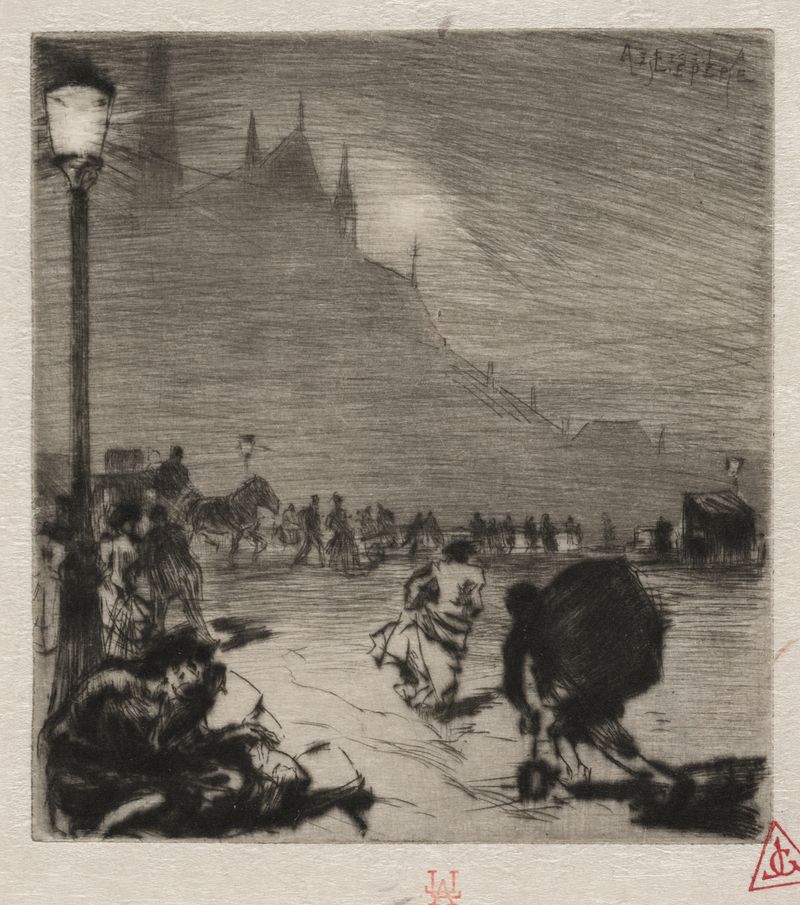
Au Coin du Pont-aux-Doubles
Auguste Louis Lepère
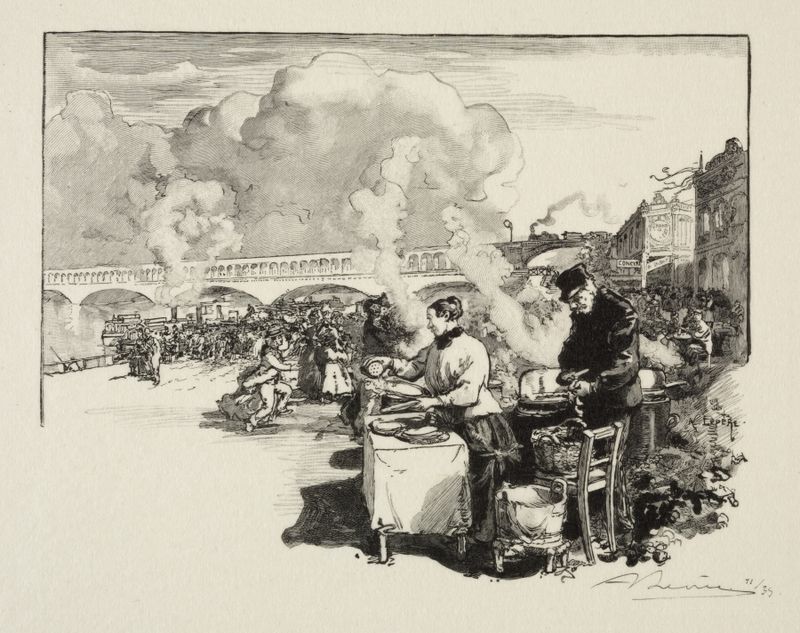
Debarcadère des bateaux-omnibus
Auguste Louis Lepère

La Seine, au quai de la Rapée
Auguste Louis Lepère
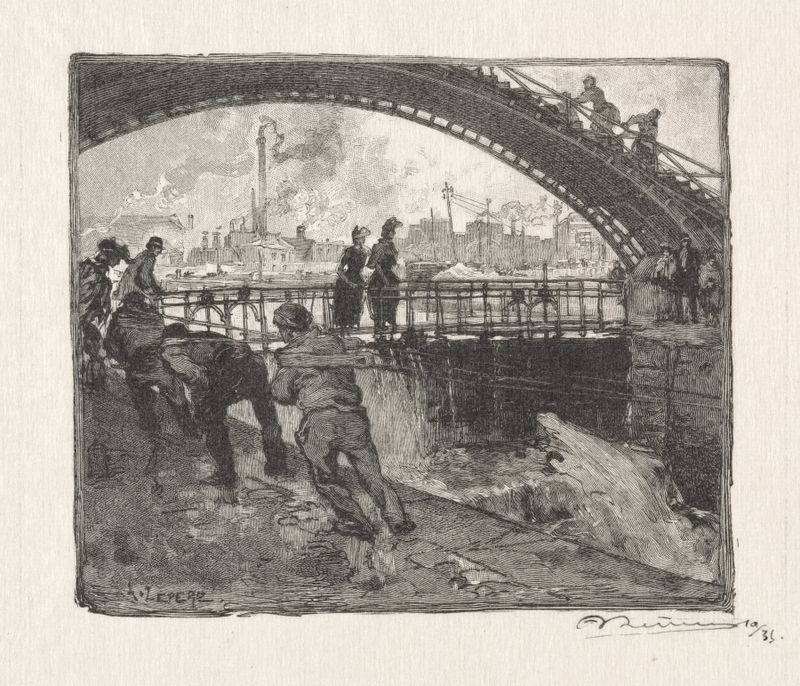
L’Ecluse du Canal St. Martin
Auguste Louis Lepère

Le Boulevard Montmartre, le Soir
Auguste Louis Lepère

Une Chasse au Mont Gérard
Auguste Louis Lepère
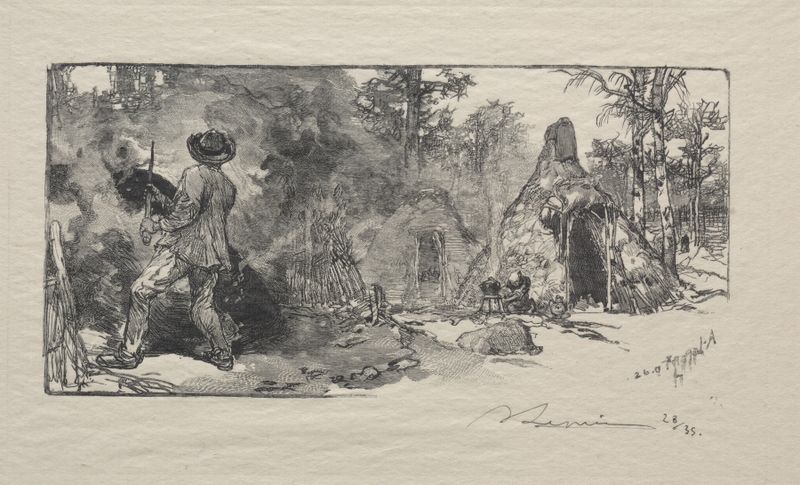
Les Charbonniere
Auguste Louis Lepère
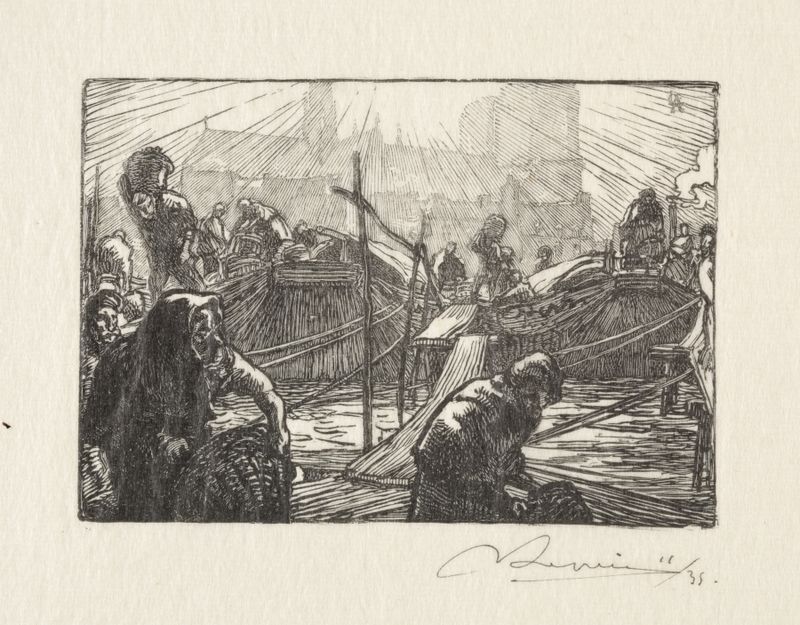
Notre Dame vue du Marché aux pommes
Auguste Louis Lepère

Le Palais des Arts Liberaux, Intèrieur
Auguste Louis Lepère





