Norra maastik — History & Facts
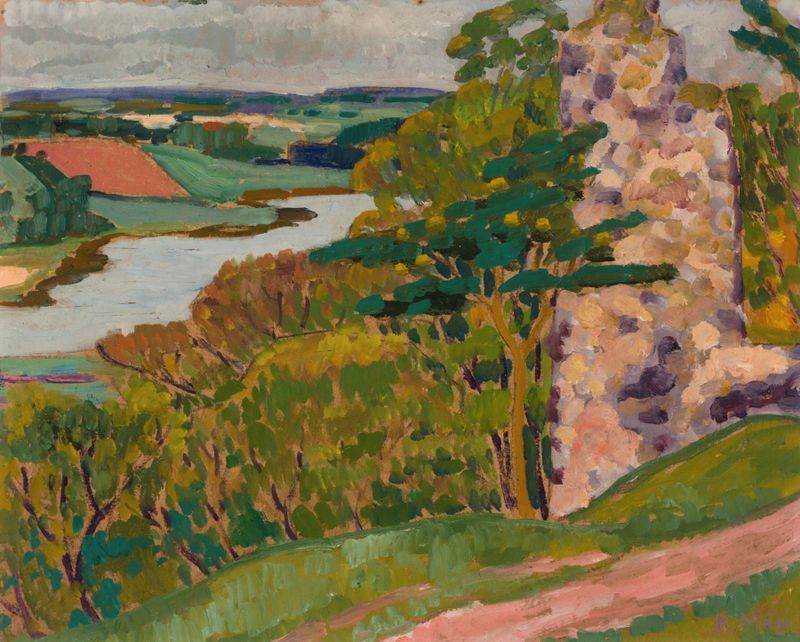
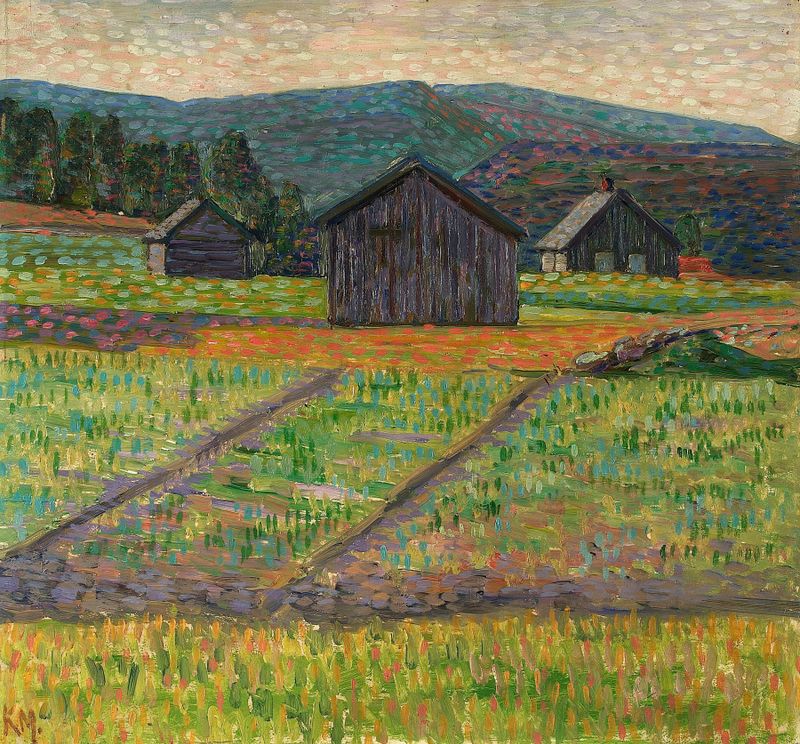
In Norra maastik, a haunting landscape unfolds, provoking a sense of unease amid its beauty. The viewer is left wondering about the hidden fears that lie within nature's splendor. Look to the foreground, where a tumultuous blend of greens and browns creates a sense of wildness. The brushstrokes, thick and vigorous, evoke both movement and turmoil.
Notice how the light dances along the horizon, illuminating the edges of the clouds, while shadows creep into the valleys below. The contrast between vibrant hues and somber tones suggests a duality, inviting contemplation about the landscape's emotional weight. Delve deeper into the layers of this artwork, where the juxtaposition of serenity and tension resides. The rolling hills, although serene, are punctuated by jagged forms that seem to claw at the sky, hinting at an underlying fear of nature's unpredictability.
There’s an unsettling tranquility, as though the beauty of the scene conceals a more chaotic reality just beneath the surface. This tension reflects the artist’s own struggles and the tumultuous social environment of his time. Mägi painted Norra maastik between 1908 and 1910, during his formative years in Tartu, Estonia. This period was marked by a growing interest in national identity and the exploration of modern art trends across Europe.
Amidst personal challenges and the shifting artistic landscape, he sought to capture the raw essence of the Estonian countryside, deftly blending emotion with the natural world.