
Norwich from the gravel pits — History & Facts
It holds the reflections of memories long past, beckoning us to explore the layers of nostalgia it captures. Begin your journey in the lower left corner where muted greens and browns establish a tranquil landscape. Notice how the artist’s brushwork creates a gentle texture, evoking the richness of the earth and the stillness of the gravel pits. As your gaze moves upward, it is met by a softened sky, painted with delicate hues of blue and pale gold, suggesting a quiet dawn or dusk; a time suspended between moments. Hidden within the tranquil scene lies a poignant contrast between nature’s serenity and the industrial evidence of human industry.
The gravel pits are a reminder of progress, yet they whisper of loss — the surrounding landscape, once untouched, now bears the marks of change. The distant spires of Norwich rise against the horizon, standing both proud and melancholy, symbolizing the duality of growth and decay. Each element reflects the passage of time and the memories that linger long after the moment has faded. Robert Dixon created this artwork in a period when the Industrial Revolution was reshaping landscapes and lives across Britain.
Active during the 19th century, he often focused on the interplay between nature and man-made environments, capturing the essence of a transforming world. Contextually, this work emerges from a time of both opportunity and nostalgia, where the beauty of the past grapples with the tensions of modernity.
More Artworks by Robert Dixon
Browse all →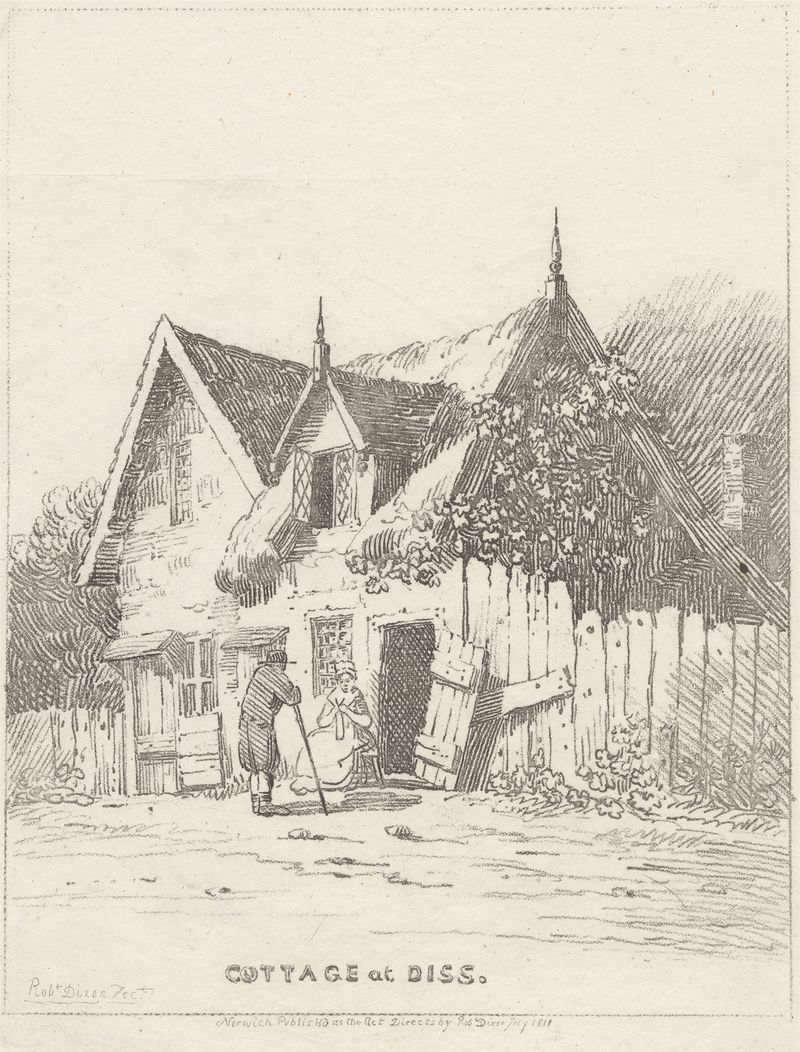
Cottage at Diss
Robert Dixon
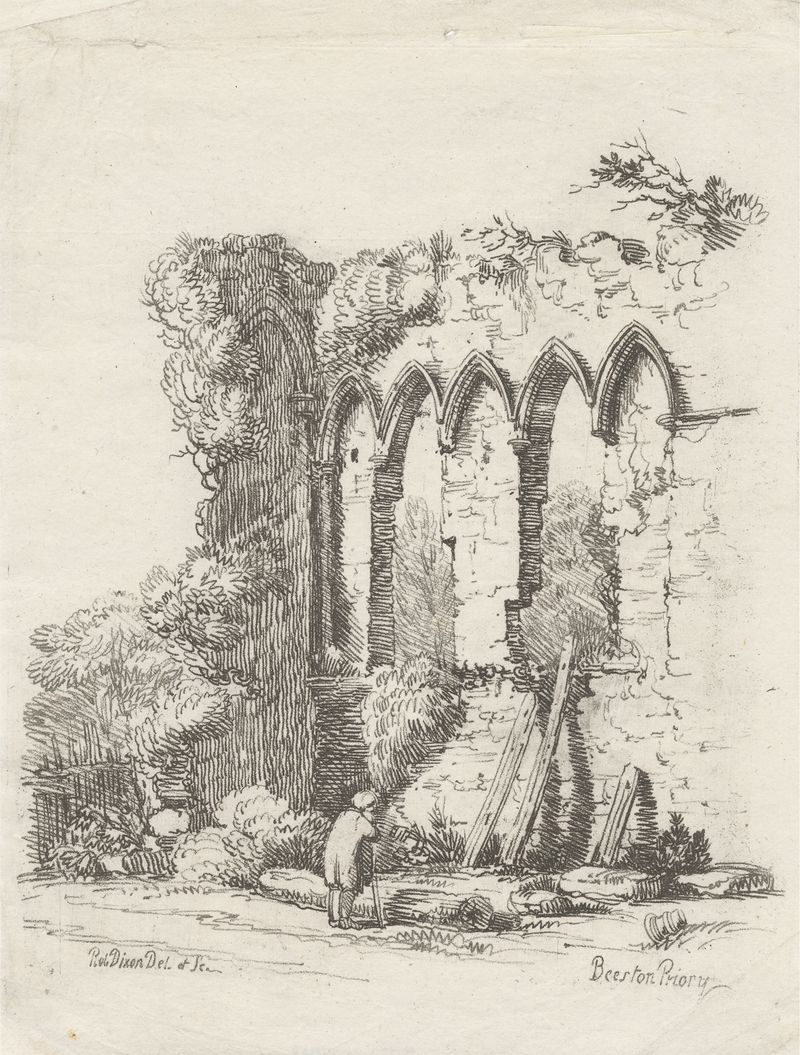
Beeston Priory, Beeston Regis
Robert Dixon
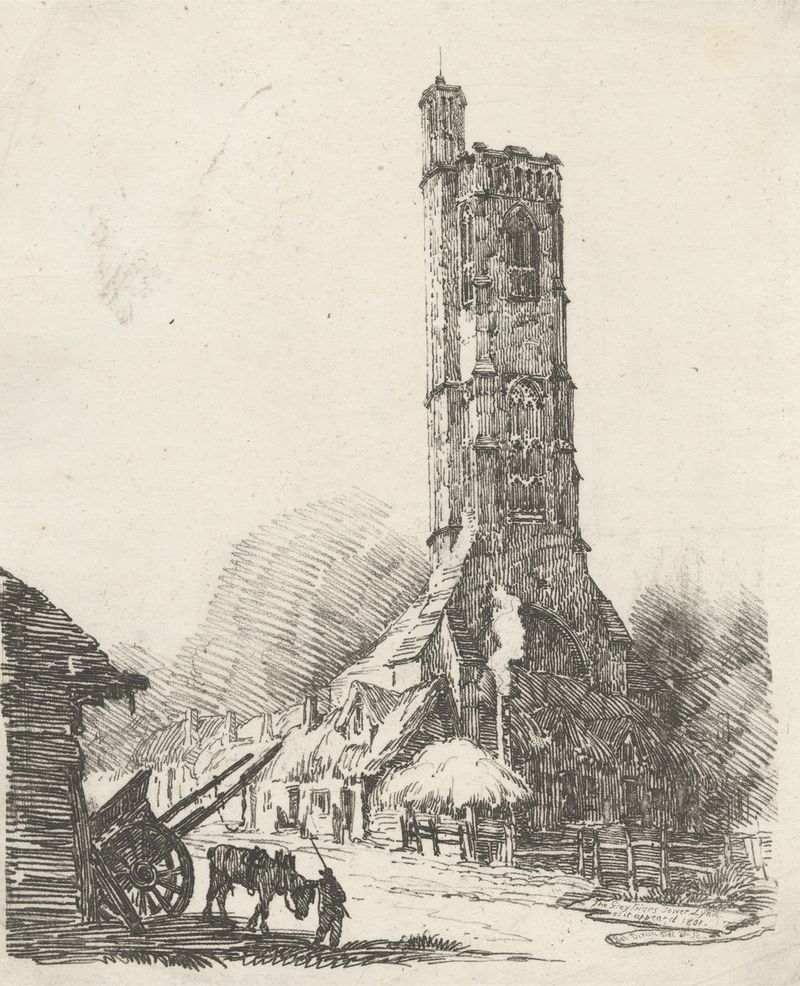
The Greyfriars Tower, Lynn, as it appeared 1801
Robert Dixon

Street with Buildings
Robert Dixon
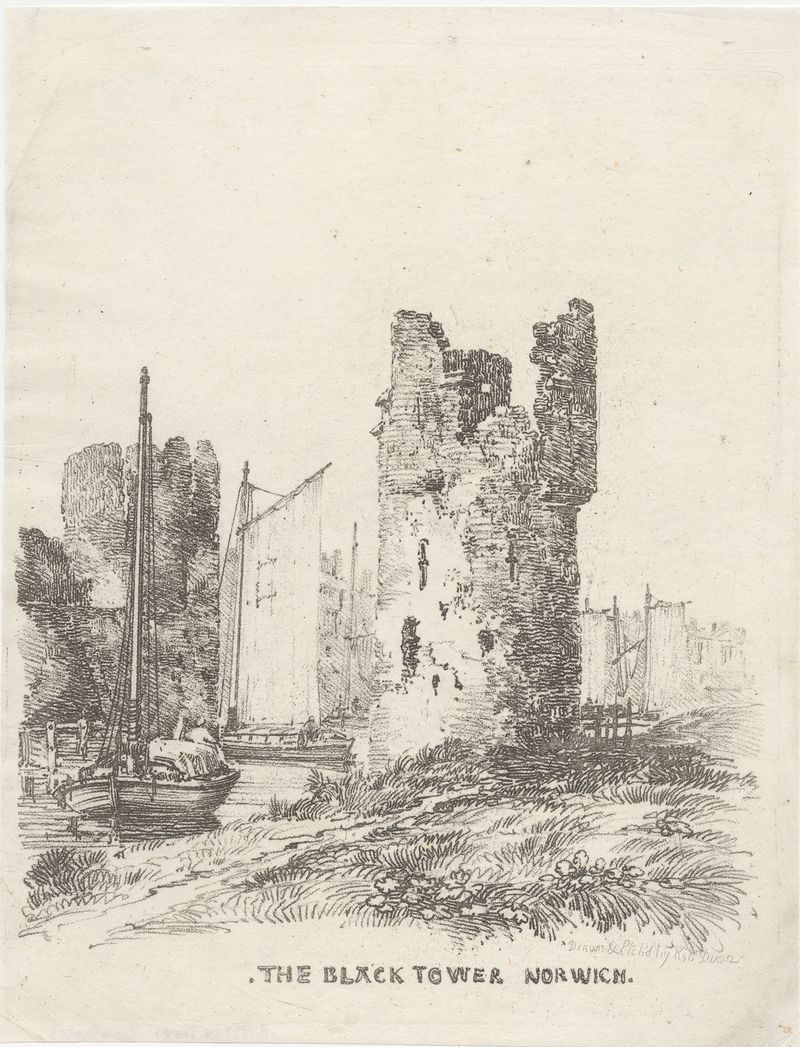
The Black Tower Norwich
Robert Dixon

Figures Outside the Boar Inn
Robert Dixon
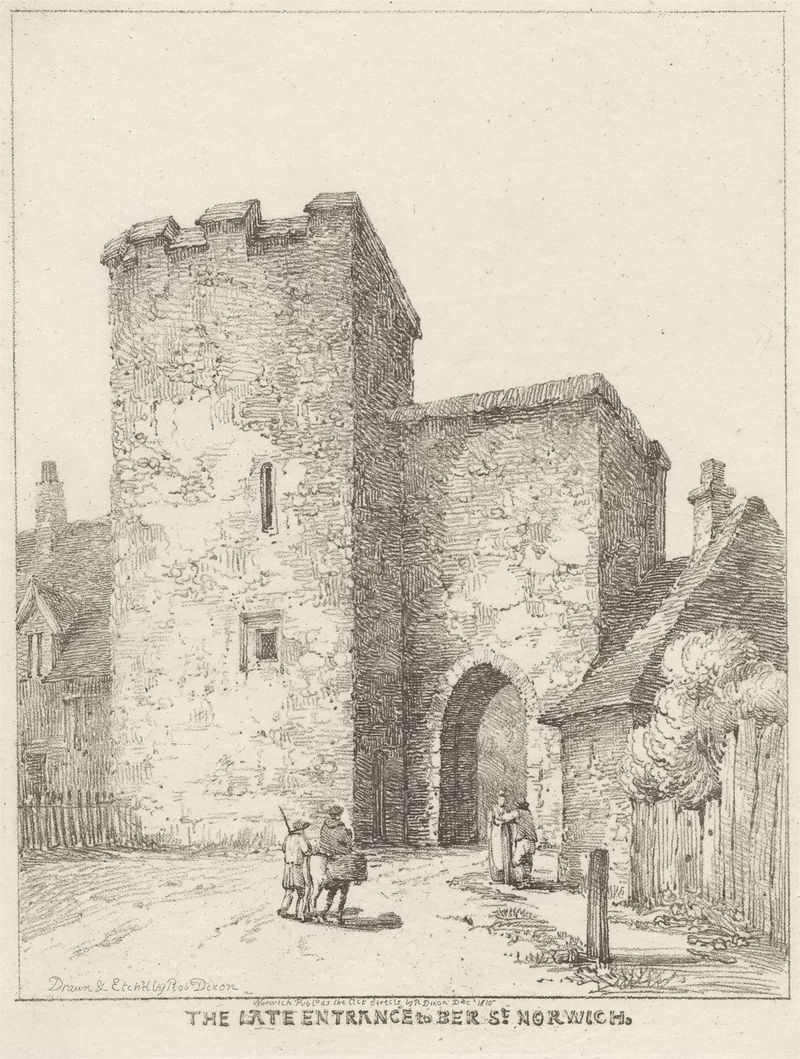
The Late Entrance to Ber Street, Norwich
Robert Dixon
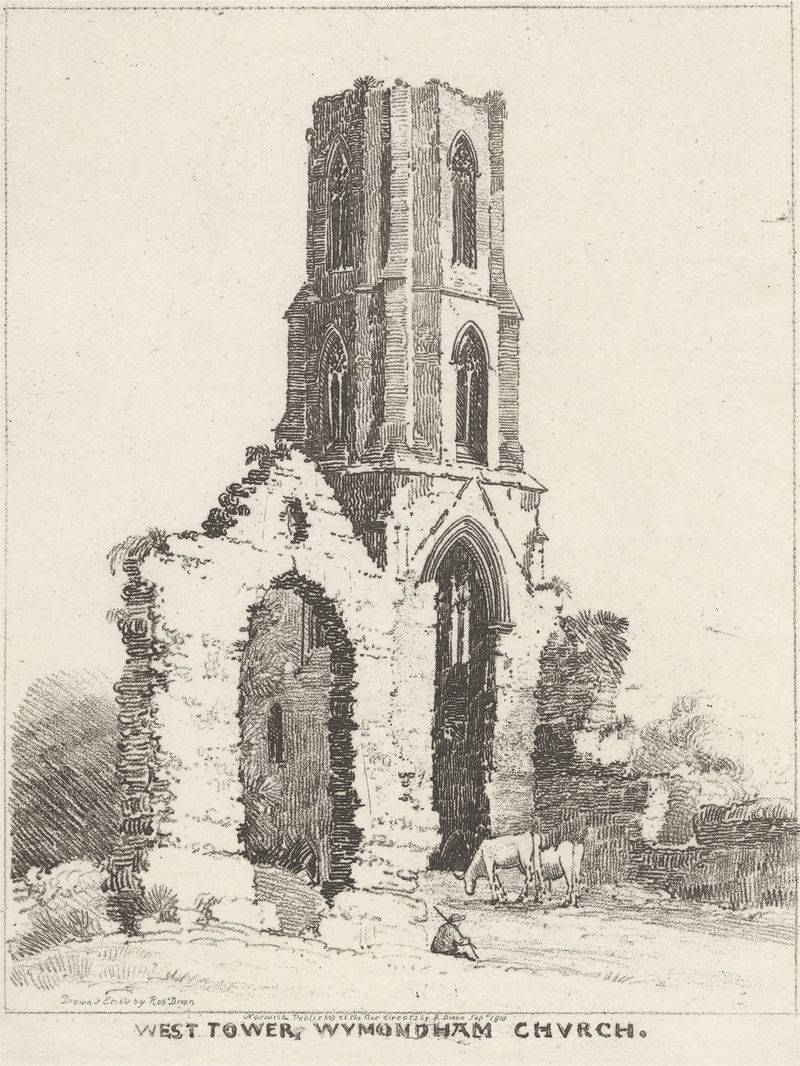
West Tower, Wymondham Church
Robert Dixon

Sketch at Mulbarton
Robert Dixon





