
Sketch at Mulbarton — History & Facts
Each mark made on the canvas whispers of a divine connection, intertwining the earthly with the celestial, capturing a sacred moment in time. Look to the center of the canvas where the delicate interplay of light and shadow breathes life into the landscape. Notice how the artist expertly layers soft greens and muted browns, suggesting the gentle undulations of the land. The horizon stretches wide, inviting the viewer’s eye to wander into the distance, while textured brushwork evokes the lushness of nature in perfect harmony.
The sky, awash in subtle blues and grays, reflects both tranquility and impending tumult, creating a profound sense of depth. A closer inspection reveals the emotional undercurrents flowing beneath the surface. The juxtaposition of the serene landscape with hints of tension in the stormy sky suggests the duality of existence—peace and chaos coexisting. The small figures, seemingly insignificant against the expansive backdrop, represent humanity's search for meaning amidst nature's grandeur.
Each stroke encapsulates not just a scene, but a dialogue between the divine and the mundane, urging reflection on our place in the universe. During the years 1810-1811, Robert Dixon, a little-known yet talented artist, sought to establish his voice in the evolving world of English landscape painting. He created Sketch at Mulbarton during a period marked by growing Romantic sensibilities, where nature was revered not just for its beauty but as a source of spiritual awakening. As he navigated the art scene of his time, Dixon's work began to resonate with an emerging appreciation for the sublime, blending observation with emotional expression, and forever memorializing the divine in the natural world.
More Artworks by Robert Dixon
Browse all →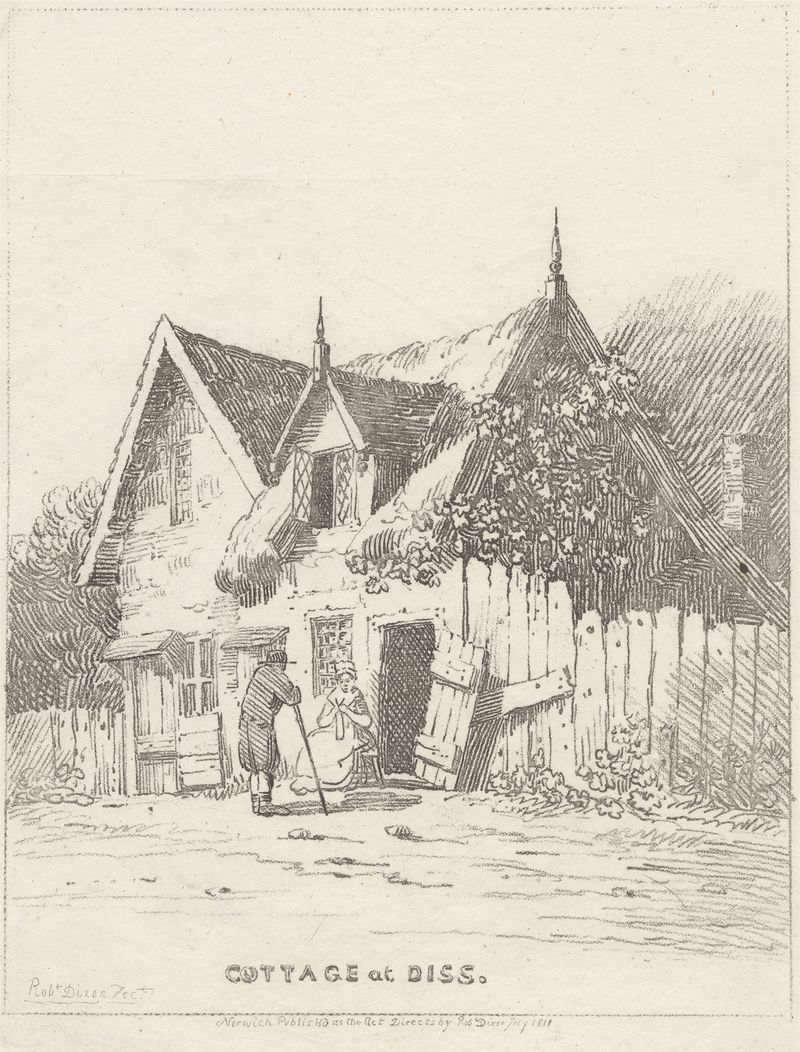
Cottage at Diss
Robert Dixon
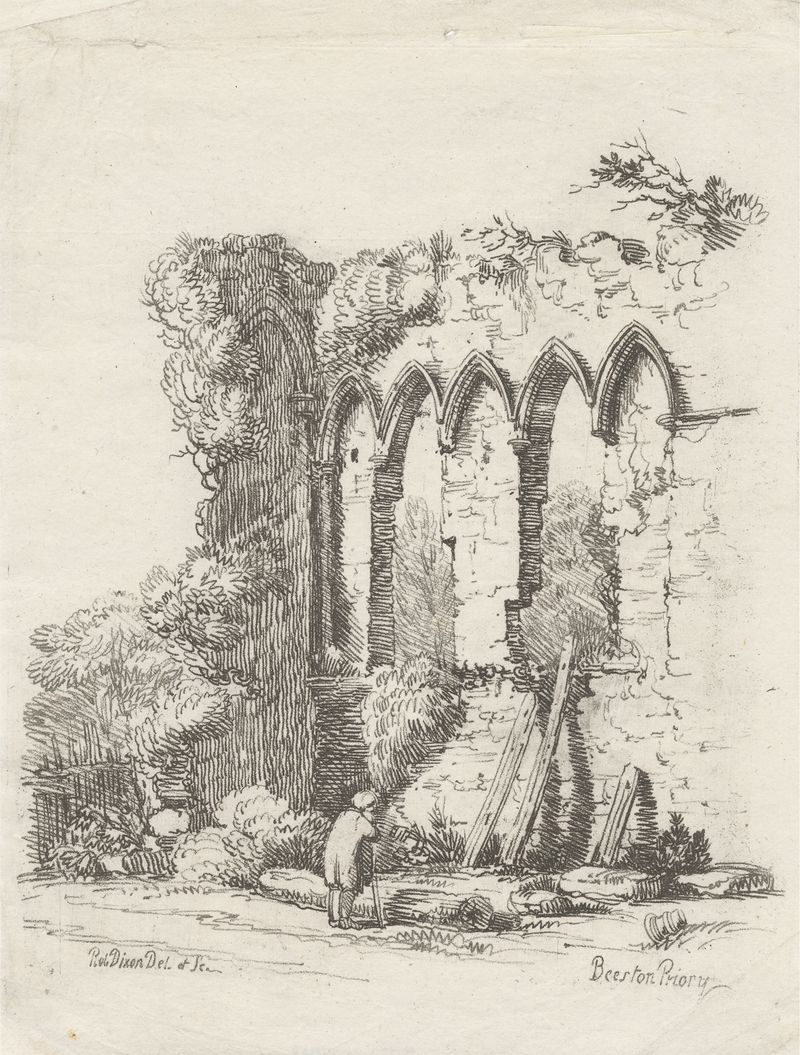
Beeston Priory, Beeston Regis
Robert Dixon
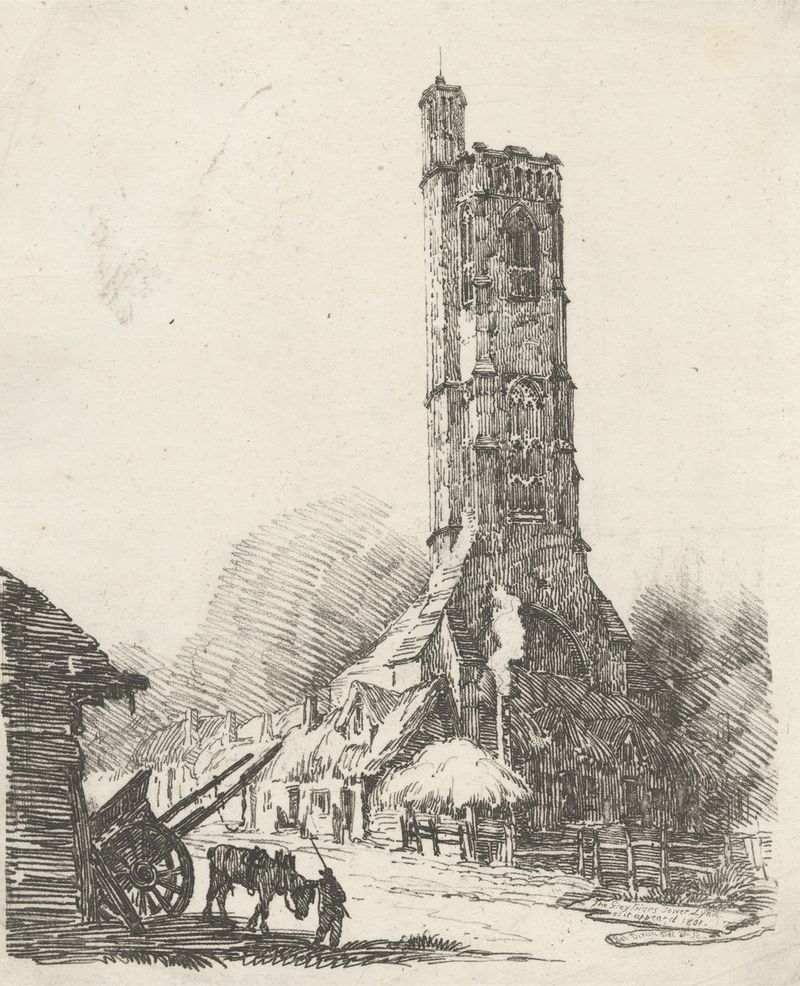
The Greyfriars Tower, Lynn, as it appeared 1801
Robert Dixon

Street with Buildings
Robert Dixon
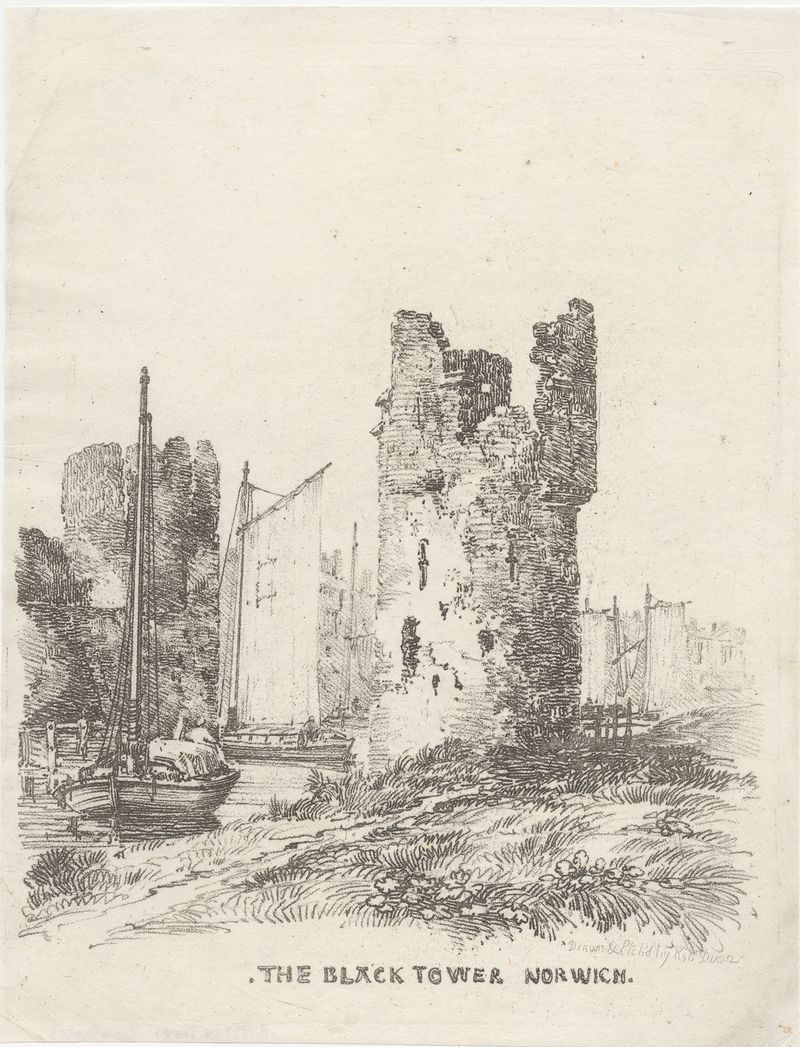
The Black Tower Norwich
Robert Dixon

Figures Outside the Boar Inn
Robert Dixon
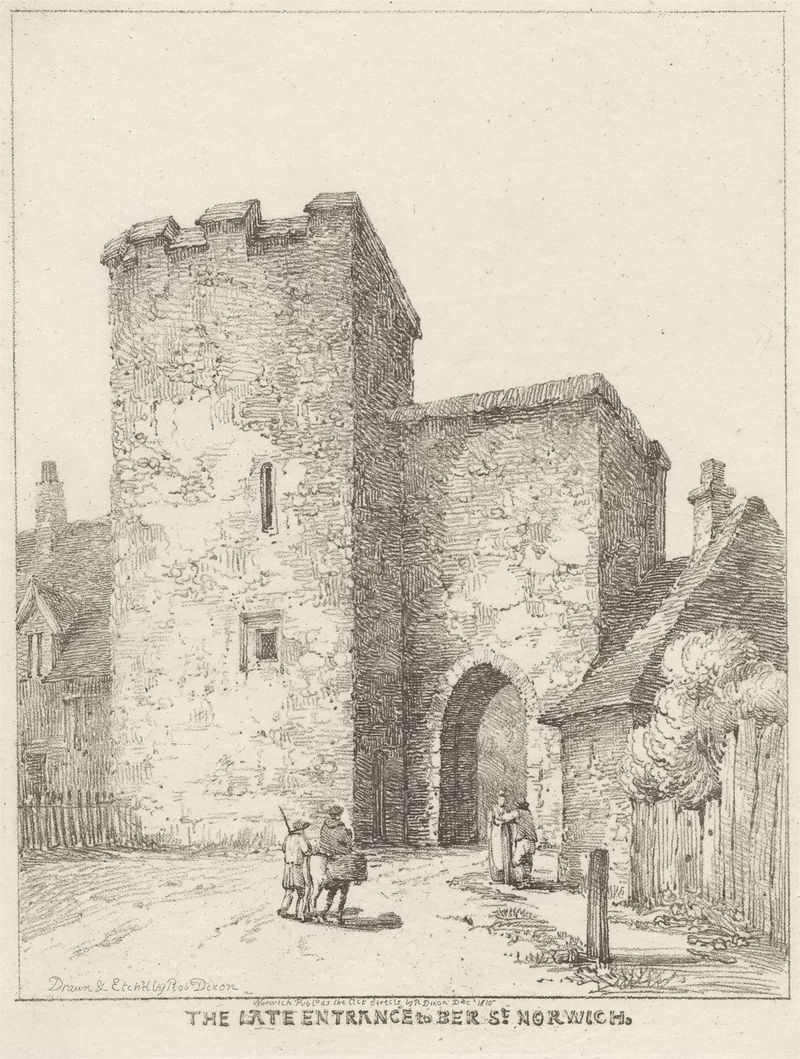
The Late Entrance to Ber Street, Norwich
Robert Dixon
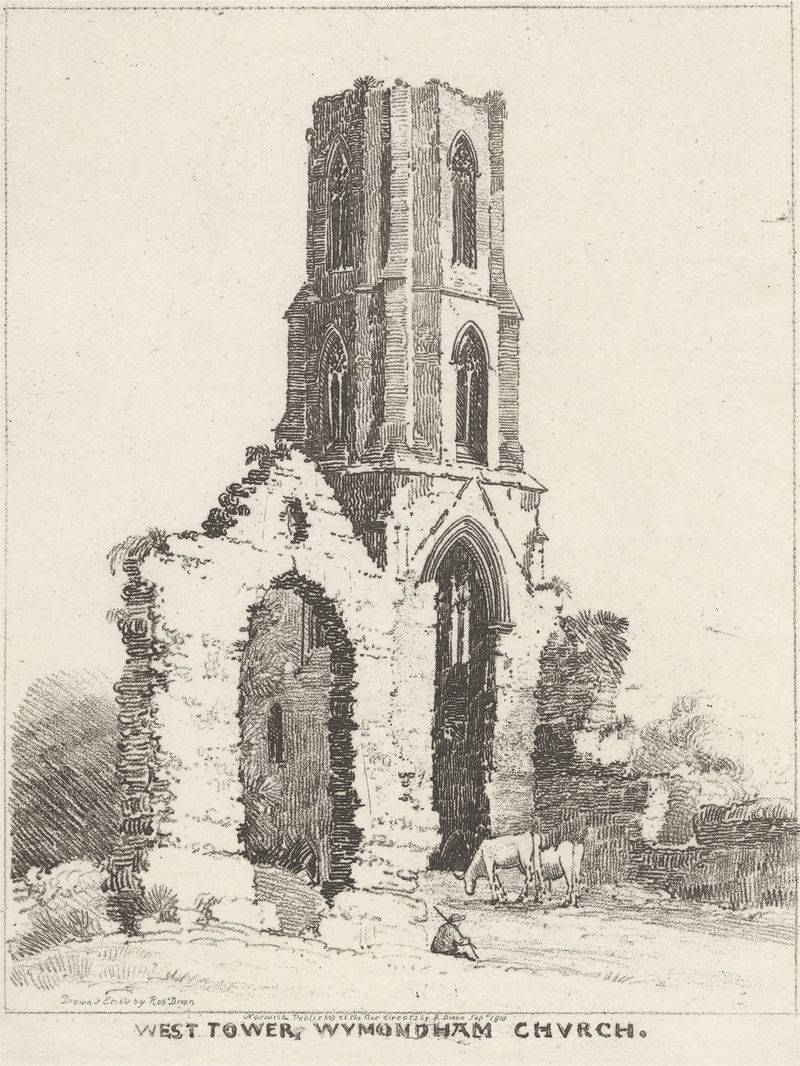
West Tower, Wymondham Church
Robert Dixon

Norwich from the gravel pits
Robert Dixon





