
The Greyfriars Tower, Lynn, as it appeared 1801 — History & Facts
What if beauty was never meant to be finished? In The Greyfriars Tower, Lynn, as it appeared 1801, the spirit of rebirth weaves through the ruins, inviting reflection on decay and renewal. Focus on the central tower, rising stoically amidst a tapestry of wild, untamed nature. Notice how the soft greens and browns envelop the structure, almost as if nature is reclaiming what was once a testament to human endeavor. The muted palette conveys a sense of nostalgia, while the meticulous detail of the stonework contrasts with the organic forms around it, guiding your eyes to the interplay of solidity and fragility. Hidden meanings emerge as you explore the painting's layers.
The juxtaposition of the crumbling tower against the vibrant greenery speaks to the cyclical nature of existence—how beauty can be found even in decay, how life persists amid remnants of the past. The sky, painted in gentle hues, suggests hope; perhaps the tower stands as a symbol of resilience, a reminder that even structures of stone can undergo transformation. During the years 1810-1811, Robert Dixon was creating this work in the context of a burgeoning Romantic movement, which emphasized emotional depth and the sublime in nature. This period followed the Industrial Revolution's onset, when artists began to reflect on the contrasts between nature and human influence.
Dixon's focus on historical architecture against a backdrop of rejuvenated nature captures the essence of an era wrestling with change and permanence.
More Artworks by Robert Dixon
Browse all →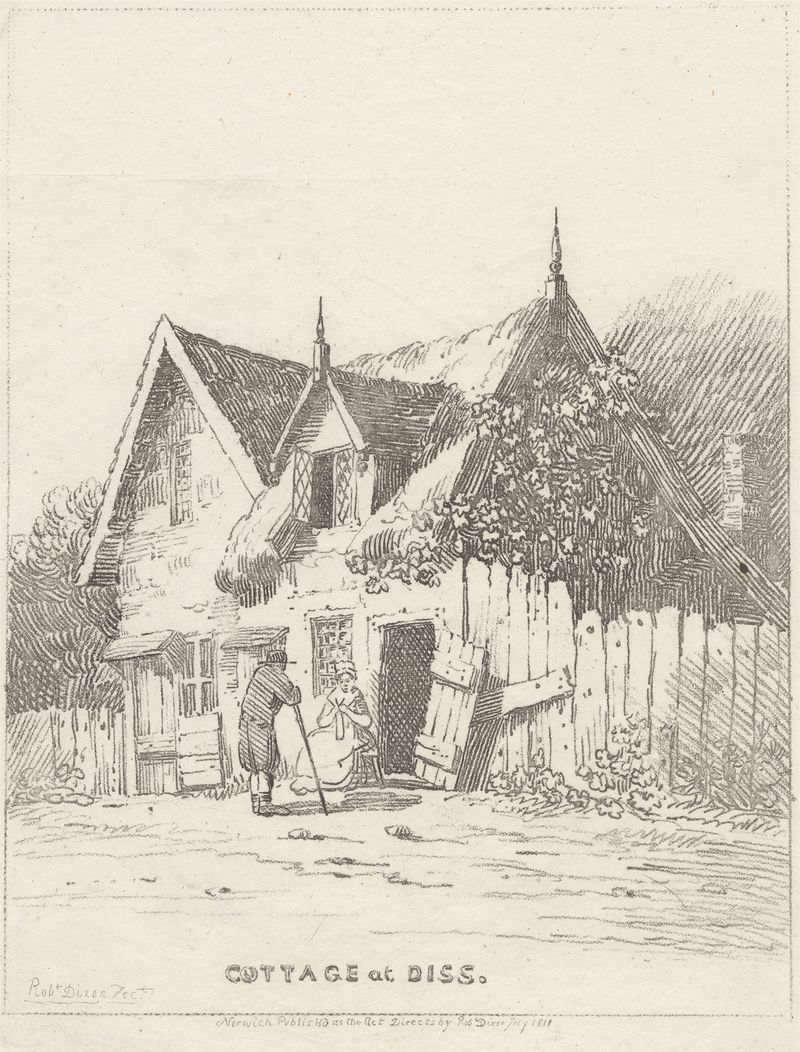
Cottage at Diss
Robert Dixon
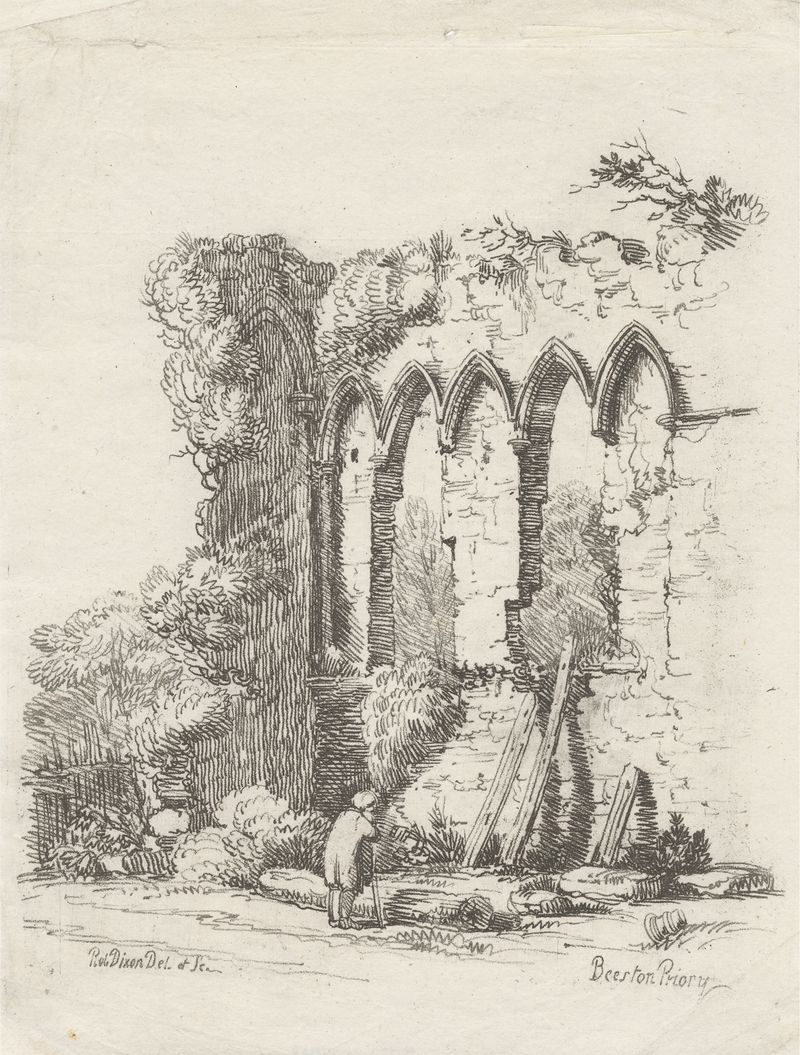
Beeston Priory, Beeston Regis
Robert Dixon

Street with Buildings
Robert Dixon
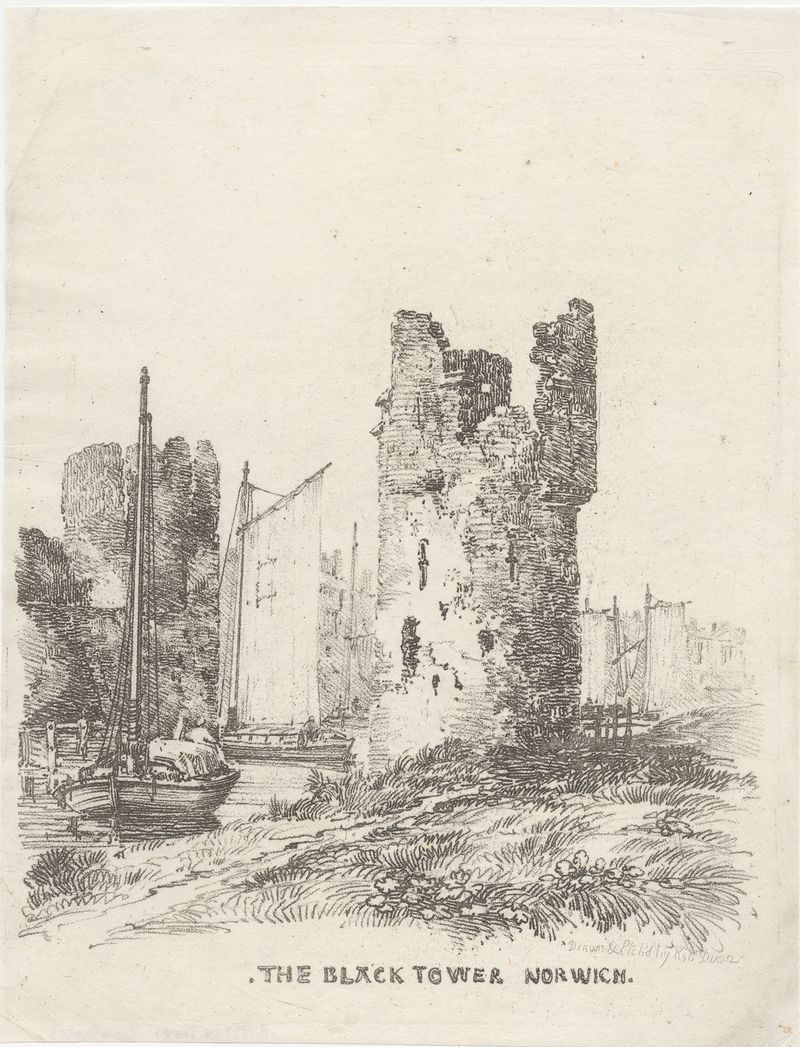
The Black Tower Norwich
Robert Dixon

Figures Outside the Boar Inn
Robert Dixon
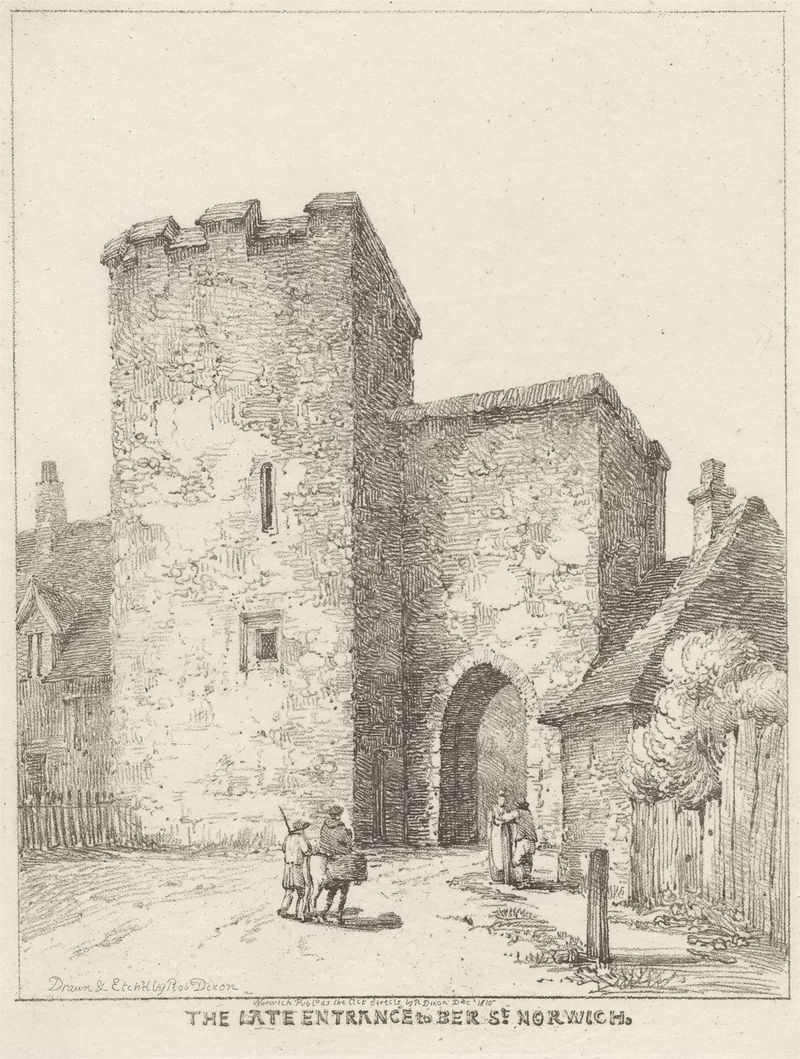
The Late Entrance to Ber Street, Norwich
Robert Dixon
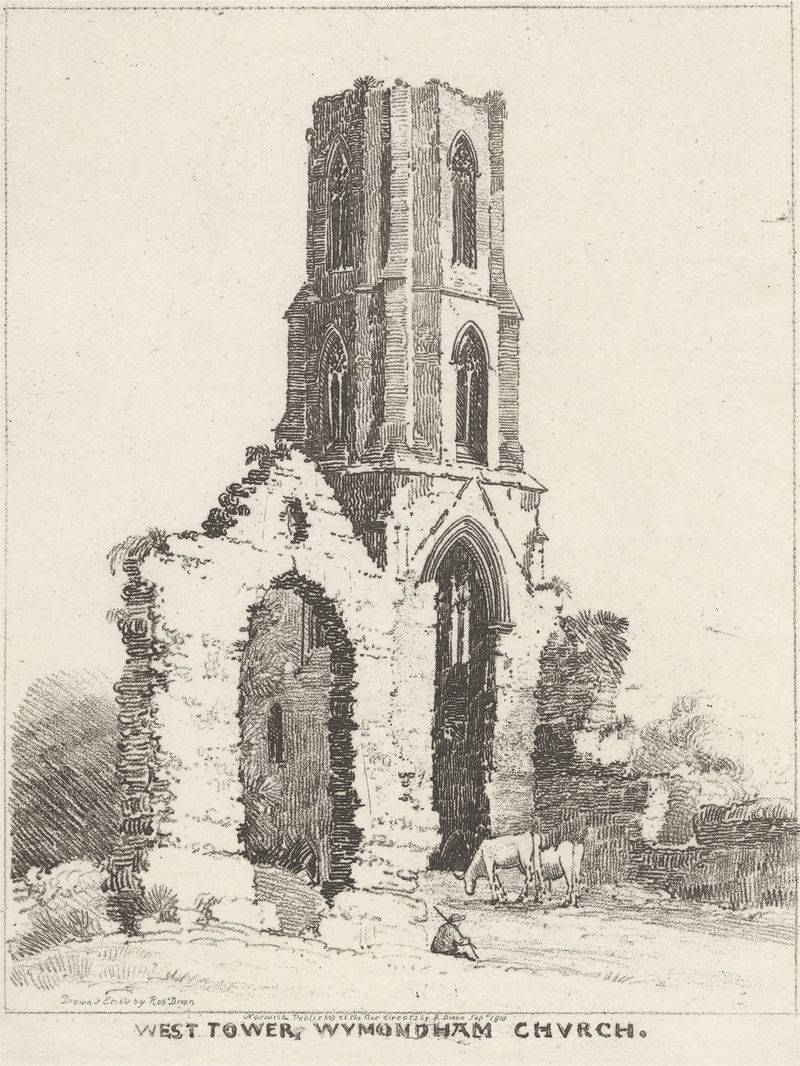
West Tower, Wymondham Church
Robert Dixon

Norwich from the gravel pits
Robert Dixon

Sketch at Mulbarton
Robert Dixon
More Architecture Art
Browse all →
The statue of Liberty
Frédéric Auguste Bartholdi

View of Houses in Delft, Known as ‘The Little Street’
Johannes Vermeer

View of Houses in Delft, Known as ‘The Little Street’
Johannes Vermeer

The Cathedral in Rouen. The portal, Grey Weather
Claude Monet

The yellow house
Vincent van Gogh

The Church in Auvers-sur-Oise, View from the Chevet
Vincent van Gogh