
The Black Tower Norwich — History & Facts
In the quiet stillness of The Black Tower Norwich, violence is not depicted; it simmers beneath the surface. The stark imagery of the tower stands sentinel against the backdrop, a monument both imposing and contemplative. Each brushstroke holds the tension of unspoken histories, revealing an artist’s struggle with the weight of existence. Look to the left and notice how the tower looms over the landscape, its dark silhouette stark against the dim twilight sky.
The chiaroscuro technique creates a dramatic interplay of light and shadow, emphasizing the tower’s ominous presence. The muted palette of grays and blacks contrasts sharply with the softer hues of the surrounding foliage, compelling the viewer’s gaze to linger on the structure that commands the scene. The deliberate brushwork adds texture and depth, inviting exploration of the nuances that lie within the image. As you gaze deeper, consider how the tower serves as a symbol of isolation and strength, embodying a historical moment fraught with conflict.
The surrounding trees, swaying gently in the breeze, whisper of change and the passage of time, revealing an underlying tension between nature and human creation. Dixon captures a moment that feels both timeless and ephemeral, eliciting a sense of foreboding that speaks to the violence inherent in both history and memory. Created between 1810 and 1811, during a period of significant change in Europe, this work reflects Robert Dixon's engagement with the romantic landscape tradition. He painted at a time when the Industrial Revolution began reshaping society, and tensions ran high between progress and preservation.
Dixon sought to encapsulate the conflicting emotions around such transformations, rendering a moment of unease that resonates through the ages.
More Artworks by Robert Dixon
Browse all →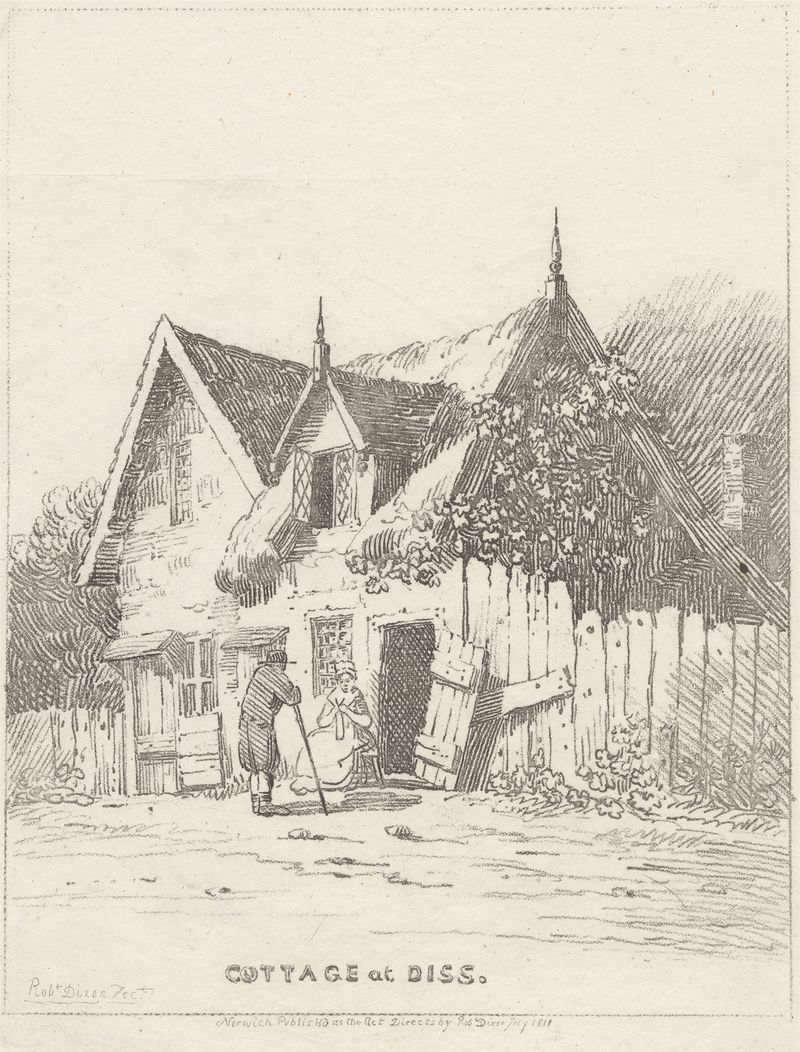
Cottage at Diss
Robert Dixon
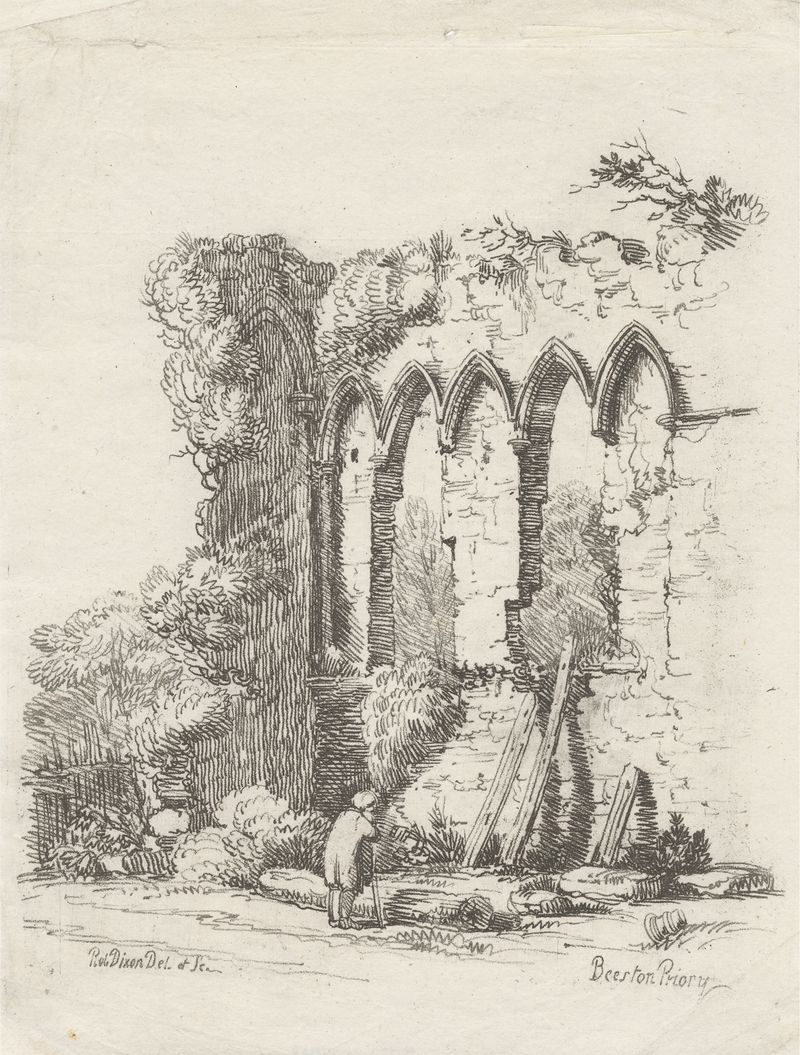
Beeston Priory, Beeston Regis
Robert Dixon
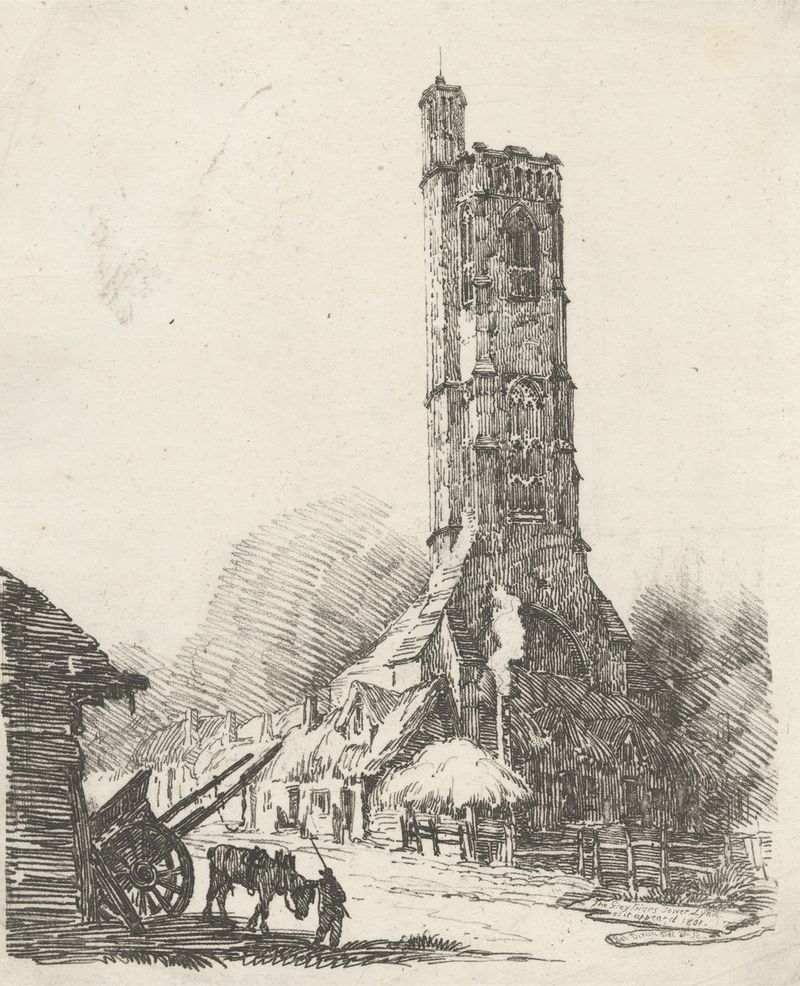
The Greyfriars Tower, Lynn, as it appeared 1801
Robert Dixon

Street with Buildings
Robert Dixon

Figures Outside the Boar Inn
Robert Dixon
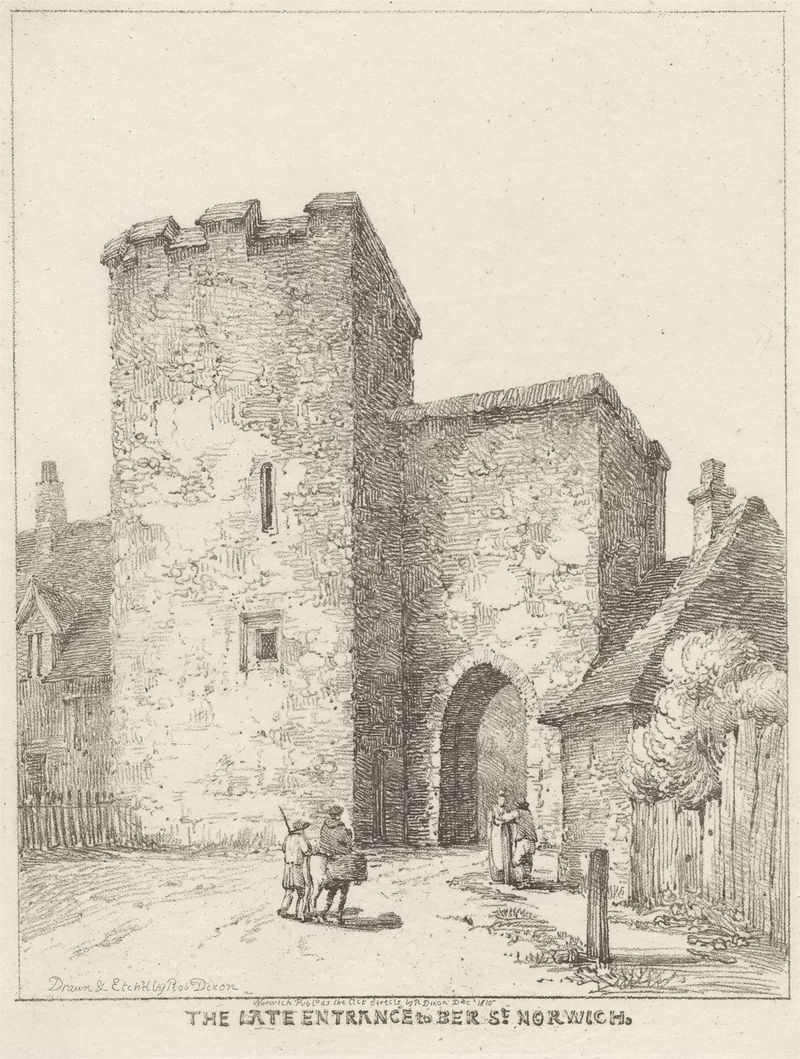
The Late Entrance to Ber Street, Norwich
Robert Dixon
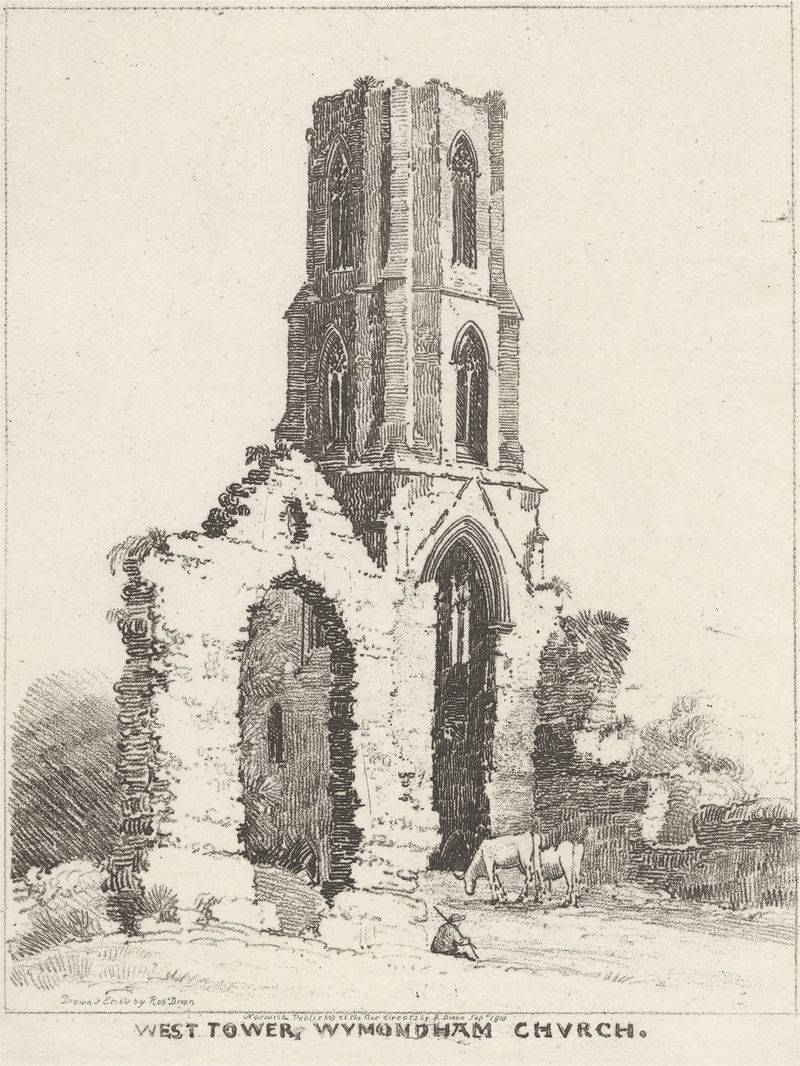
West Tower, Wymondham Church
Robert Dixon

Norwich from the gravel pits
Robert Dixon

Sketch at Mulbarton
Robert Dixon





