
Notre-Dame de Paris — History & Facts
In the stillness of a Parisian dusk, the intertwined essences of stone and water merge, inviting contemplation. Here, reflections ripple across the Seine, whispering tales of a city both timeless and transient, where shadows play against the fabric of memory. Look to the lower right, where the water’s surface shimmers with soft hues of blue and gold. The arching silhouette of Notre-Dame rises majestically against the evening sky, its intricate details seemingly illuminated by the fading sunlight.
The brushwork reveals an intimate connection between the natural world and architectural grandeur, as fluid strokes evoke the gentle motion of the river while simultaneously grounding the cathedral amidst the urban landscape. Beneath this tranquil exterior lies a profound duality — the steadfastness of the ancient stone juxtaposed with the ephemeral nature of water. Each glance at the painting oscillates between past and present, a meditation on permanence versus fluidity. Noteworthy are the subtle shifts in color that suggest the passage of time, inviting viewers to ponder what lies beneath the surface of memory, both personal and collective. In 1854, Jongkind created this work during a formative period in his artistic journey, living in Paris where he engaged with both the Romantic and Impressionist movements.
The bustling city was undergoing rapid change, reflecting the tension between tradition and modernity. This piece encapsulates his quest to blend these influences, capturing the essence of a city whose spirit is as much about the stories held in its landmarks as it is about the ever-changing reflections upon its rivers.
More Artworks by Johan Barthold Jongkind
Browse all →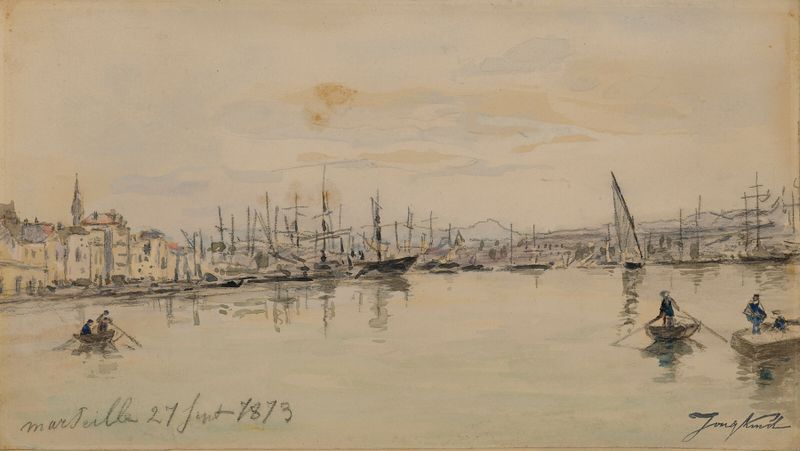
Le Port de Marseille
Johan Barthold Jongkind

Canal Saint-Martin
Johan Barthold Jongkind

Countryside near Brezins, between Grenoble and Vienne
Johan Barthold Jongkind

Notre-Dame vue du quai de la Tournelle
Johan Barthold Jongkind

Environs de Grenoble
Johan Barthold Jongkind

Clair de lune à Overschie (environs de Rotterdam)
Johan Barthold Jongkind

Port de Honfleur
Johan Barthold Jongkind
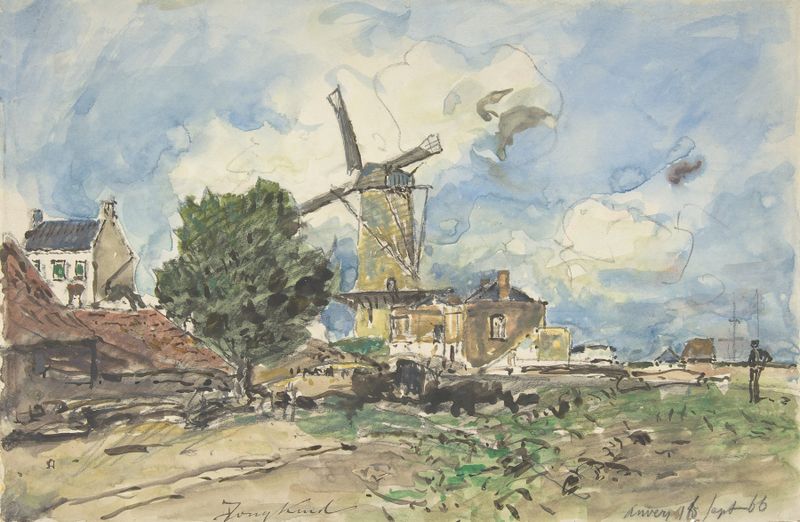
Wind Mill at Antwerp
Johan Barthold Jongkind

Le Havre
Johan Barthold Jongkind

The Church of Overschie
Johan Barthold Jongkind





