Nymphs Bathing — History & Facts
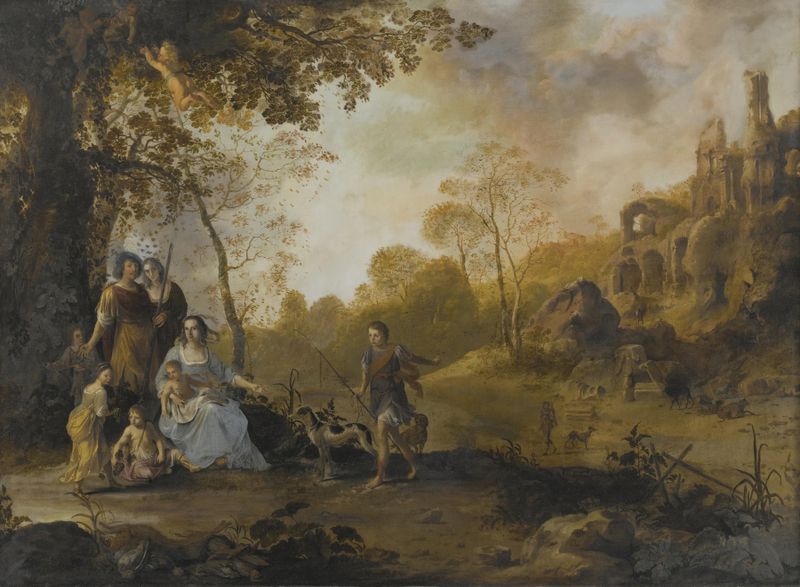
Could beauty survive in a century of chaos? In Nymphs Bathing, the answer resonates within a serene tableau that feels both timeless and vulnerable. The painting draws us into a delicate world of ephemeral charm that contrasts starkly with the turmoil of the mid-17th century—a moment where nature and femininity converge in harmony. Look to the center of the canvas, where graceful nymphs emerge from the water, their alabaster skin gleaming under dappled sunlight. The play of light creates a tapestry of soft reflections rippling across the water’s surface, inviting the viewer to appreciate the gentle nuances of the figures' postures.
Notice how the lush greenery surrounds them, framing the scene with deep greens and earthy browns, enhancing the vibrancy of their soft hues. Each detail, from the delicate curls of hair to the glistening droplets on their skin, speaks to the artist's refined technique and deep appreciation for beauty. The juxtaposition of innocence and the untamed aspects of nature unveils an emotional tension within the piece, where desire and purity intertwine. The nymphs’ leisurely bathing hints at a fleeting joy in an era steeped in conflict and uncertainty.
This delicate moment captures the essence of a world that yearns for peace, a sanctuary from the chaos beyond the frame—an invitation to ponder the fragility of beauty amidst life's tumult. Painted around 1650, this artwork emerged during a time when Dirck van der Lisse was navigating the shifting art scene of the Dutch Golden Age. The period was marked by a transition towards genre painting, yet he chose to explore themes of myth and beauty, reflecting not only his personal vision but also the collective longing for serenity during an era riddled with social and political upheaval. This blend of classic themes within a contemporary context makes the piece a compelling reflection of its time.