
Oaks — History & Facts
In the aftermath of upheaval, the brush becomes a weapon, transcending mere aesthetics to confront the violence inherent in existence. Look to the foreground, where the gnarled roots of ancient oaks intertwine, their twisted forms evoking a struggle against the very earth they inhabit. Notice how the muted greens and browns create an atmosphere of solemnity, while flickering light dapples the leaves, casting fleeting shadows that whisper of both resilience and decay. The composition draws you in, inviting contemplation of the weight these trees bear—guardians of a landscape that has witnessed generations of conflict and peace alike. Amidst the serenity of nature, one senses a tension simmering beneath the surface; the oaks stand resolute against the backdrop of a world scarred by turmoil.
Their thick trunks symbolize strength in adversity, yet the surrounding emptiness hints at a loss—a reminder of lives uprooted. This juxtaposition of solidity and absence amplifies the emotional gravity of the piece, urging viewers to reflect on the violence that often shapes beauty. In 1920, at a time when Europe was reeling from the aftermath of World War I, the artist created this work in Poland, a nation grappling with its identity amid political struggle. Jabłczyński, influenced by the churning cultural currents, sought to capture not just the beauty of nature but its deeper, often painful connection to human experience.
His focus on the oak trees serves as an enduring metaphor for survival and the scars left by conflict, underscoring the duality of life in his time.
More Artworks by Feliks Jabłczyński
Browse all →
Villa Borgia in Rome
Feliks Jabłczyński

Mariensztat Street in Warsaw
Feliks Jabłczyński
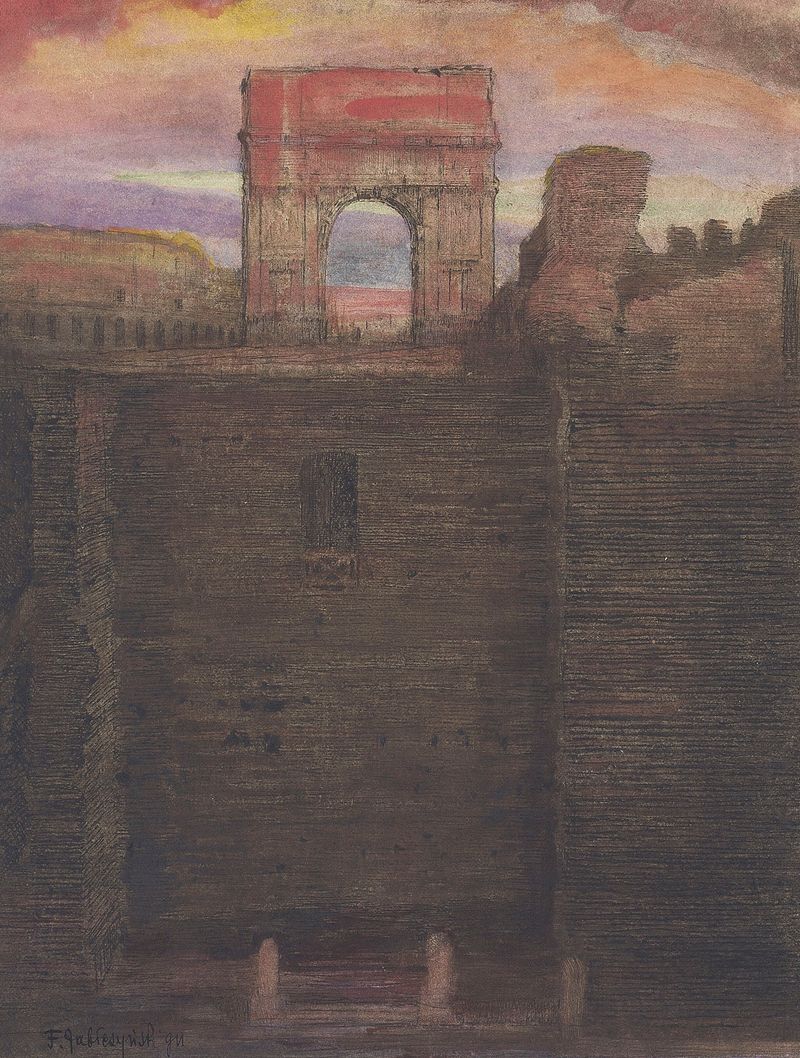
The House of Vestals and the Arch of Titus in the background
Feliks Jabłczyński
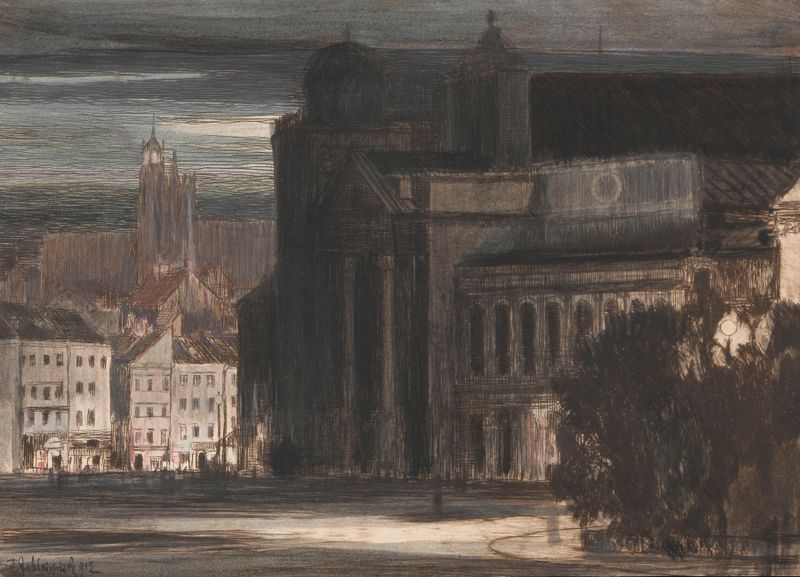
View of the Church of St. Anna and the Castle Square in Warsaw
Feliks Jabłczyński

Kaplica Boimów we Lwowie
Feliks Jabłczyński
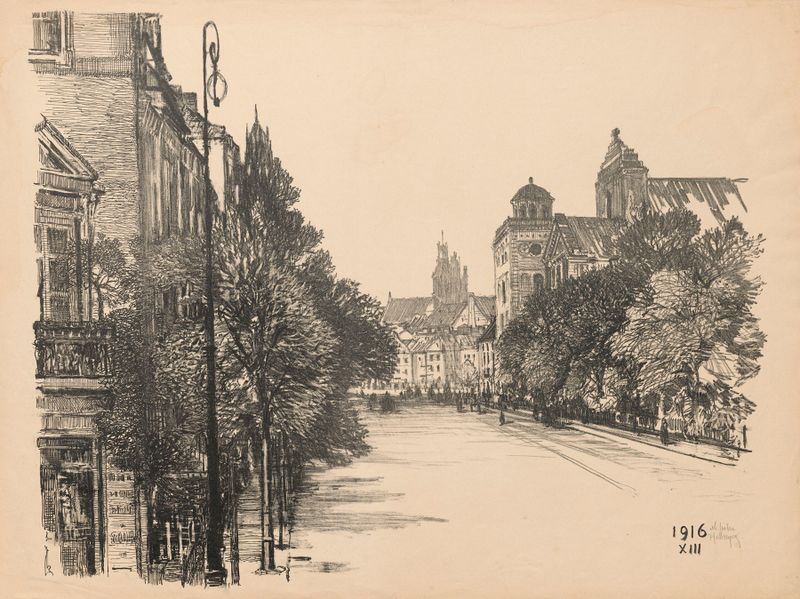
Krakowskie Przedmieście Street
Feliks Jabłczyński
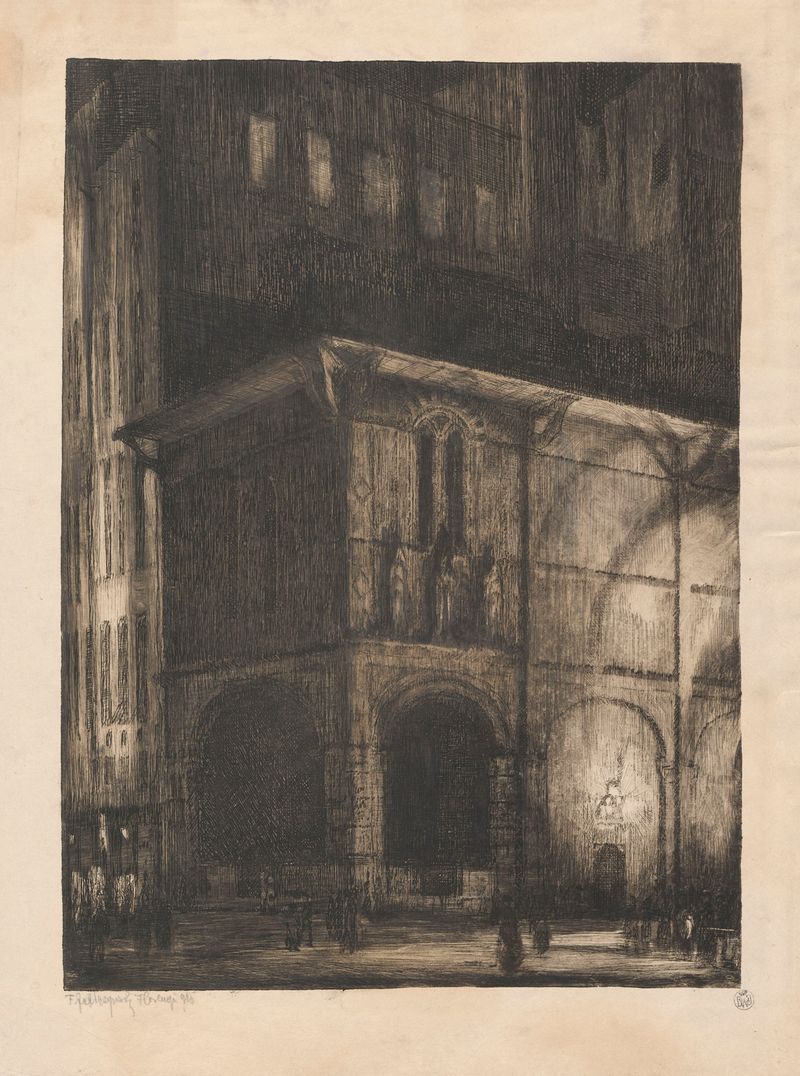
Florence
Feliks Jabłczyński
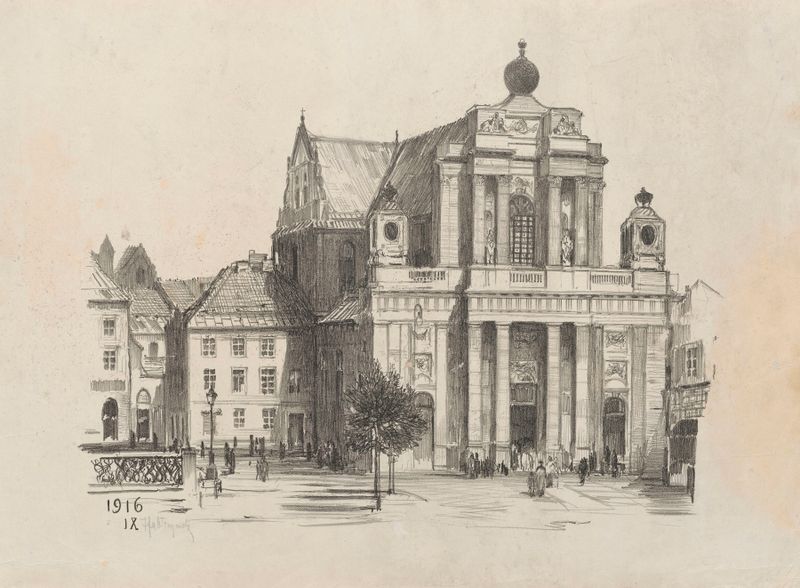
Carmelite Church.
Feliks Jabłczyński

The Visitation Sisters Church
Feliks Jabłczyński
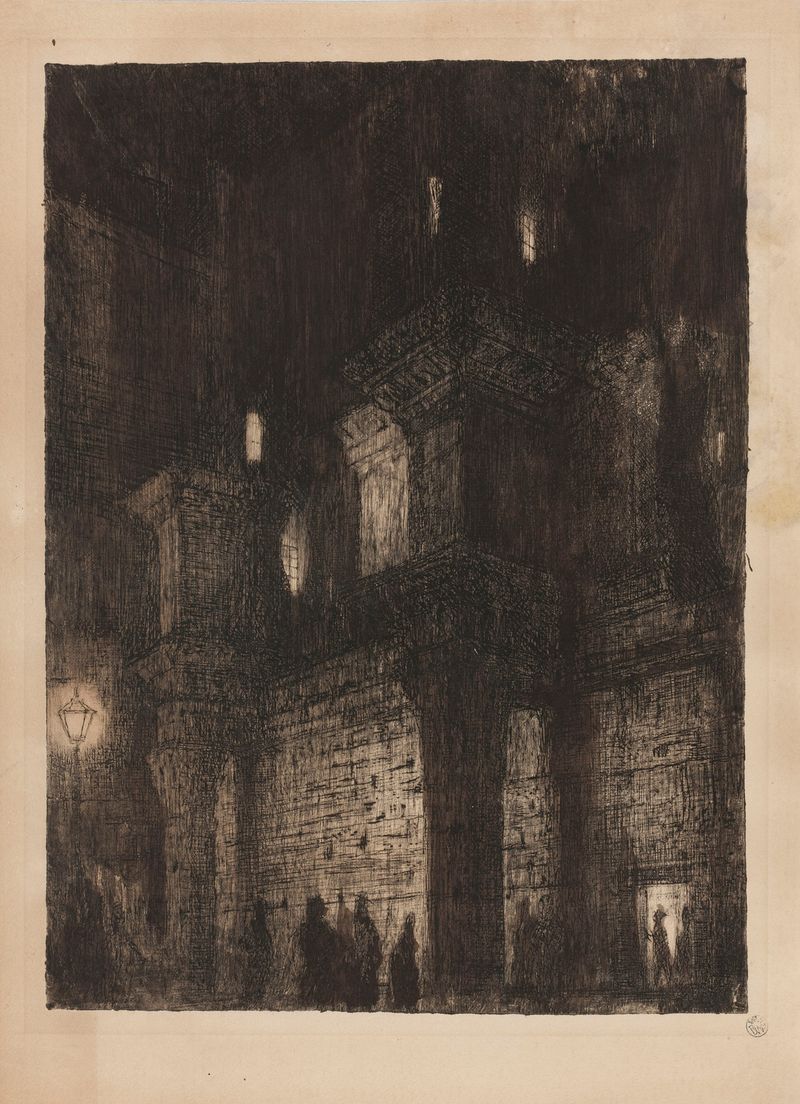
Forum Nervae
Feliks Jabłczyński





