Obersdorfi maastik — History & Facts
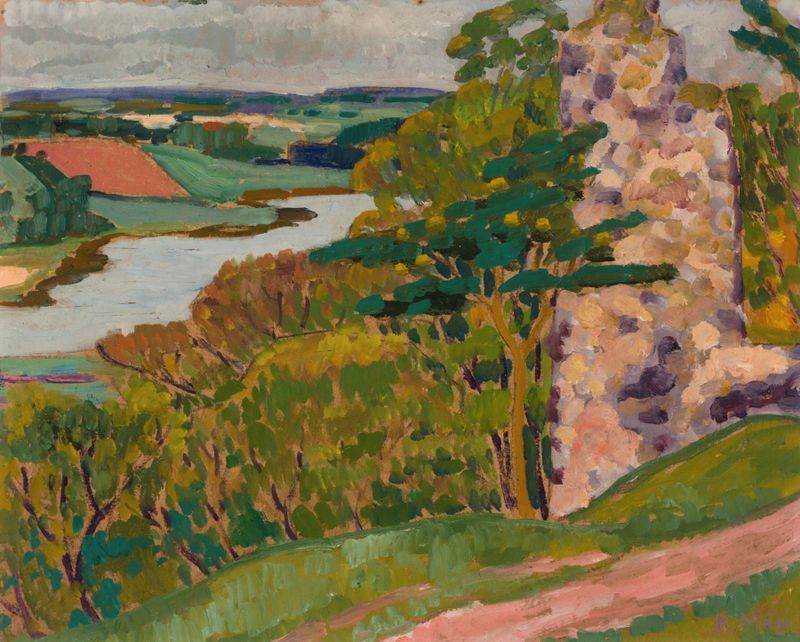
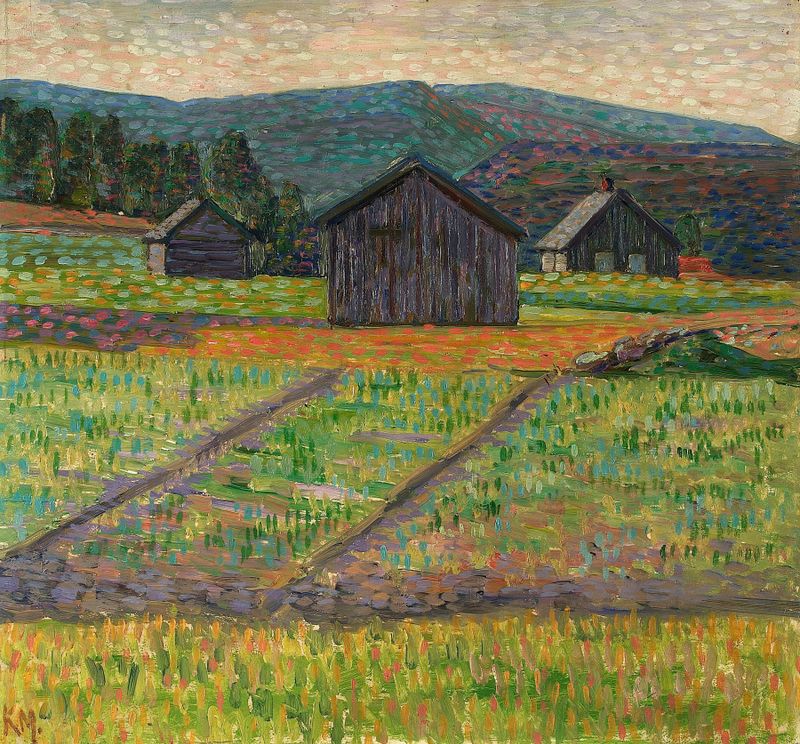
Who listens when art speaks of silence? In Obersdorfi maastik, the canvas vibrates with movement, yet it whispers softly, inviting the viewer to contemplate what lies beneath the serene surface. Look to the left at the rolling hills, where gentle swathes of green and gold cascade down like a tranquil wave. The brushwork is fluid, each stroke revealing a rhythm that dances across the landscape. The sky, painted in soft pastels, transitions from dusky blues to warm pinks, illuminated by the fading light of dusk.
Notice how the interplay of colors and brush techniques creates a sensation of depth, drawing your gaze toward the horizon, where the earth meets the sky in a perfect embrace. Yet beneath this exterior calm lies an emotional tension, a paradox of stillness and the pulse of life. The sporadic patches of vivid color suggest the presence of unseen movement—perhaps a breeze stirring the grass or the flutter of wings among the trees. This dichotomy invites reflection on the transient nature of peace, hinting at the vibrant life that ebbs and flows in the background of quiet moments, reminding us of the presence of change even in serenity. In 1922, Konrad Mägi painted Obersdorfi maastik during his time in Estonia, a period marked by a resurgence of national identity and a search for artistic expression amid political upheaval.
Amidst the shifting dynamics of the art world, he sought to capture the essence of the Estonian landscape, blending Impressionism with a unique local sensibility. His work reflects not only his personal vision but also a collective yearning for tranquility in a transforming world.