
Oct 9, 2007 L’île de Grenelle — History & Facts
The stillness of a moment can echo louder than the clamor of life, revealing the deep yearning that often dwells within us. In L’île de Grenelle, the artist captures a fleeting whisper of humanity’s intimate relationship with nature and each other. Look to the center of the canvas, where gentle ripples of water shimmer under a soft, diffused light. The delicate interplay of warm ochres and cool blues creates a serene atmosphere that invites contemplation.
The boats, rendered with careful precision, seem to float tranquilly against the backdrop of a quiet island, their presence harmonizing with the subtle details of the shoreline. Each brushstroke radiates an intention to connect the viewer to a world both familiar and elusive. Yet, beneath the tranquility lies a tension of longing—a bridge between the vibrancy of life and the stillness of solitude. The empty boats evoke a sense of absence, hinting at stories untold, as if the figures who once occupied them have slipped away into the silence.
This contrast between presence and void speaks to the human experience, where yearning often intertwines with the beauty of our surroundings. In 1898, while living in Paris, the artist embraced an artistic philosophy that celebrated the interplay of landscape and emotion. This period was marked by a rise in Impressionism, and Lepère drew inspiration from the natural beauty of the Seine. His work reflects the era's explorations of light and color, a visual poetry that captures both the world around him and the inner reflections of the soul.
More Artworks by Auguste Louis Lepère
Browse all →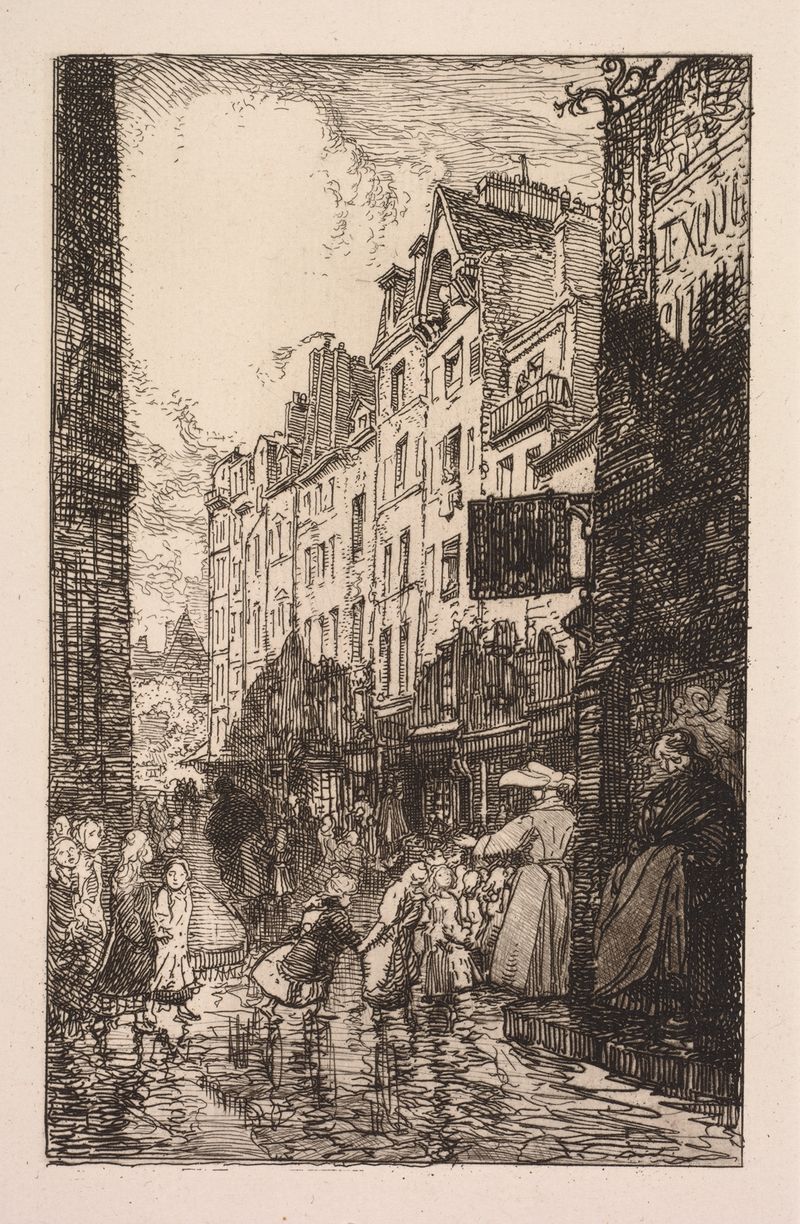
La Rue des Prêtres Saint-Séverin
Auguste Louis Lepère
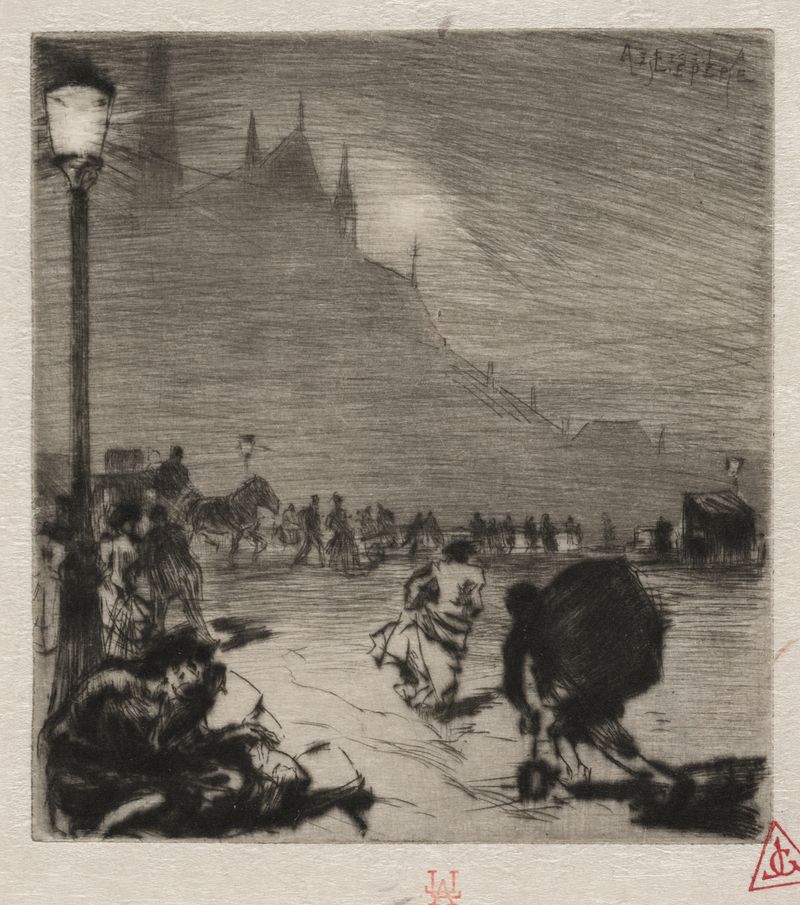
Au Coin du Pont-aux-Doubles
Auguste Louis Lepère
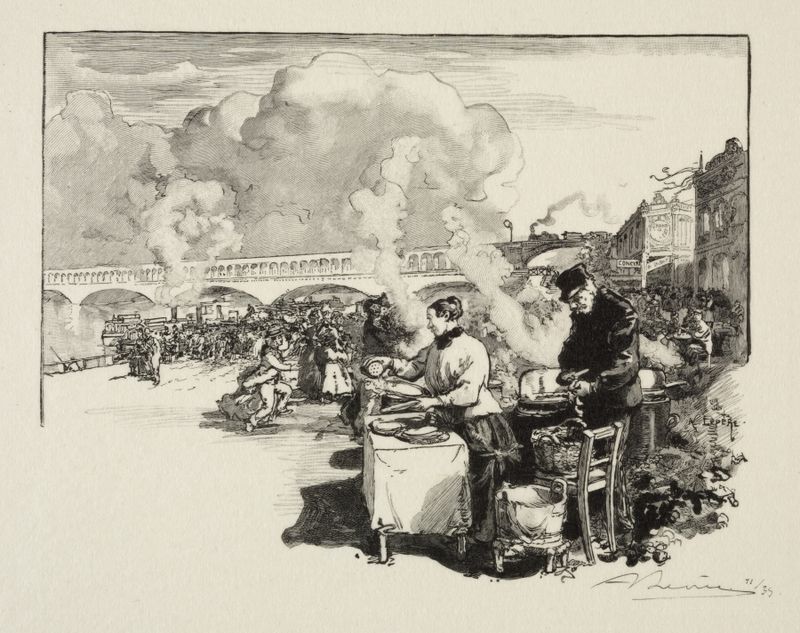
Debarcadère des bateaux-omnibus
Auguste Louis Lepère

La Seine, au quai de la Rapée
Auguste Louis Lepère
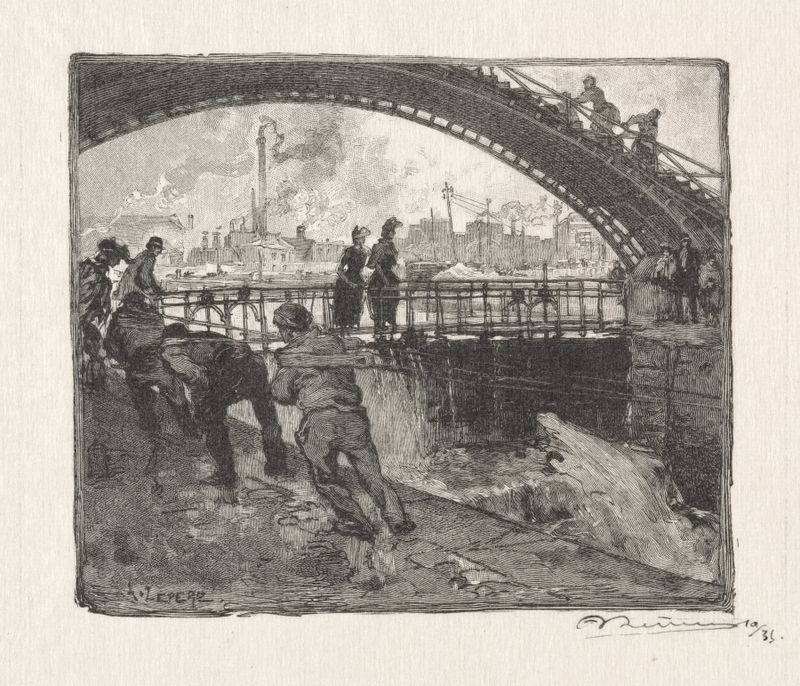
L’Ecluse du Canal St. Martin
Auguste Louis Lepère

Le Boulevard Montmartre, le Soir
Auguste Louis Lepère

Une Chasse au Mont Gérard
Auguste Louis Lepère
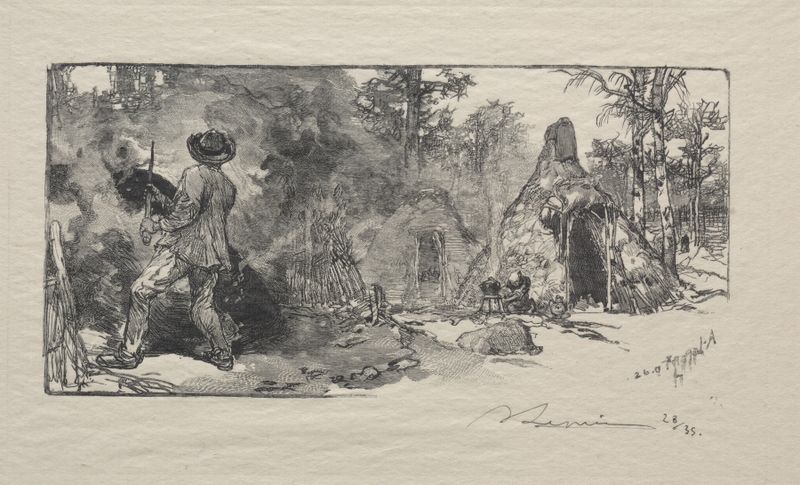
Les Charbonniere
Auguste Louis Lepère
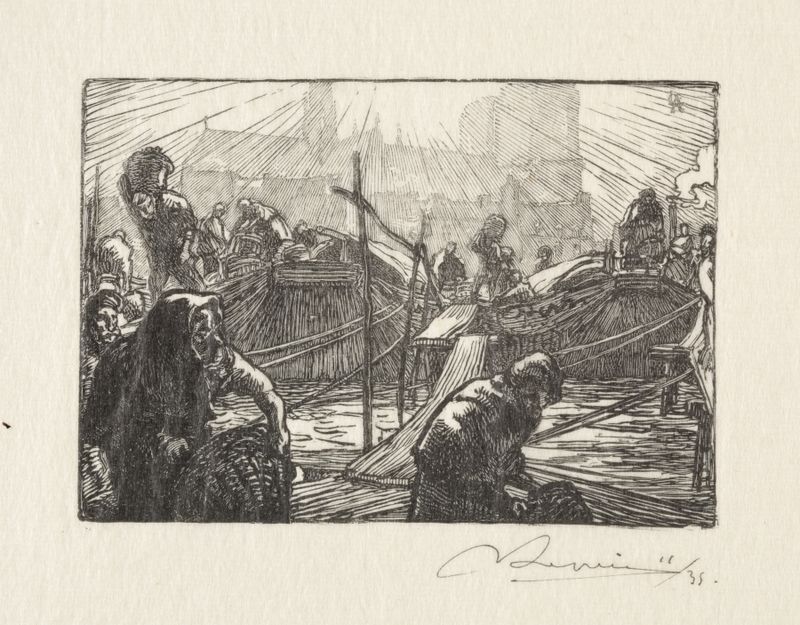
Notre Dame vue du Marché aux pommes
Auguste Louis Lepère

Le Palais des Arts Liberaux, Intèrieur
Auguste Louis Lepère





