
Ohne Titel (Haus in Wiese) — History & Facts
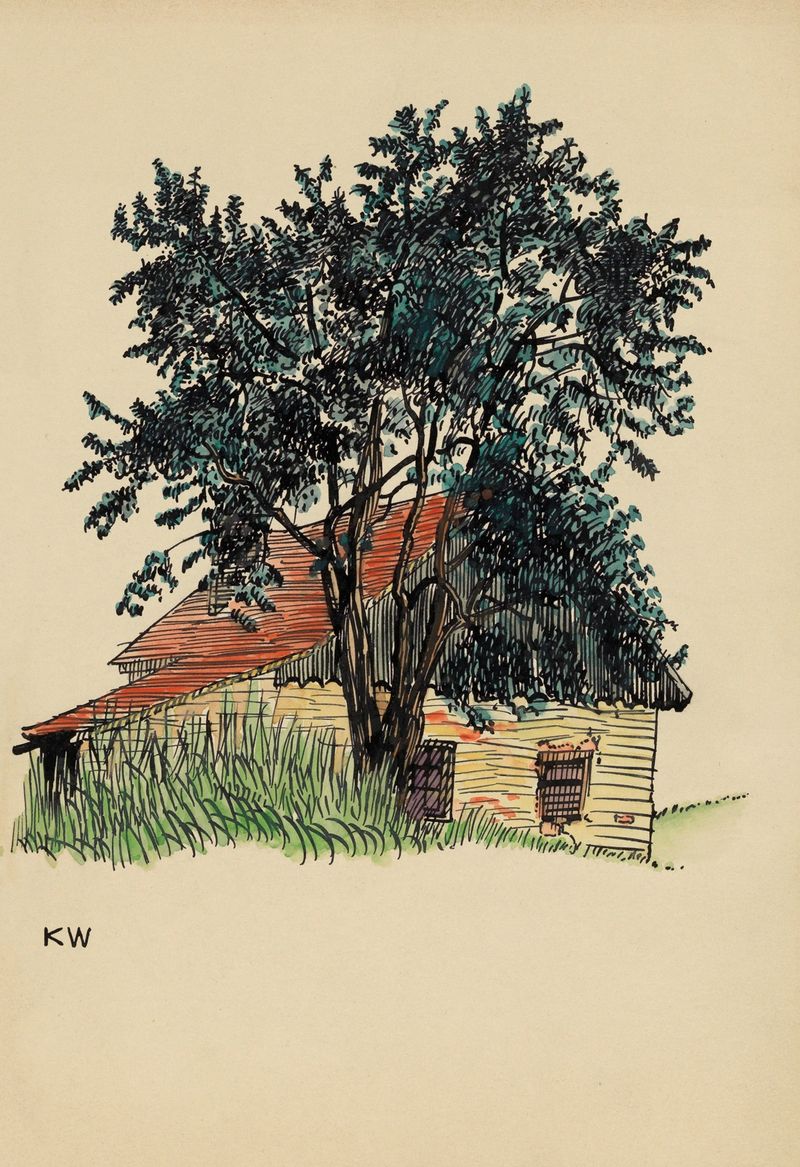
What transforms in the artist's hand is not merely pigment, but a world waiting to unfurl into life. In the quiet embrace of nature and architecture, the essence of rebirth resonates deeply. Look to the center of the canvas, where the modest structure stands against a backdrop of lush, verdant fields. The house, adorned in soft pastel tones, breathes warmth and familiarity, inviting the viewer to explore its tranquil surroundings.
Notice how the artist employs gentle brushstrokes, allowing the colors to blend seamlessly, mimicking the natural harmony of the landscape. The dappled light dances across the soft grass, creating a mosaic of shadow and brightness that accentuates the home’s resilience. As you delve deeper into the scene, contrast emerges between the solidity of the dwelling and the fluidity of the grass, whispering stories of growth and transformation. The humble house may symbolize security or shelter, yet it also hints at the fragility inherent in nature.
Here, the vibrant green fields burst with life, suggesting a cycle of renewal, while the muted tones of the structure hint at history and stability—a duality that emphasizes the perpetual dance of existence. Around 1924, the artist painted this piece amidst a post-World War I landscape, where Europe was grappling with loss and a yearning for new beginnings. During this time, Wiener was exploring the intersection of nature and architecture, seeking to capture the fragility and beauty of everyday life. This period marked a transition in the art world, as artists began to embrace more personal and emotional themes, reflecting the desire for hope and rebirth amid the chaos of their times.
More Artworks by Karl Wiener
Browse all →
Österreich
Karl Wiener

Vorstadt VII
Karl Wiener

Der Turm
Karl Wiener

Ohne Titel (Häuser mit Holzscheune)
Karl Wiener

Kopfstudie, aus; ‘Profile’, 10 Blätter, Graz XV
Karl Wiener

Steinberg
Karl Wiener
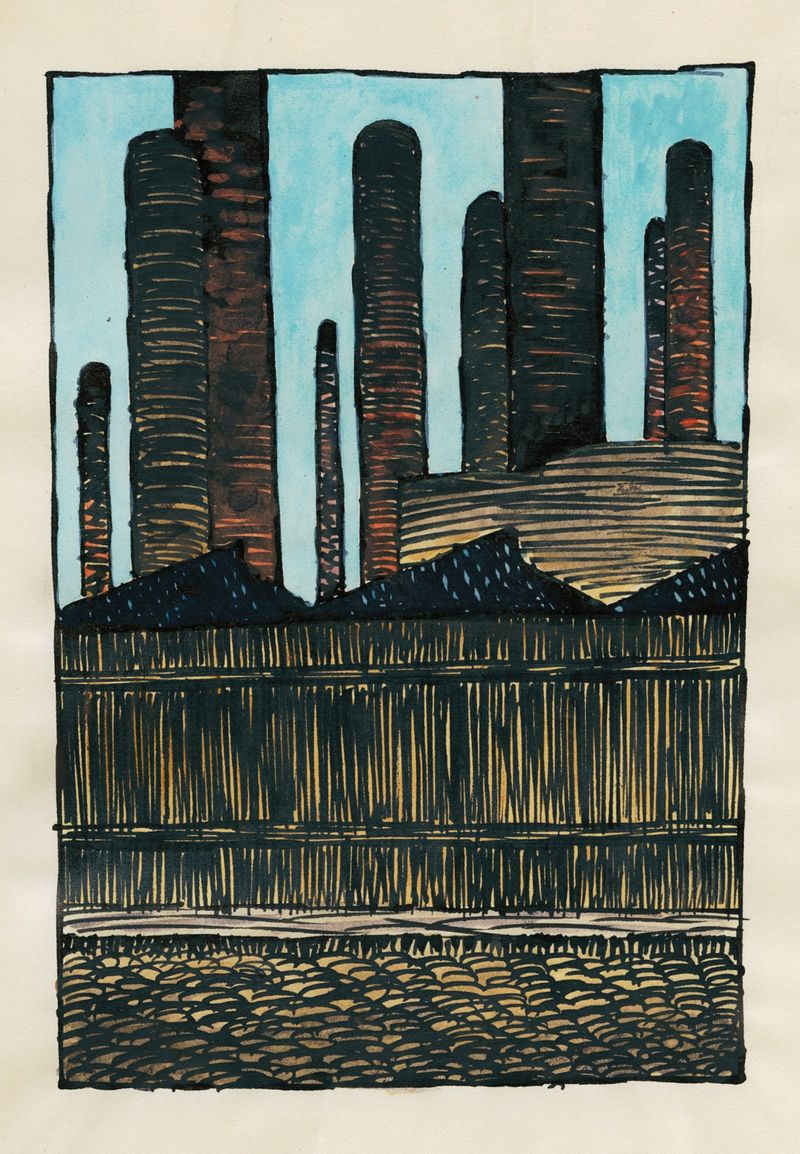
Kopfstudie, aus; ‘Profile’, 10 Blätter, Graz XIV
Karl Wiener

Ohne Titel (Bauernhaus mit Vorgarten)
Karl Wiener
Ohne Titel (Bauernhaus)
Karl Wiener
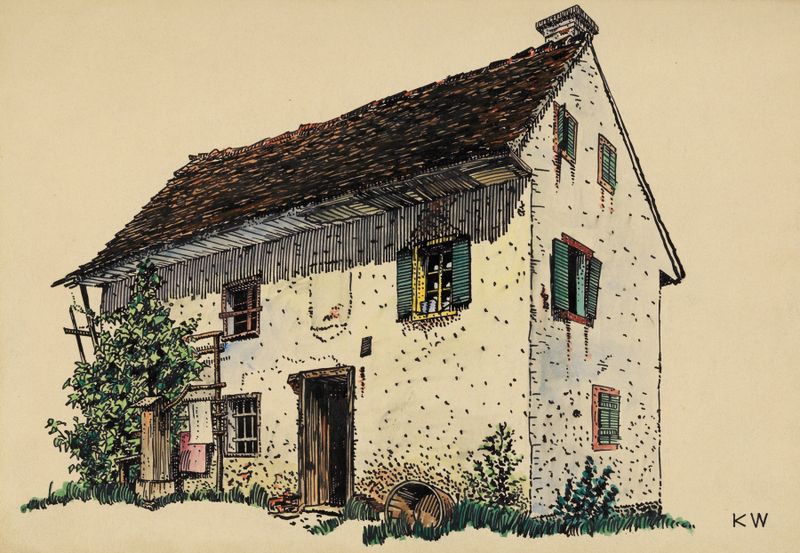
Ohne Titel (Bauernhaus)
Karl Wiener
More Architecture Art
Browse all →
The statue of Liberty
Frédéric Auguste Bartholdi

View of Houses in Delft, Known as ‘The Little Street’
Johannes Vermeer

View of Houses in Delft, Known as ‘The Little Street’
Johannes Vermeer

The Cathedral in Rouen. The portal, Grey Weather
Claude Monet

The yellow house
Vincent van Gogh

The Church in Auvers-sur-Oise, View from the Chevet
Vincent van Gogh