
Ohne Titel (Scheune mit Stroh) — History & Facts
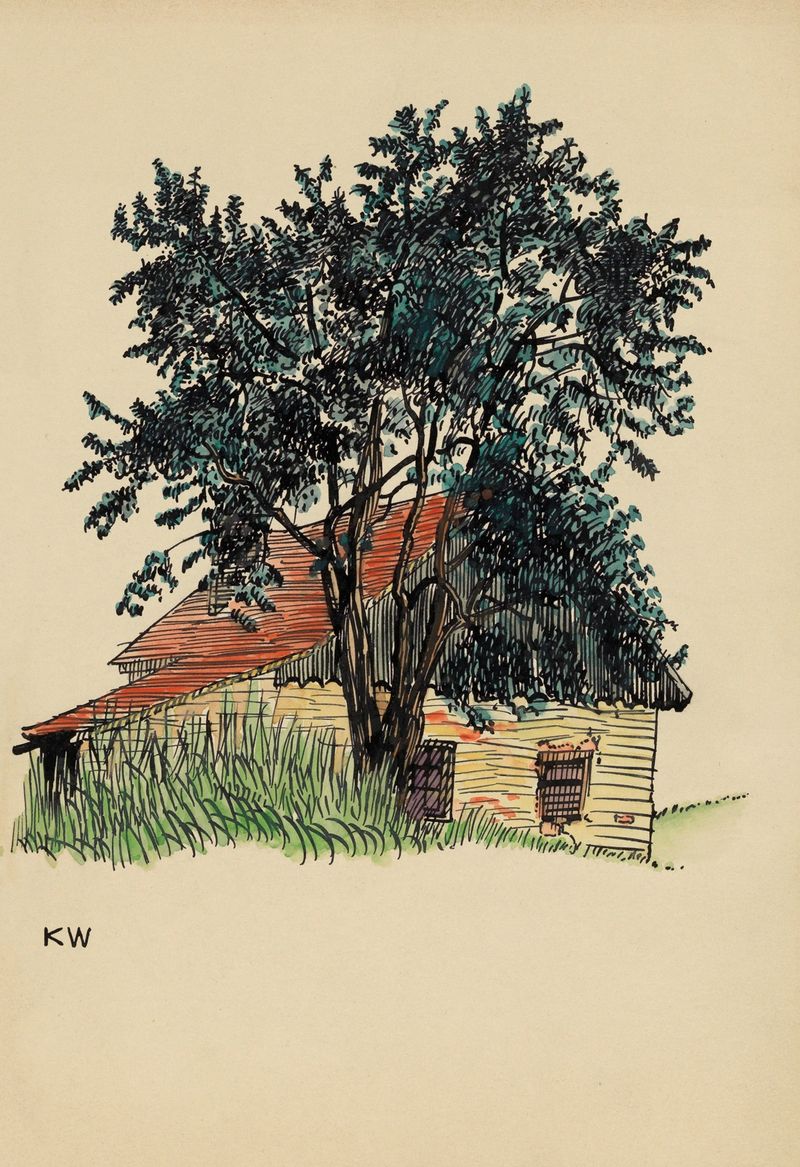
Can paint confess what words never could? In Ohne Titel (Scheune mit Stroh, the chaos of life is distilled into an arresting visual symphony, urging the viewer to confront the unspoken truths beneath the surface. Look to the center, where the barn stands robust yet weathered, its wooden beams hinting at a history written in the knots and grains of the timber. The play of light across the straw, rendered in warm yellows and earthy browns, creates a tactile quality that draws you in. Notice how the shadows whisper secrets in the corners, amplifying the sense of stillness juxtaposed against the potential for disarray lurking just beyond the edges of the canvas. Here lies a tension between order and chaos, as the composition teeters on the brink of collapse yet remains steadfast.
The vibrant strokes of color pulse with energy, hinting at the wildness of nature and the unpredictable rhythms of rural life. Each brushstroke feels deliberate, capturing both the beauty and harshness of existence, inviting viewers to reflect on their own narratives woven through layers of complexity. In the early 1920s, during a transformative era in Central Europe, Ohne Titel (Scheune mit Stroh) emerged from the hands of Karl Wiener while he was navigating personal and artistic reinvention. As post-World War I disillusionment swept through society, artists like Wiener began to use their mediums to grapple with the tumultuous reality around them, creating works that resonated deeply with the chaos of their times.
More Artworks by Karl Wiener
Browse all →
Österreich
Karl Wiener

Vorstadt VII
Karl Wiener

Der Turm
Karl Wiener

Ohne Titel (Häuser mit Holzscheune)
Karl Wiener

Kopfstudie, aus; ‘Profile’, 10 Blätter, Graz XV
Karl Wiener

Steinberg
Karl Wiener
Kopfstudie, aus; ‘Profile’, 10 Blätter, Graz XIV
Karl Wiener

Ohne Titel (Bauernhaus mit Vorgarten)
Karl Wiener
Ohne Titel (Bauernhaus)
Karl Wiener
Ohne Titel (Bauernhaus)
Karl Wiener





