
Olympia — History & Facts
Could a single brushstroke hold eternity? Olympia, a striking work by Carl Rottmann, invites us to consider the weight of time captured on canvas, a fleeting moment rendered eternal through vivid colors and careful composition. Focus your gaze on the sweeping landscape, where the gentle undulation of hills meets the distant horizon. Observe how the sky blurs from deep cerulean to soft pastels, reflecting both dawn and dusk, a metaphor for life’s inexorable passage. The meticulous brushwork in the foreground draws you into the lush foliage, each leaf a testament to Rottmann’s dedication to detail, while the figures, diminutive and serene, are enveloped in a world that feels both welcoming and distant. Within this idyllic scene lies an intricate interplay between nature and humanity.
The figures, seemingly at peace, evoke tranquility, yet their smallness against the grandeur of the landscape highlights the transient nature of existence. The lush greenery represents fertility and potential, contrasting with the expansive sky that suggests a vast, unknowable future. This tension between man and nature captures the essence of time, urging us to reflect on our place within it. Rottmann painted Olympia between 1836 and 1838 during his time in Italy, a period that significantly influenced his artistic vision.
The Romantic movement’s emphasis on nature and emotion shaped his approach as he explored the interplay of light and color. While Europe was undergoing profound changes—revolutions and industrial advancements—this artwork serves as a quiet reminder of nature's enduring beauty amidst the chaos of human progress.
More Artworks by Carl Rottmann
Browse all →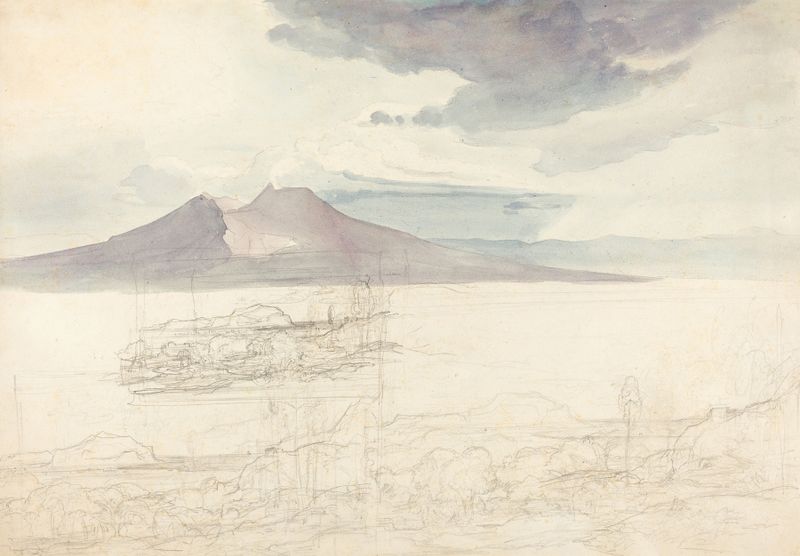
Panoramic Views of Vesuvius and Monte Pellegrino
Carl Rottmann
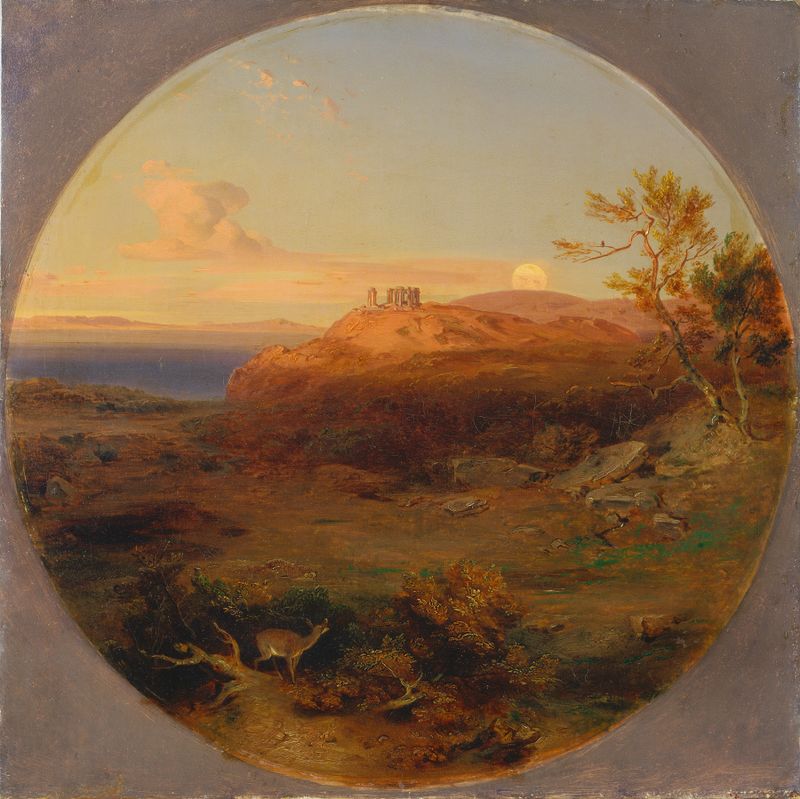
Greek Landscape on the Island of Aegina
Carl Rottmann
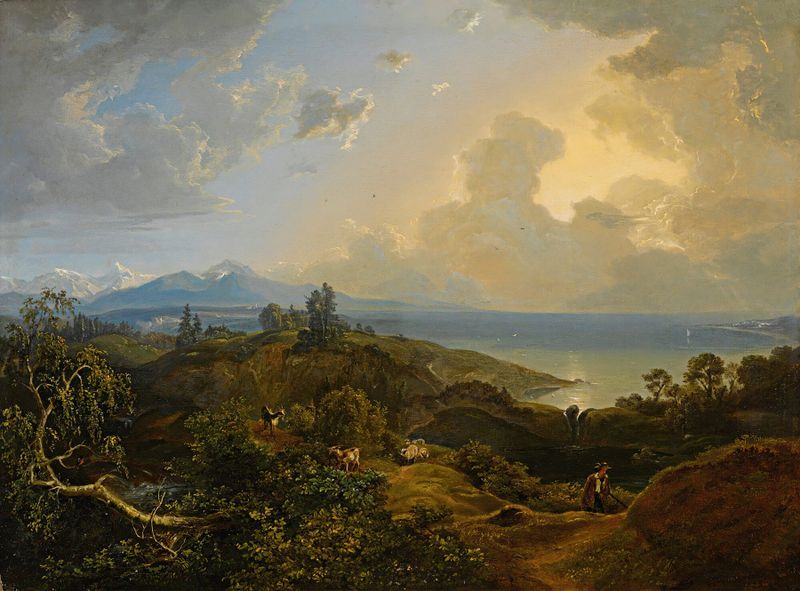
An extensive landscape in Bavaria or the Salzkammergut
Carl Rottmann
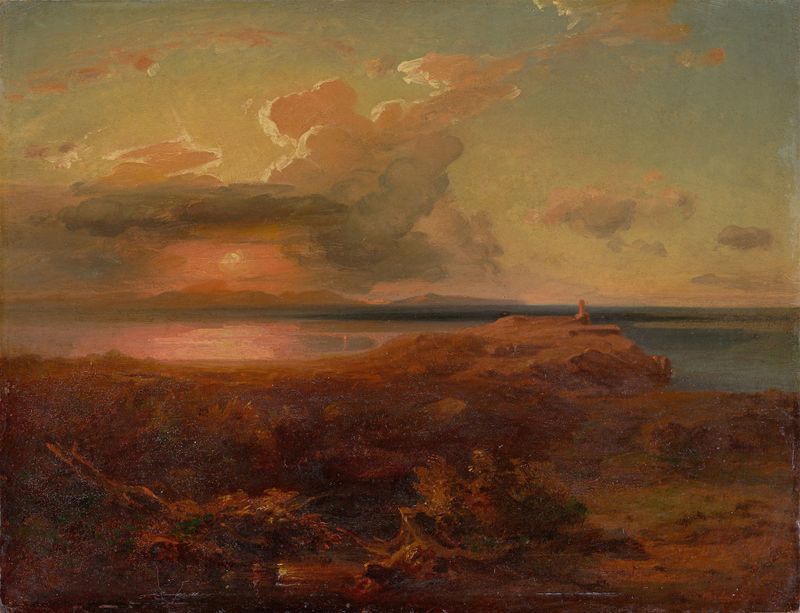
Ägina mit dem Apollotempel
Carl Rottmann

Landscape
Carl Rottmann

Die Insel Ägina mit den Ruinen des Hekatetempels
Carl Rottmann
Santorini (Thira)
Carl Rottmann

Athens, seen from the well
Carl Rottmann
Die Insel Delos
Carl Rottmann

Athens, seen from the well
Carl Rottmann





