
Santorini (Thira) — History & Facts
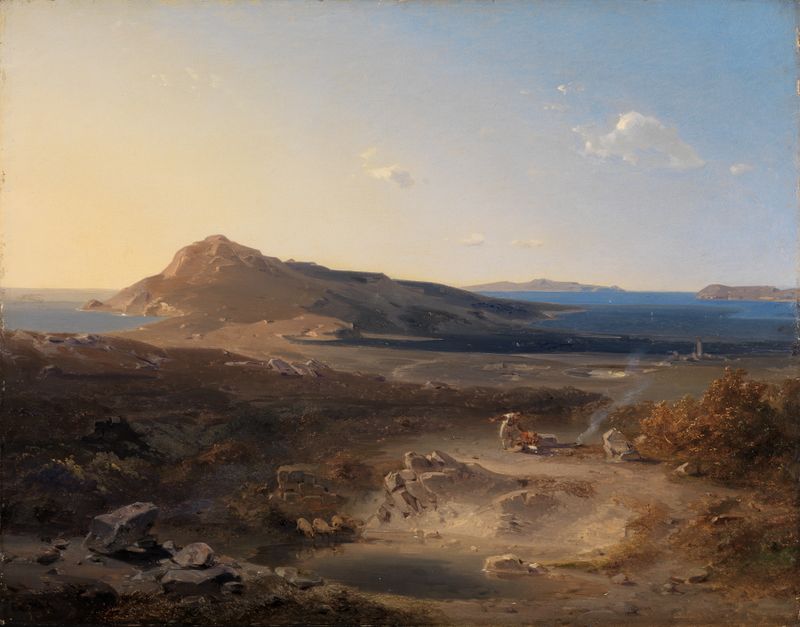
In the stillness of Santorini, the weight of existence hangs in the air, echoing the fragility of life itself. Towering cliffs embrace whitewashed houses, their facades gleaming under the relentless sun, reminiscent of memories too precious to fade. The azure sea stretches infinitely, a vast canvas of solitude, inviting reflection on what lies beneath the surface. Look to the foreground, where the brilliant white buildings punctuate the deep blue backdrop of the Aegean Sea.
Notice how Rottmann’s brushwork captures the harsh yet beautiful contrast between land and water, light and shadow. The play of sunlight highlights architectural details and softens the rugged cliffs, inviting the eye to wander and the mind to contemplate. As you explore further, the nuanced interplay of colors reveals a harmony that speaks to both the vibrant life and the stark reality of nature's dominion. Delve deeper into the emotional undertones present in the work—the juxtaposition of human existence against nature’s grandeur suggests a fleeting moment in time.
The serene landscape contrasts with the inevitable passage of time, hinting at mortality and the transience of beauty. Each element serves as a reminder that while life flourishes, it is also susceptible to the ravages of time, creating an atmosphere that is both tranquil and haunting. In 1843, Carl Rottmann painted this piece during a period marked by Romanticism’s influence on his work. His artistic journey took him to Greece, where he sought to fuse natural beauty with profound philosophical themes.
The art world was evolving, with a growing fascination for landscapes and the sublime, as artists began to explore deeper emotional connections within their surroundings. Rottmann's time in Santorini was pivotal, serving as a bridge between the idyllic and the impermanent.
More Artworks by Carl Rottmann
Browse all →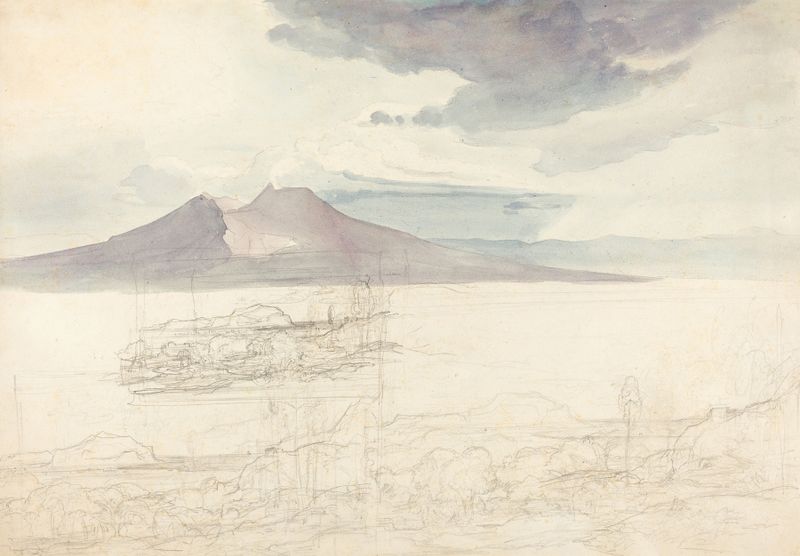
Panoramic Views of Vesuvius and Monte Pellegrino
Carl Rottmann
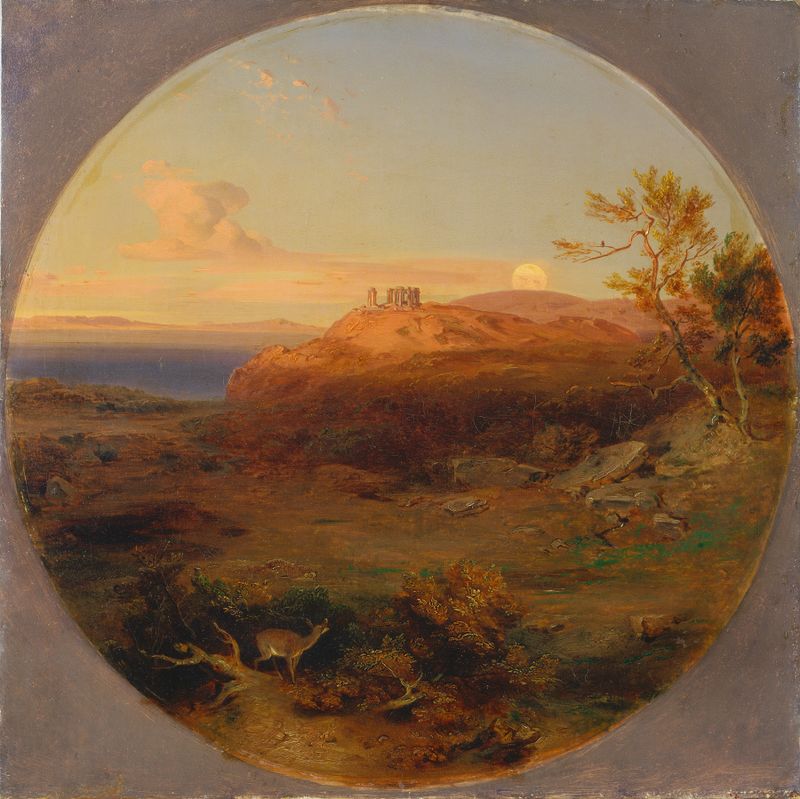
Greek Landscape on the Island of Aegina
Carl Rottmann
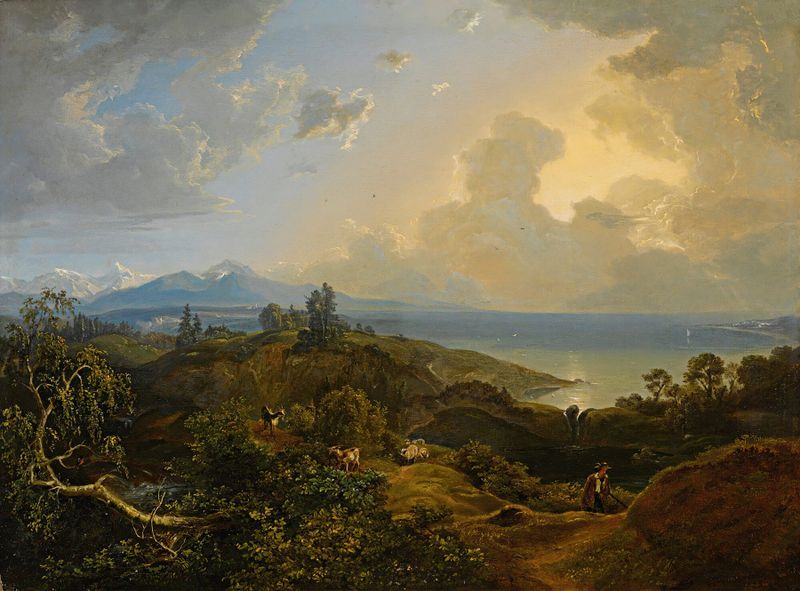
An extensive landscape in Bavaria or the Salzkammergut
Carl Rottmann
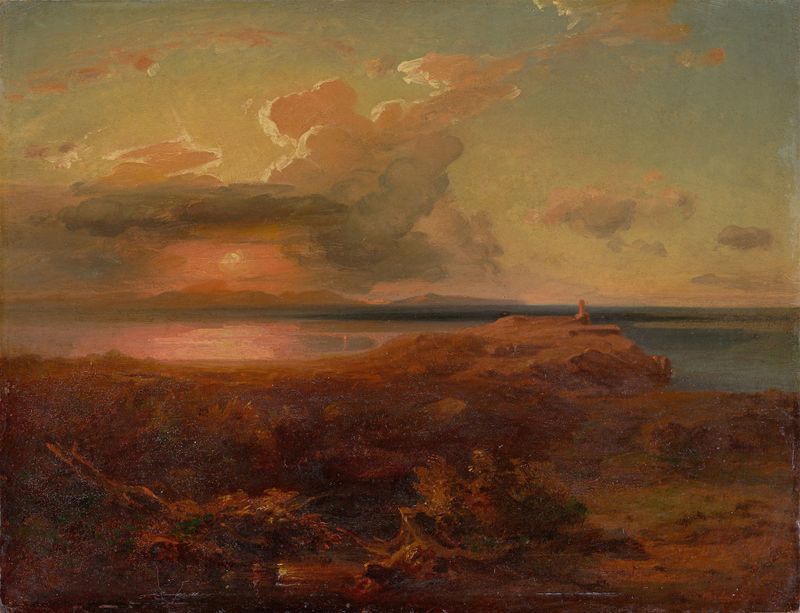
Ägina mit dem Apollotempel
Carl Rottmann

Landscape
Carl Rottmann

Die Insel Ägina mit den Ruinen des Hekatetempels
Carl Rottmann

Athens, seen from the well
Carl Rottmann
Die Insel Delos
Carl Rottmann

Olympia
Carl Rottmann

Athens, seen from the well
Carl Rottmann





