
Greek Landscape on the Island of Aegina — History & Facts
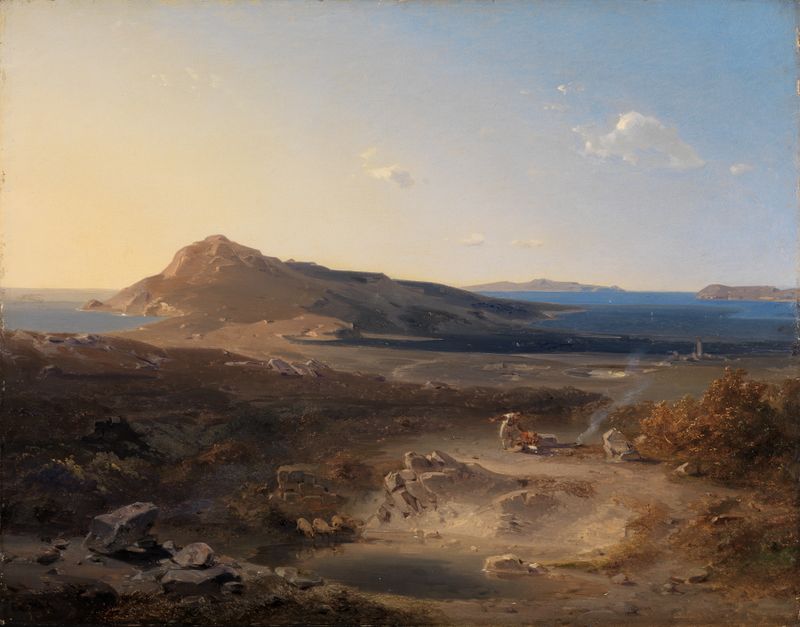
What if silence could speak through light? In the stillness of the Greek landscape, time seems to stretch, inviting contemplation and reverie. Focus first on the horizon where the sun's rays gently kiss the undulating hills, casting long shadows that dance across the canvas. The serene blues of the sky gradually transition into the warm ochres and greens of the land, hinting at an almost tactile warmth in the air. Notice how the artist employs soft brushwork to create a flowing sense of movement in the clouds—each stroke suggesting the fleeting passage of time, capturing a moment both ephemeral and eternal. Delve deeper into the interplay between light and shadow, revealing the emotional tension in this tranquil scene.
The lush greenery juxtaposed against the arid, sunlit earth evokes a sense of both abundance and scarcity, reflecting the duality of life itself. A solitary tree stands sentinel, perhaps representing resilience against the passage of time, while the distant mountains loom like ancient witnesses, grounding the viewer in both nature’s beauty and its transience. During the years 1842 to 1845, Rottmann painted this work during his period in Greece, where he was profoundly inspired by the landscape's timelessness. This era was marked by a revival of interest in classical themes in art, as well as a growing Romanticism that emphasized emotional experience and nature's sublimity.
Rottmann’s landscapes, including this one, resonate with a sense of place that reflects both his personal journey and the broader artistic movements of his time.
More Artworks by Carl Rottmann
Browse all →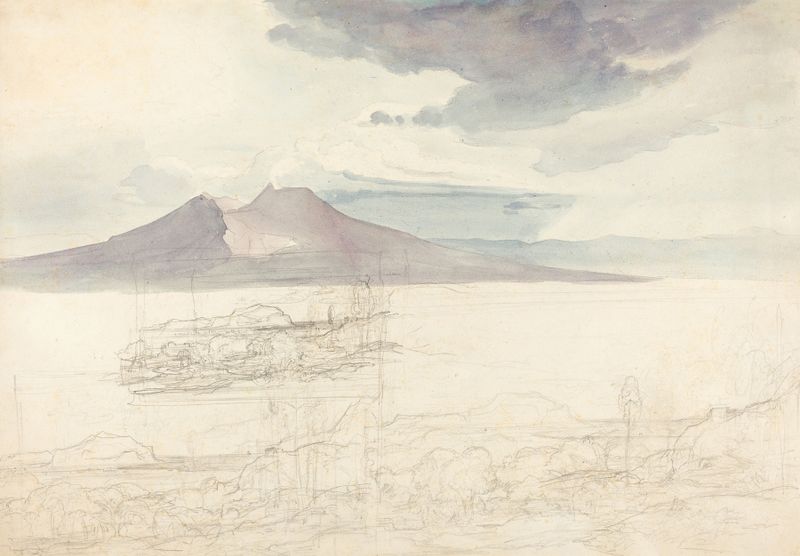
Panoramic Views of Vesuvius and Monte Pellegrino
Carl Rottmann
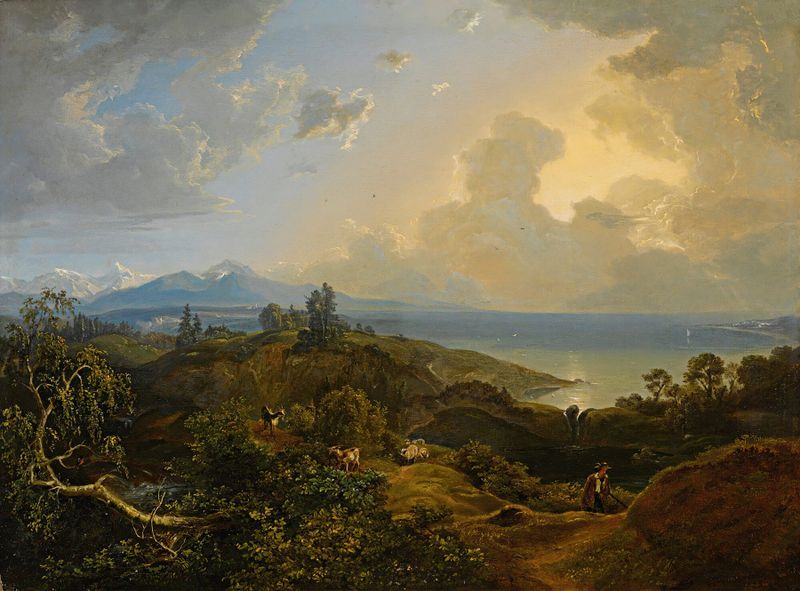
An extensive landscape in Bavaria or the Salzkammergut
Carl Rottmann
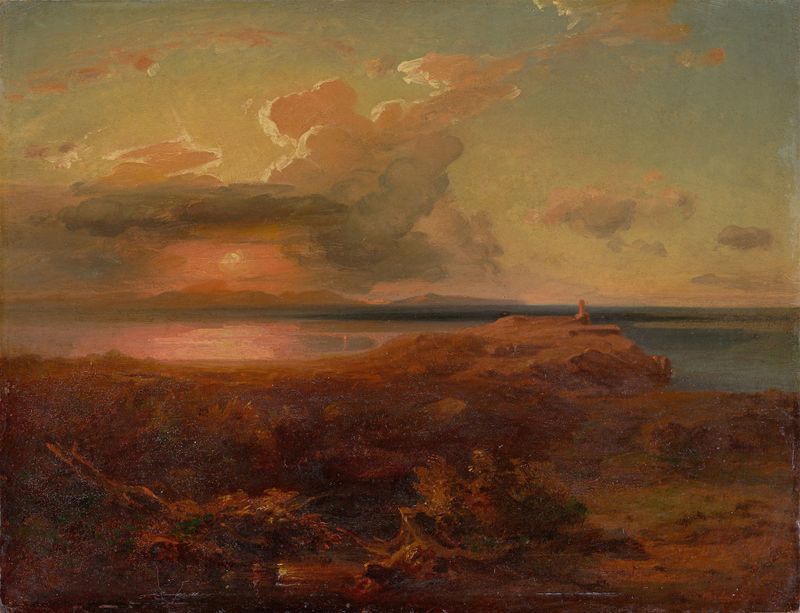
Ägina mit dem Apollotempel
Carl Rottmann

Landscape
Carl Rottmann

Die Insel Ägina mit den Ruinen des Hekatetempels
Carl Rottmann
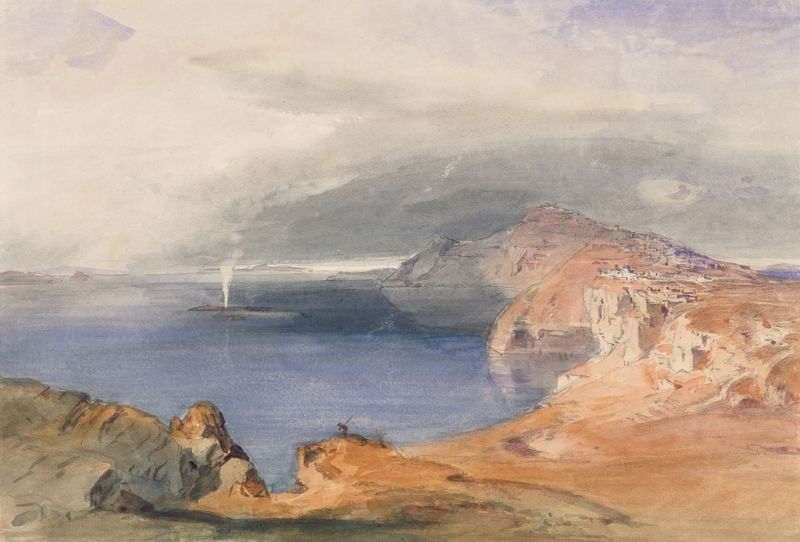
Santorini (Thira)
Carl Rottmann

Athens, seen from the well
Carl Rottmann
Die Insel Delos
Carl Rottmann

Olympia
Carl Rottmann

Athens, seen from the well
Carl Rottmann





