
Ägina mit dem Apollotempel — History & Facts
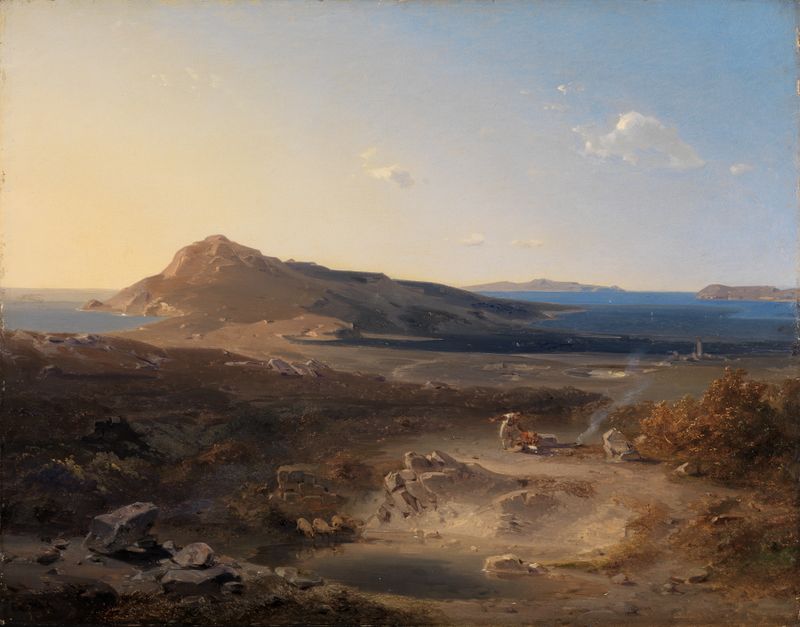
In the stillness of a captured moment, truth emerges as a fragile yet enduring force. Ägina mit dem Apollotempel invites us to reflect on the interplay of memory and beauty inherent in the passage of time. Look to the left at the soft, glowing outlines of the ancient temple rising majestically against the backdrop of a cerulean sky. The artist's brushstrokes create a delicate balance between the solidity of the stone and the ethereal sweep of clouds, inviting the viewer to wander through history.
Notice how the vibrant greens of the surrounding landscape contrast with the temple’s weathered façade, which speaks to the ravages of time while still exuding a sense of reverent awe. In this serene landscape, the juxtaposition of past and present is palpable. The temple, a remnant of ancient worship, stands silent yet proud, representing humanity’s eternal quest for divinity. The light that bathes the scene hints at fleeting moments of enlightenment, revealing the passage of time’s relentless grip.
Moreover, the gentle waves lapping at the shore echo the rhythms of life, suggesting both tranquility and the inevitable decay that comes with existence. Carl Rottmann painted this work around 1835 while residing in Munich, during a period of burgeoning Romanticism that sought to portray idealized landscapes infused with emotion. His experience traveling through Greece heavily influenced his artistry, reflecting the era’s fascination with classical ruins and the search for a deeper truth in nature and history. The stunning interplay of light and shadow in this piece embodies his commitment to capturing the transcendent beauty of the world around him.
More Artworks by Carl Rottmann
Browse all →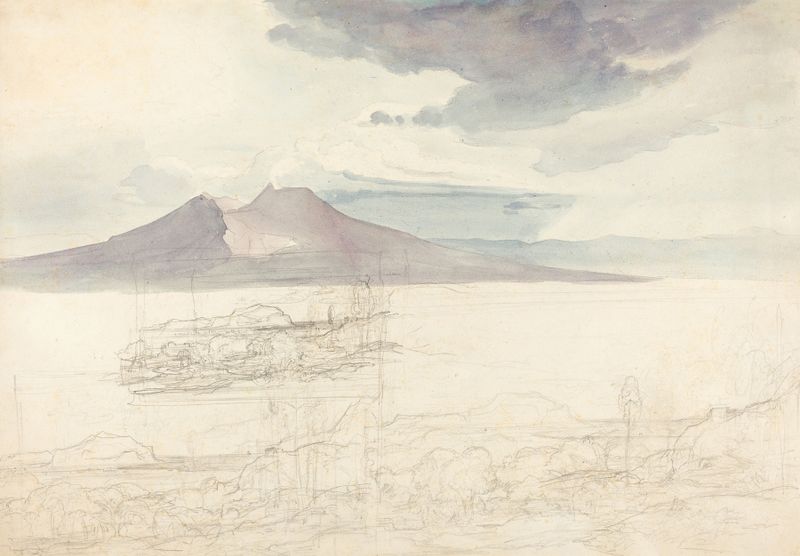
Panoramic Views of Vesuvius and Monte Pellegrino
Carl Rottmann
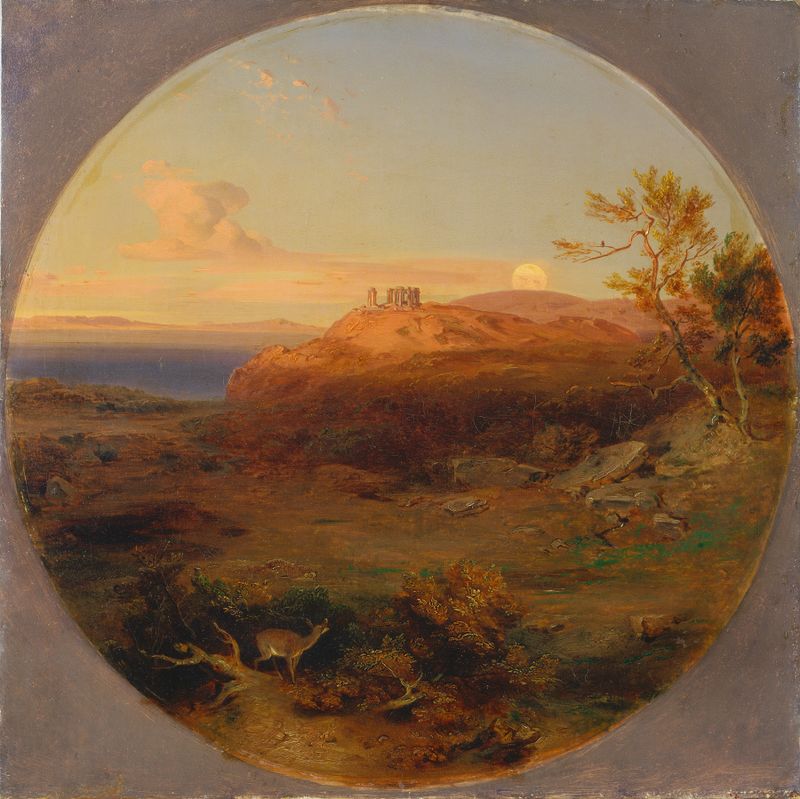
Greek Landscape on the Island of Aegina
Carl Rottmann
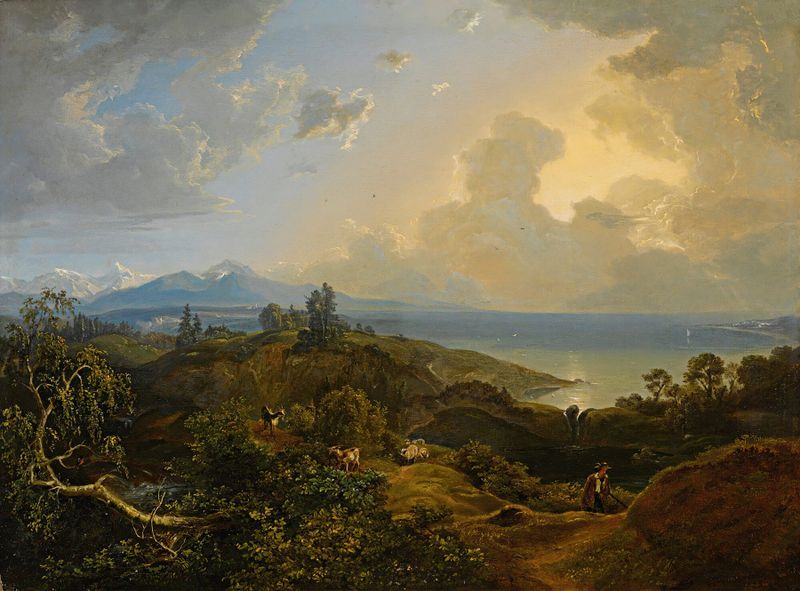
An extensive landscape in Bavaria or the Salzkammergut
Carl Rottmann

Landscape
Carl Rottmann

Die Insel Ägina mit den Ruinen des Hekatetempels
Carl Rottmann
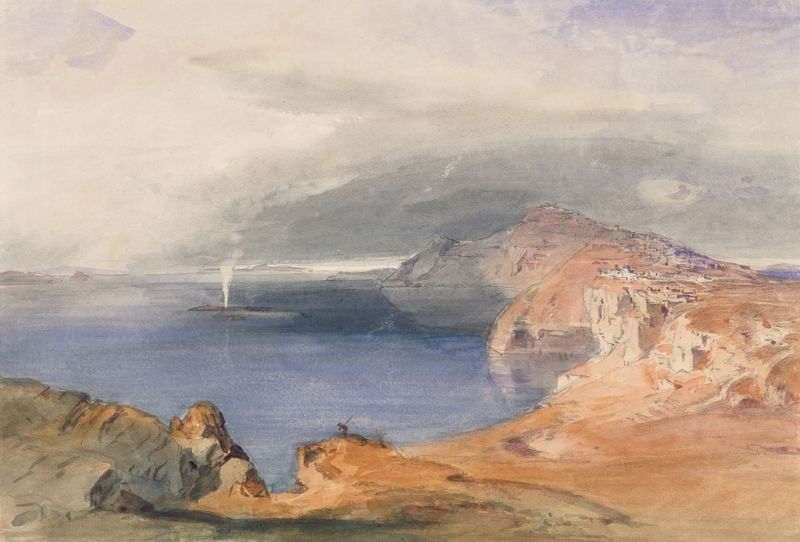
Santorini (Thira)
Carl Rottmann

Athens, seen from the well
Carl Rottmann
Die Insel Delos
Carl Rottmann

Olympia
Carl Rottmann

Athens, seen from the well
Carl Rottmann





