
On the Alpine Pasture — History & Facts
What if beauty was never meant to be finished? In On the Alpine Pasture, serenity unfolds in the embrace of nature, inviting contemplation and stillness. Look to the foreground, where gentle slopes of soft, verdant grass cradle a cluster of grazing livestock, their forms rendered with delicate brushstrokes that bring them to life. Notice how the light bathes the scene, illuminating the textures of the animals’ coats and the subtle variations in the landscape. The palette is a harmonious blend of greens and blues, suggesting tranquility, while the expansive sky above extends towards the horizon, evoking an infinite sense of peace. Such serenity contrasts with the hidden layers within the work.
The sturdy, imposing mountains in the background symbolize the permanence of nature, while the pastoral scene hints at the fleeting moments of life. The interplay of light and shadow creates a dialogue between the ethereal and the earthly, inviting viewers to pause and reflect on the balance between humanity and the natural world. Each stroke captures a moment so ephemeral yet timeless, encouraging a deeper exploration of what it means to find solace in simplicity. Wilhelm von Kobell painted this piece in 1828 while based in Munich, during a time when Romanticism surged through European art.
Influenced by the beauty of the Alpine landscape, he sought to evoke emotions tied to nature’s majesty. As the art world grew more experimental, Kobell’s focus on capturing serene rural life reflected a yearning for authenticity in a rapidly industrializing society.
More Artworks by Wilhelm von Kobell
Browse all →
Der Postillon auf dem Weg nach Weilheim
Wilhelm von Kobell

Königsee with the Cliffs of St. Bartholomëe
Wilhelm von Kobell

Bauernwagen in bergiger Landschaft
Wilhelm von Kobell
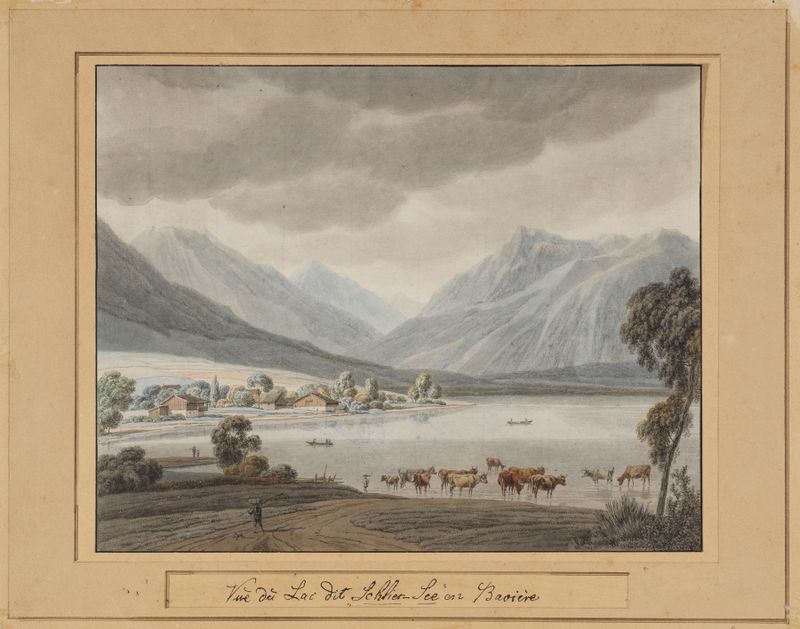
Schliersee
Wilhelm von Kobell
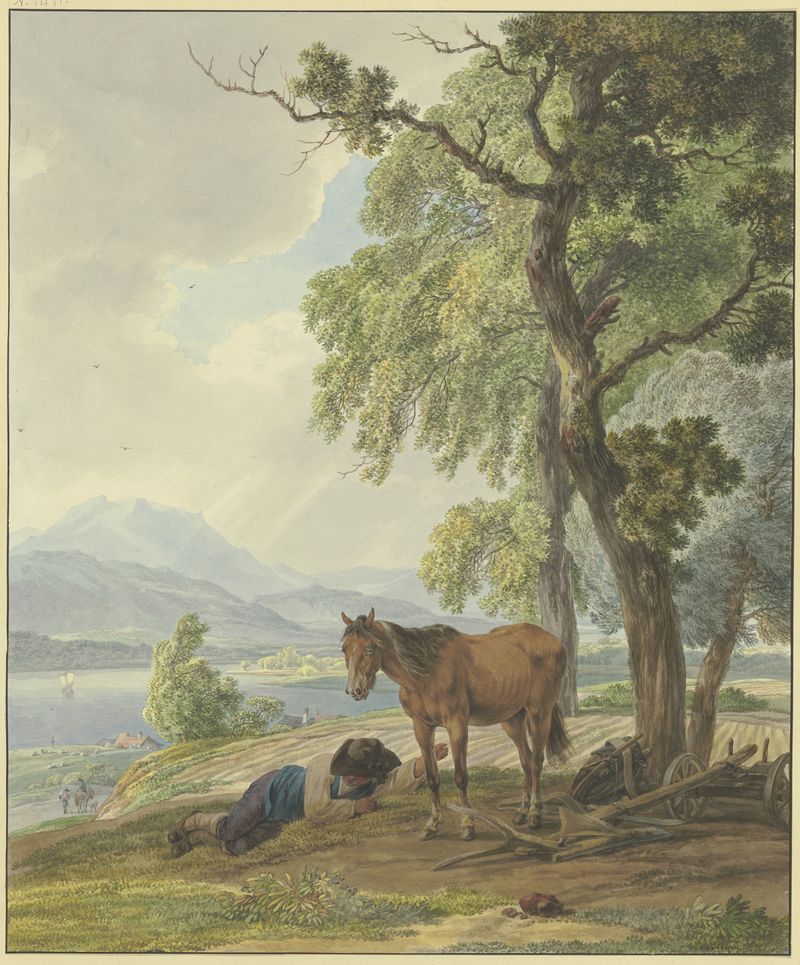
Ruhender Bauer mit seinem Pferd neben dem gepflügten Acker
Wilhelm von Kobell
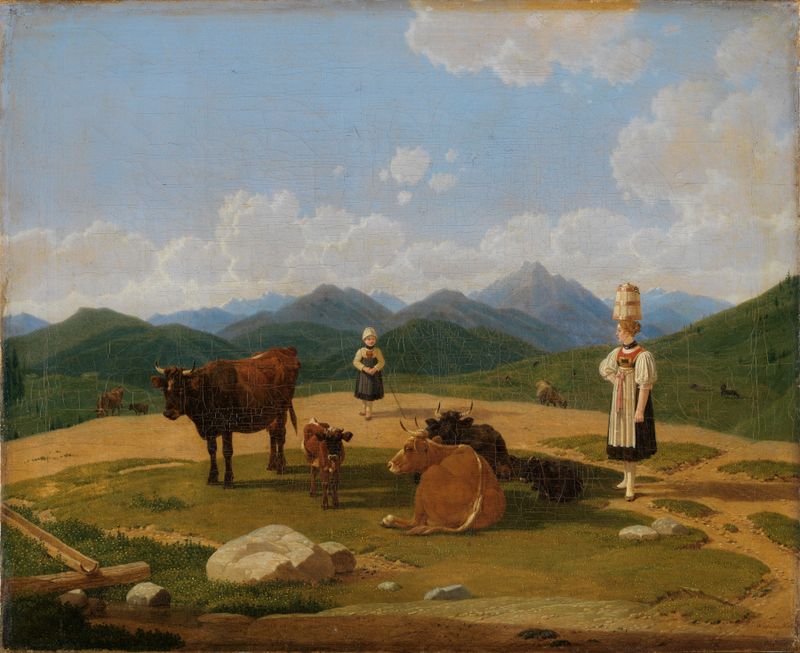
Auf der Alm
Wilhelm von Kobell
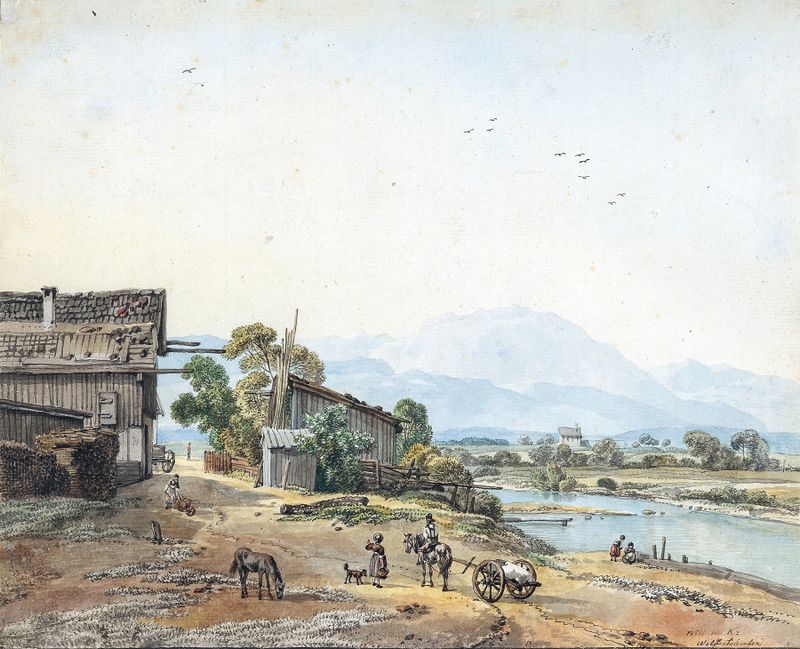
Wolfratshausen an der Loisach
Wilhelm von Kobell
Bauer und Hirtenkinder in oberbayerischer Voralpenlandschaft
Wilhelm von Kobell

Begegnung auf der Landstrasse
Wilhelm von Kobell
Schlafender Eseltreiber unter einer Baum an einem See
Wilhelm von Kobell





