On the Bank of the Seine, Bennecourt — History & Facts
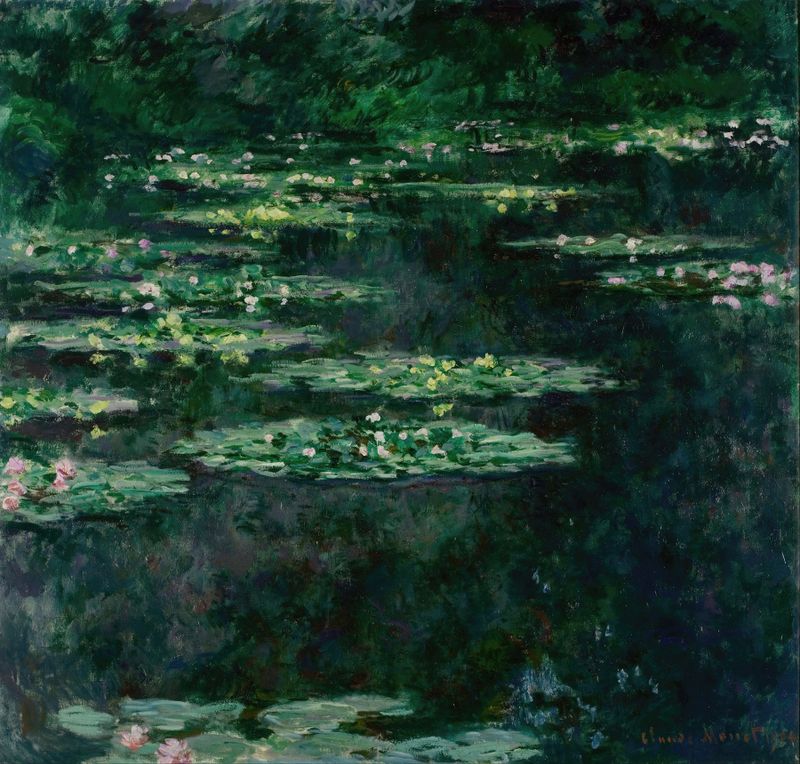
When did color learn to lie? In the delicate balance between reality and perception, Monet invites us to explore the ecstasy of light dancing upon water, capturing a moment that transcends simple representation. Focus on the vibrant hues that play across the canvas, guiding your gaze through the shimmering reflections in the Seine. Notice how the soft strokes of green and blue create a harmonious blend, evoking the gentle ripples of the river. The trees stand as proud sentinels on the bank, their dappled leaves adorned with bursts of sunlight, while the varied brushwork invites an immersive experience of movement and life. As you delve deeper, consider the emotional tension between tranquility and vibrancy.
The leisurely figures, absorbed in their moment near the water, embody a sense of freedom and joy, yet their stillness contrasts with the lively brushstrokes that create a sense of swirling motion around them. Each element reflects a fleeting instant where nature and humanity intersect, making this scene a celebration of the ephemeral beauty of life. In 1868, Monet created this piece during a time of personal and artistic transformation. Living in Bennecourt, he was deeply engaged in the Impressionist movement, which sought to capture the fleeting effects of light.
This period marked a departure from traditional techniques, as he experimented with color and brushwork to express his perception of the world around him, forever altering the course of modern art.