
Optical Phenomenon of an Inverted Ship on the Horizon near the Coast of Jameson’s Land, Greenland — History & Facts
Can paint confess what words never could? In the quiet confrontation between the surreal and the tangible, longing finds its voice on the canvas. Look to the bottom of the piece, where the gentle curve of the coastline meets the subtle waves. The palette is a muted interplay of blues and grays, allowing the eye to drift toward the horizon, where an inverted ship hovers like a ghost, defying gravity and our expectations. Notice how the delicate brushstrokes create a shimmering effect on the water’s surface, enhancing the optical illusion while leaving behind a sense of disquiet.
The colors wash over one another, merging the realities of the sea and sky, challenging the viewer to question what they perceive. The ship appears to float above the sea, its mirrored form suggesting not just absence but a deeper yearning for connection. This inversion evokes a feeling of displacement, as if the ship and its journey have been paused in time, suspended between what is seen and what is felt. The surrounding landscape, rendered in soft, muted tones, amplifies this sense of isolation, emphasizing the tension between reality and illusion, presence and absence. Charles Hamilton Smith created this work during a period where the exploration of natural phenomena was burgeoning in the early 19th century.
Working alongside the rise of Romanticism, he sought to capture the emotional essence of landscapes, reflecting both personal sentiments and wider societal curiosities. The piece encapsulates his fascination with the extraordinary, drawing viewers into a world where reality blurs and the soul’s longing is laid bare.
More Artworks by Charles Hamilton Smith
Browse all →
Situation of H.M.S. Hecla & Griper
Charles Hamilton Smith
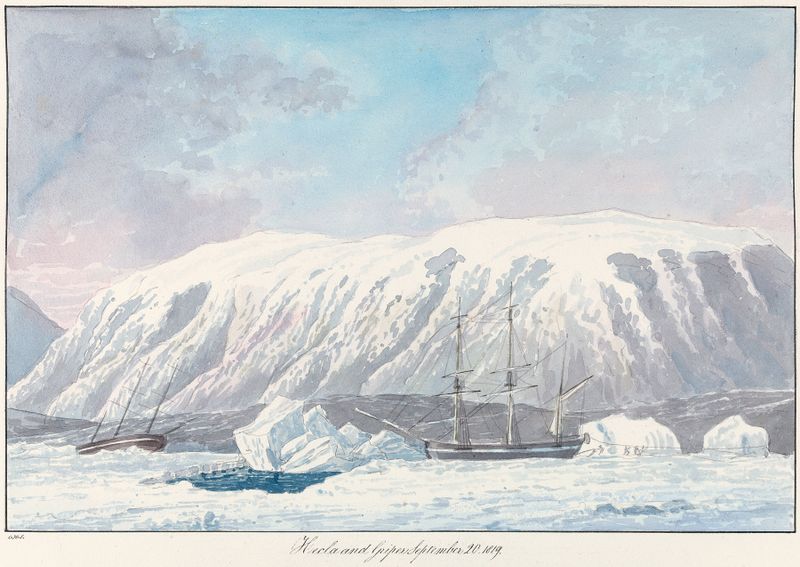
Hecla and Griper
Charles Hamilton Smith

Friendly Cove, Nootka Sound
Charles Hamilton Smith

Iceberg in Baffin’s Bay
Charles Hamilton Smith
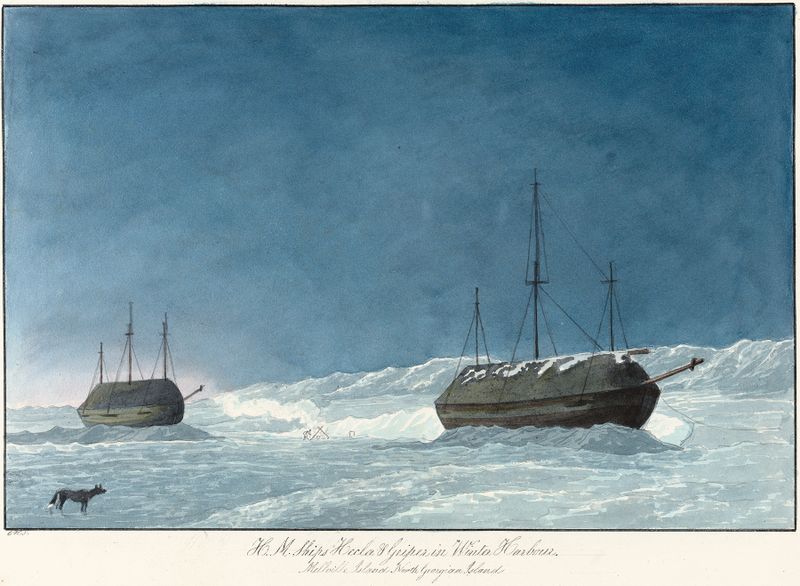
H. M. Ships Hecla and Griper in Winter Harbour
Charles Hamilton Smith

The Erebus & Terror in a Gale in the Pack of the Ice
Charles Hamilton Smith
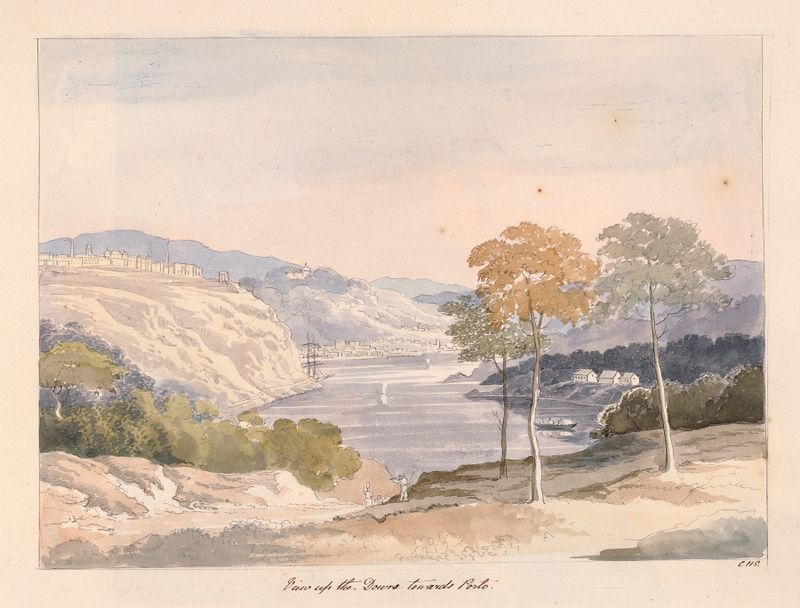
View of the Douro towards Porto
Charles Hamilton Smith
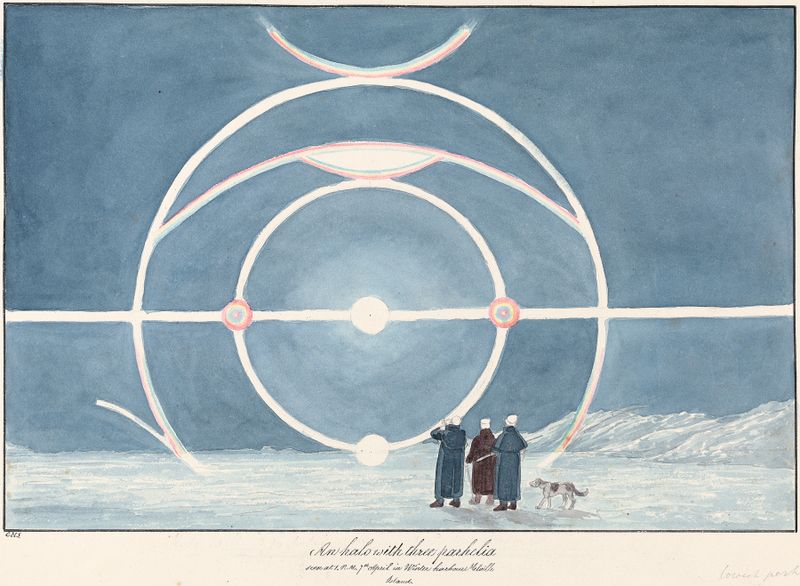
Halo with Three Parhelia, Winter Harbour Melville Island
Charles Hamilton Smith
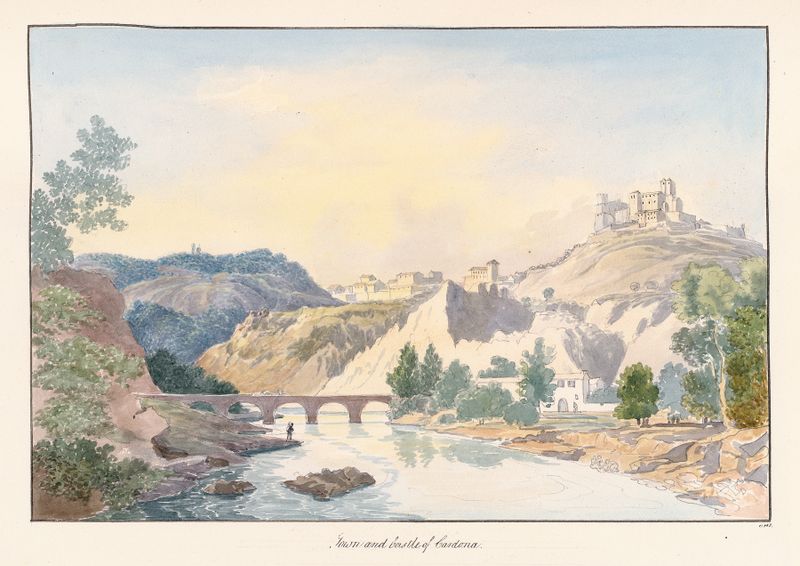
Town and Castle of Cardona
Charles Hamilton Smith
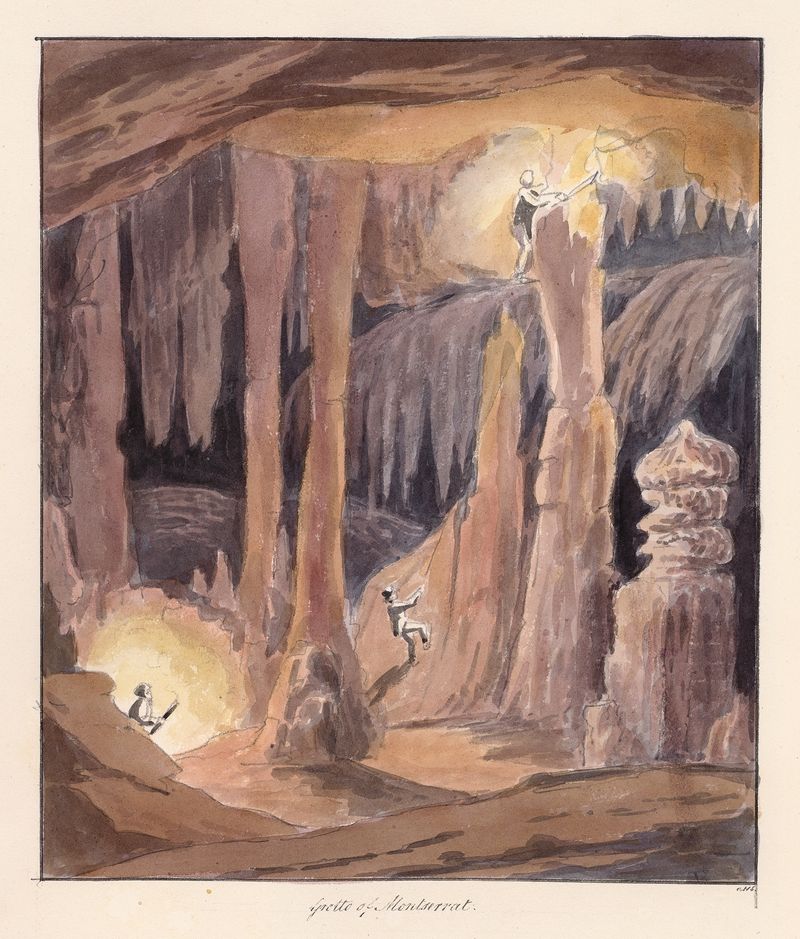
Grotto of Montserrat
Charles Hamilton Smith





