
Ornacieux — History & Facts
In the quiet spaces of our lives, loss often lingers, unspoken yet potent, waiting to be acknowledged. Focus your gaze on the gentle interplay of blues and grays that sweep across the canvas, drawing you into a world of reflection. Notice how the strokes of the brush create a soft, almost ethereal quality, blurring the line between reality and memory. The horizon, barely defined, seems to dissolve into the atmosphere, evoking a sense of longing and nostalgia that saturates each hue. The underlying tension between the vividness of the palette and the muted tones speaks to the complexity of grief.
One can feel the weight of absence—the way shadows stretch across the water, hinting at what is no longer present. The carefully crafted waves offer a rhythm of movement, yet they echo an emptiness, suggesting that the beauty of life is often intertwined with moments of profound loss. Johan Barthold Jongkind created this work in 1879, during a period of personal struggle and transition. Living in France, he was deeply influenced by the Impressionist movement, striving to capture the ephemeral qualities of nature.
As he navigated the changing art world, Ornacieux reflects not only his artistic evolution but also his intimate grappling with loss, encapsulating the quiet spaces where emotion resides.
More Artworks by Johan Barthold Jongkind
Browse all →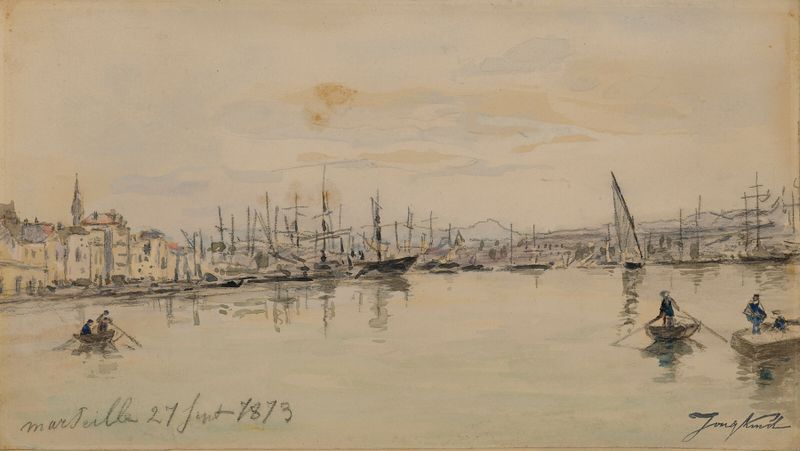
Le Port de Marseille
Johan Barthold Jongkind

Canal Saint-Martin
Johan Barthold Jongkind

Countryside near Brezins, between Grenoble and Vienne
Johan Barthold Jongkind

Notre-Dame vue du quai de la Tournelle
Johan Barthold Jongkind

Environs de Grenoble
Johan Barthold Jongkind

Clair de lune à Overschie (environs de Rotterdam)
Johan Barthold Jongkind

Port de Honfleur
Johan Barthold Jongkind
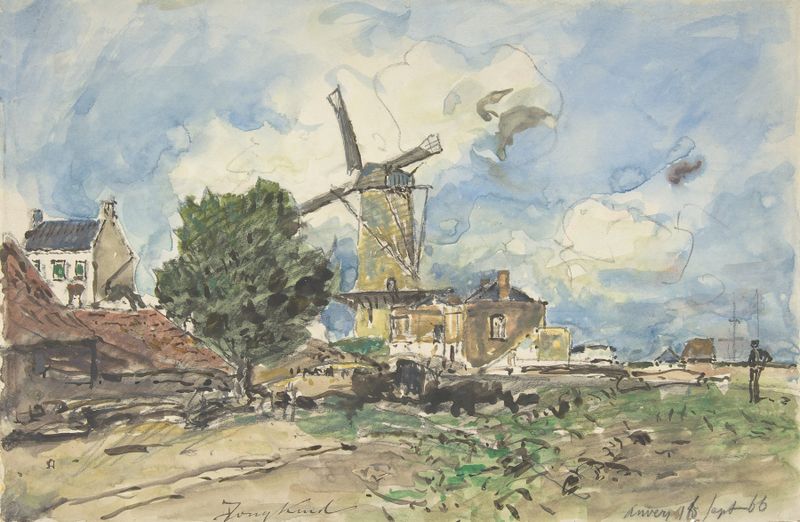
Wind Mill at Antwerp
Johan Barthold Jongkind

Le Havre
Johan Barthold Jongkind

The Church of Overschie
Johan Barthold Jongkind





