Our Street in Grau — History & Facts
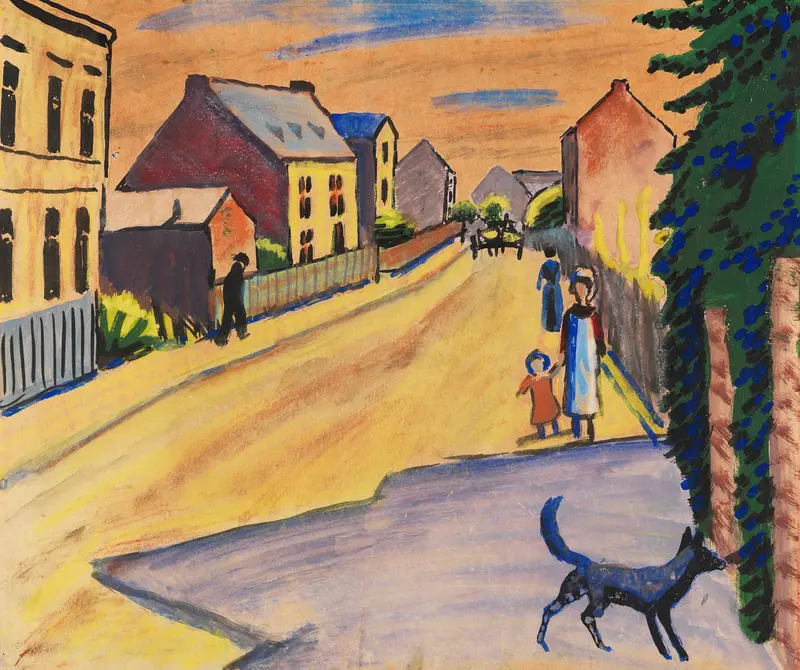
A city street unfolds from a high vantage, its surface washed in cool grey, yet animated by the quiet choreography of daily life. The eye is drawn first to the horse-drawn cart, its yellow cargo a sudden burst of color against the muted palette, suggesting the steady pulse of work amid stillness. Figures drift along the sidewalks in dark coats and red hats, their forms simplified almost to silhouettes, each absorbed in their own direction.
The facades of the buildings rise in rhythmic blocks, their windows dark and unseeing, while a pair of blossoming trees at the edge hints at spring’s arrival, their pale blooms glowing against the orange wall. Here, the geometry of urban life is softened by the artist’s brush, and the scene feels both observed and remembered—a moment suspended between movement and quiet. Painted in 1911 by August Macke, this work belongs to a world on the brink of transformation. In the years before the First World War, German artists like Macke were experimenting with color, form, and perspective, seeking new ways to capture the changing rhythms of modern life.
Such street scenes were rarely grand commissions; rather, they were personal studies, glimpses of the everyday that reflected both the anonymity and intimacy of city living. The painting’s simplified forms and gentle color contrasts echo the innovations of the Expressionist movement, yet the mood remains contemplative, not agitated. History has kept few traces of this particular street, but Macke’s vision invites us to linger, to notice the quiet drama in the ordinary, and to imagine the stories that unfold behind every window.
More Artworks by August Macke
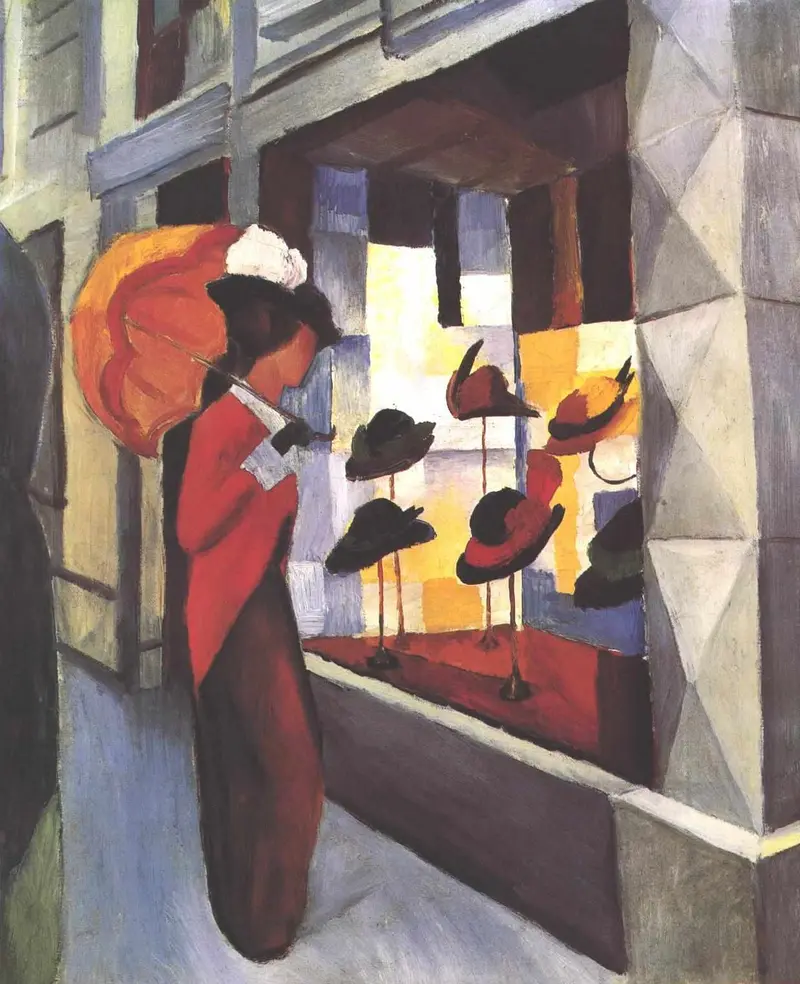
Woman with a Parasol in Front of a Hat Shop
August Macke

Street with Church in Kandern
August Macke
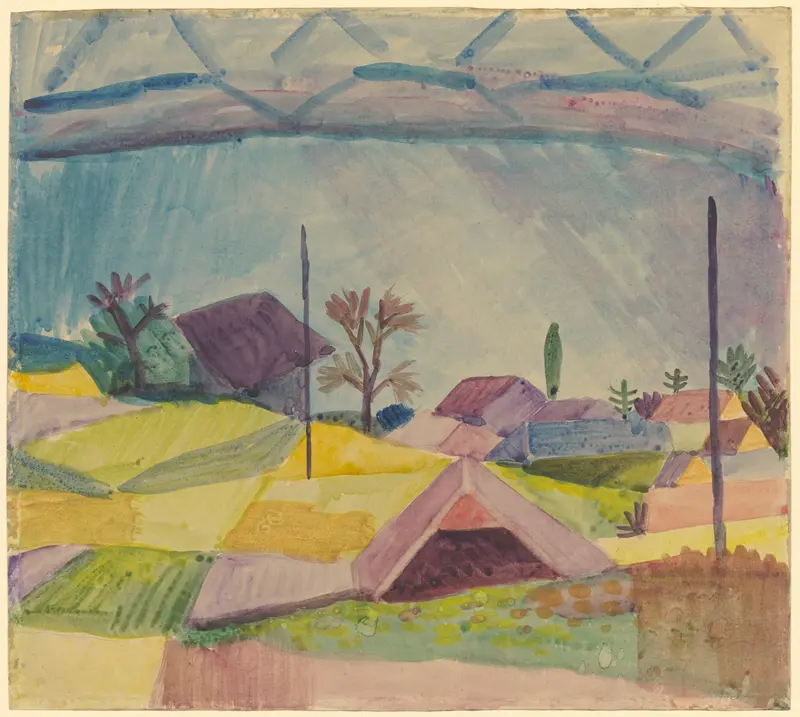
View of Hilterfingen
August Macke

Paar im Nachen
August Macke
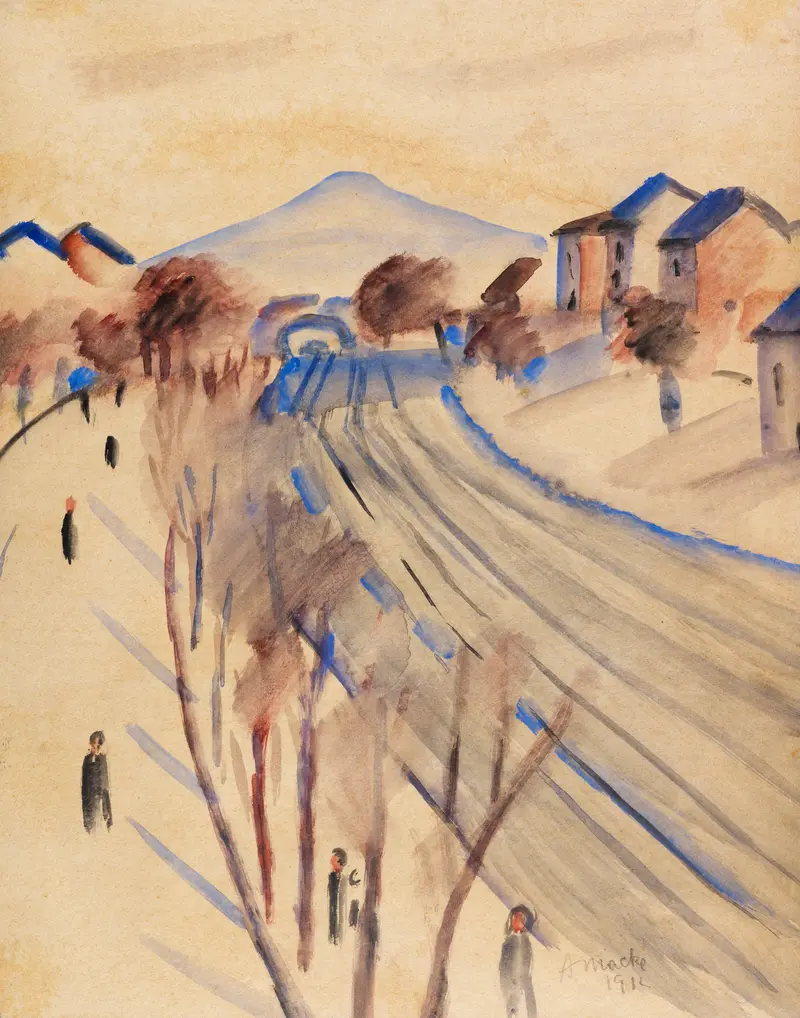
Ölberg mit Bahngleisen II
August Macke
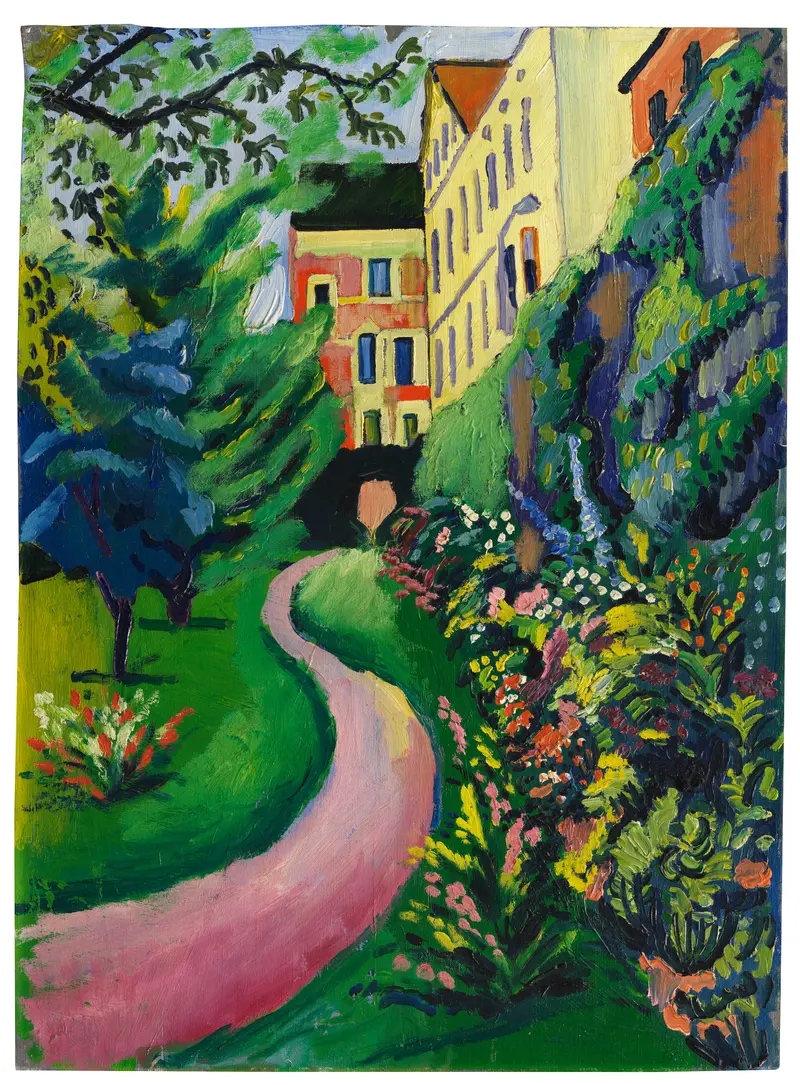
Unser Garten mit blühenden Rabatten
August Macke
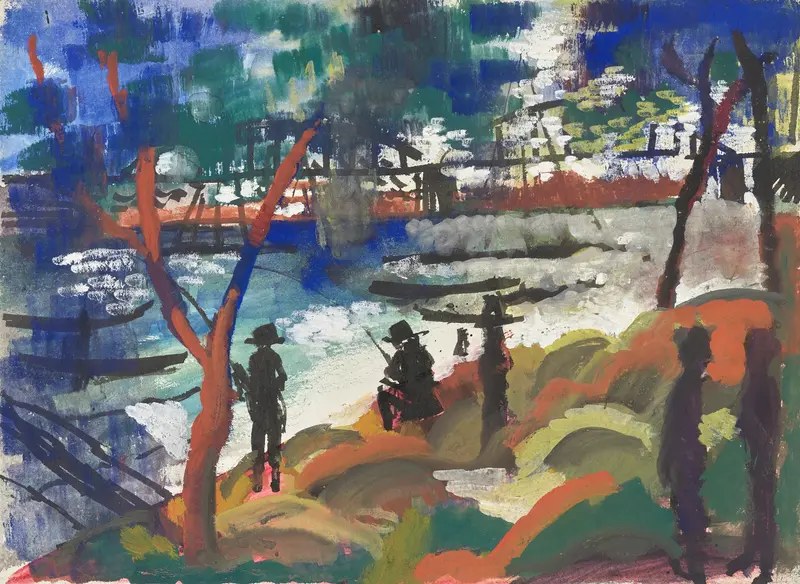
Angler am Fluss
August Macke
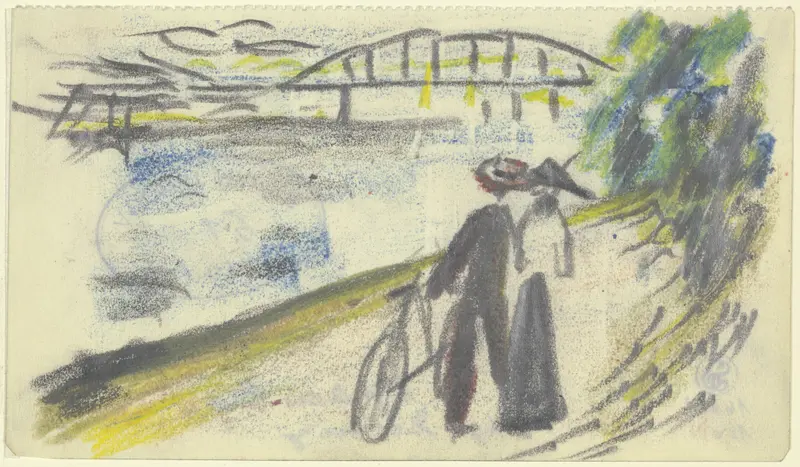
Path at the Rhine
August Macke
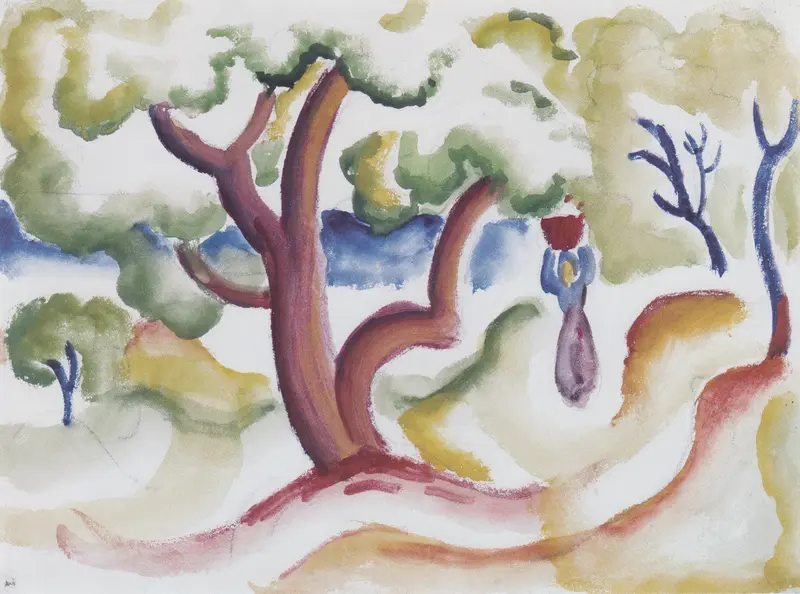
Frau mit Krug unter Bäumen
August Macke
Sonnige Straße mit Hund
August Macke