
Palais Liechtenstein — History & Facts
When did color learn to lie? In Palais Liechtenstein, the vibrant hues mask a profound sense of loss, inviting viewers to question the realities behind the beauty. Begin your exploration by looking to the left where bold strokes of green and gold create an almost intoxicating warmth. The meticulously painted façade of the palace stands proud, yet the shadows that encircle it whisper secrets of time gone by. Observe how the artist balances light and texture, each brushstroke a deliberate caress that both celebrates and mourns the architecture's splendor, revealing a depth that transcends mere representation. As you delve deeper into the work, notice the juxtaposition of vitality and decay.
The lush vegetation surrounding the building brims with life, while the slightly crumbling edges of the structure hint at neglect and the passage of time. This contrast evokes a bittersweet nostalgia, suggesting that beauty is often entwined with loss, a reminder of what once was and what can never be reclaimed. Each color seems to pulsate with emotion, crafting a narrative that speaks to the fragility of human endeavors. During the period when this painting was created, the artist found himself immersed in a world of rapid change and artistic experimentation.
In the shadow of the late 19th century, as movements like Impressionism began to thrive, this work reflects an emerging dialogue on the tension between permanence and impermanence. Graner's approach reveals a keen sensitivity to both the physical and emotional landscapes of his time, cementing his place in the evolving narrative of art.
More Artworks by Ernst Graner
Browse all →
The Departure of Emperor Francis Joseph, near the Schweizertor in Hofburg residence
Ernst Graner

Old Albrechtsplatz (today Albertinaplatz) in Vienna with the Philipphof and the Mozart monument
Ernst Graner
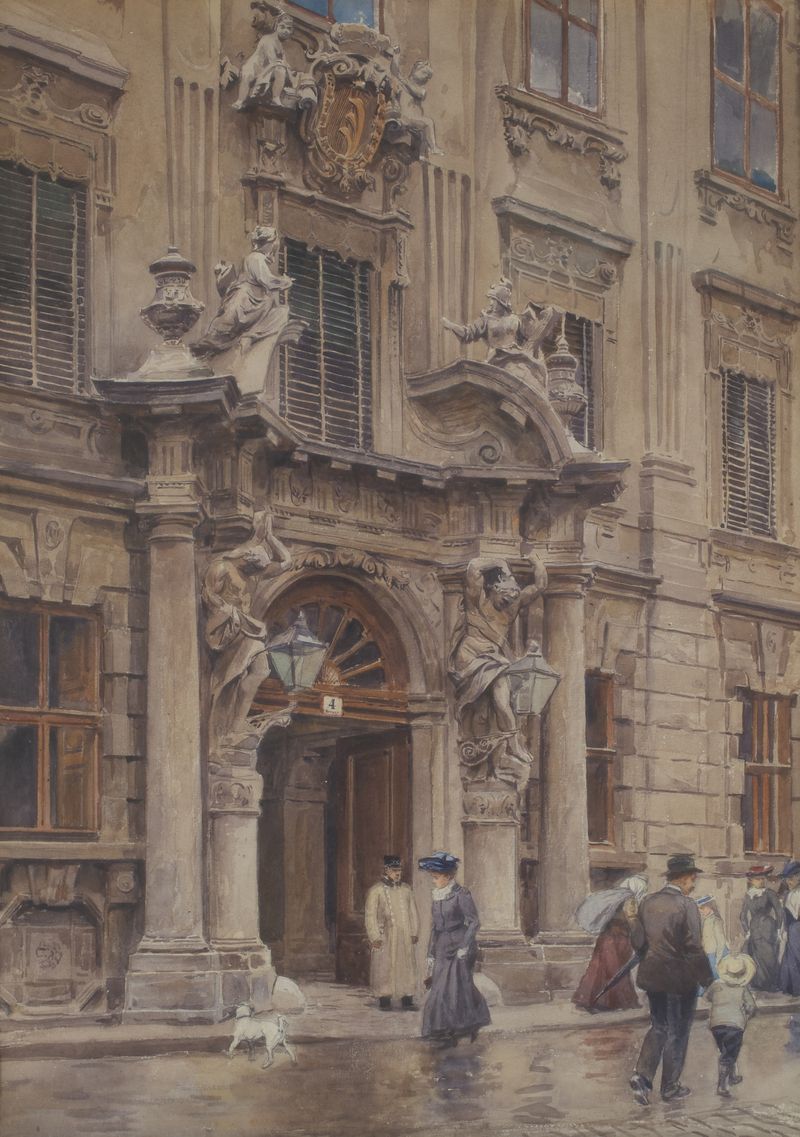
Das Portal Des Palais Kinsky
Ernst Graner
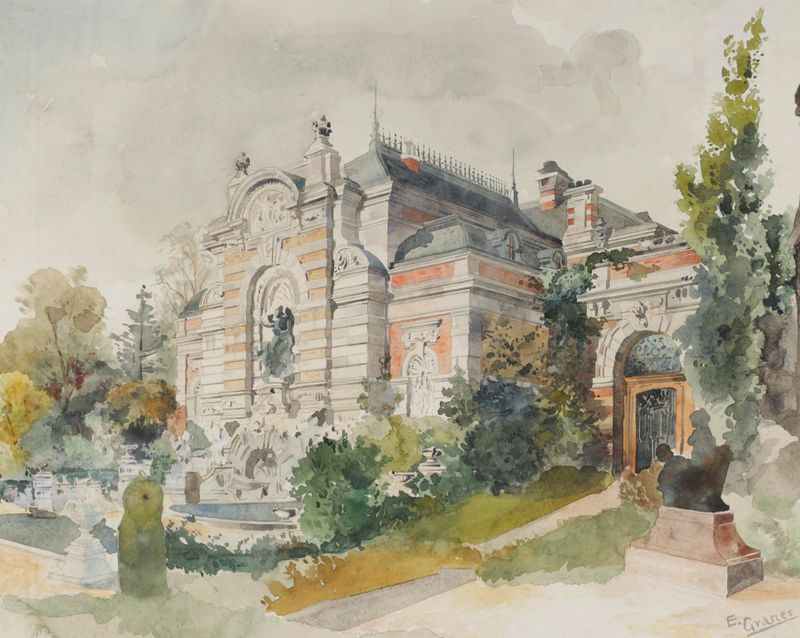
Villa in einem Park
Ernst Graner

Karlskirche
Ernst Graner

Kaiser Franz Joseph überquert den Naschmarkt
Ernst Graner

Palais des Prinzen Eugen in der Himmelpfortgasse
Ernst Graner

Die Schwendergasse In Wien Mit Schwenders Colosseum
Ernst Graner
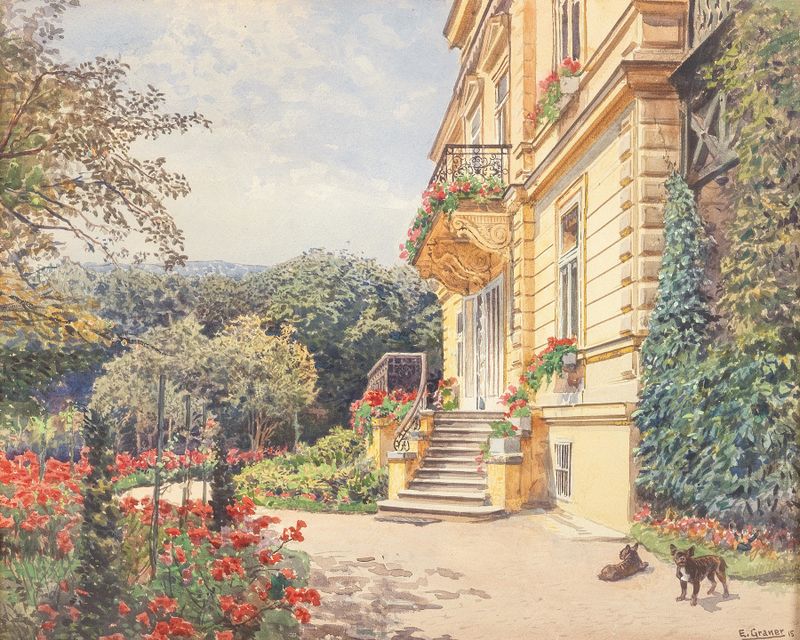
Villa in gepflegtem Garten
Ernst Graner
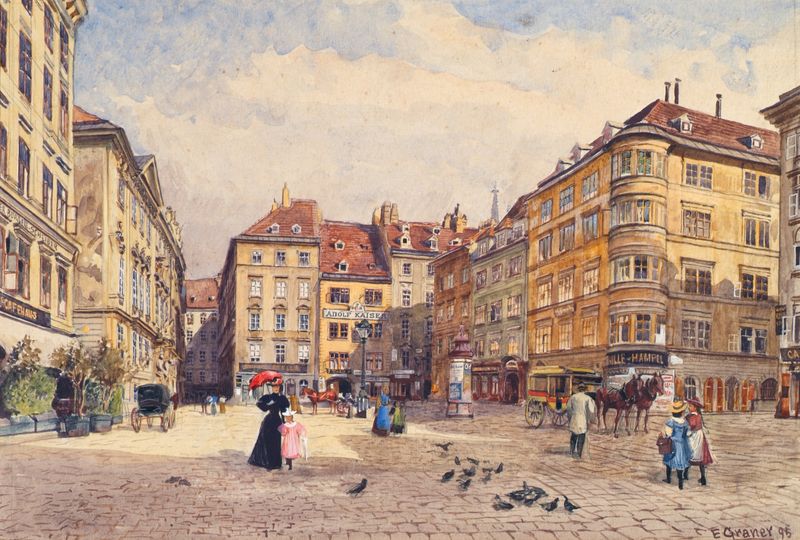
Der Judenplatz In Wien
Ernst Graner
More Architecture Art
Browse all →
The statue of Liberty
Frédéric Auguste Bartholdi

View of Houses in Delft, Known as ‘The Little Street’
Johannes Vermeer

View of Houses in Delft, Known as ‘The Little Street’
Johannes Vermeer

The Cathedral in Rouen. The portal, Grey Weather
Claude Monet

The yellow house
Vincent van Gogh

The Church in Auvers-sur-Oise, View from the Chevet
Vincent van Gogh