
Pariisi vaade — History & Facts
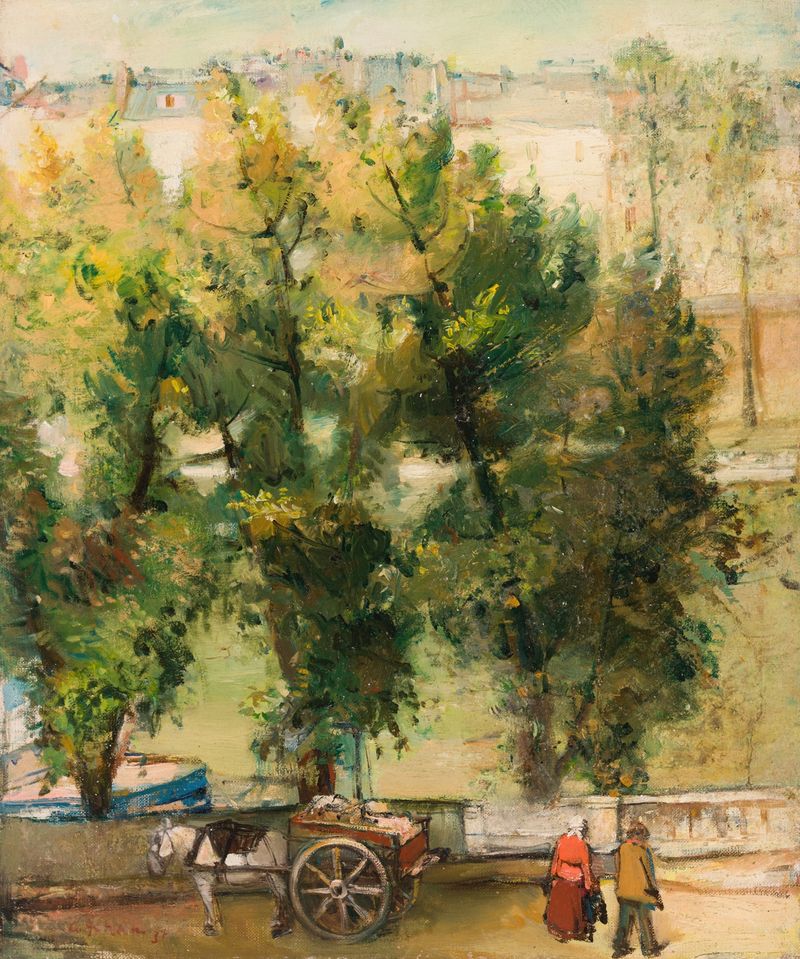
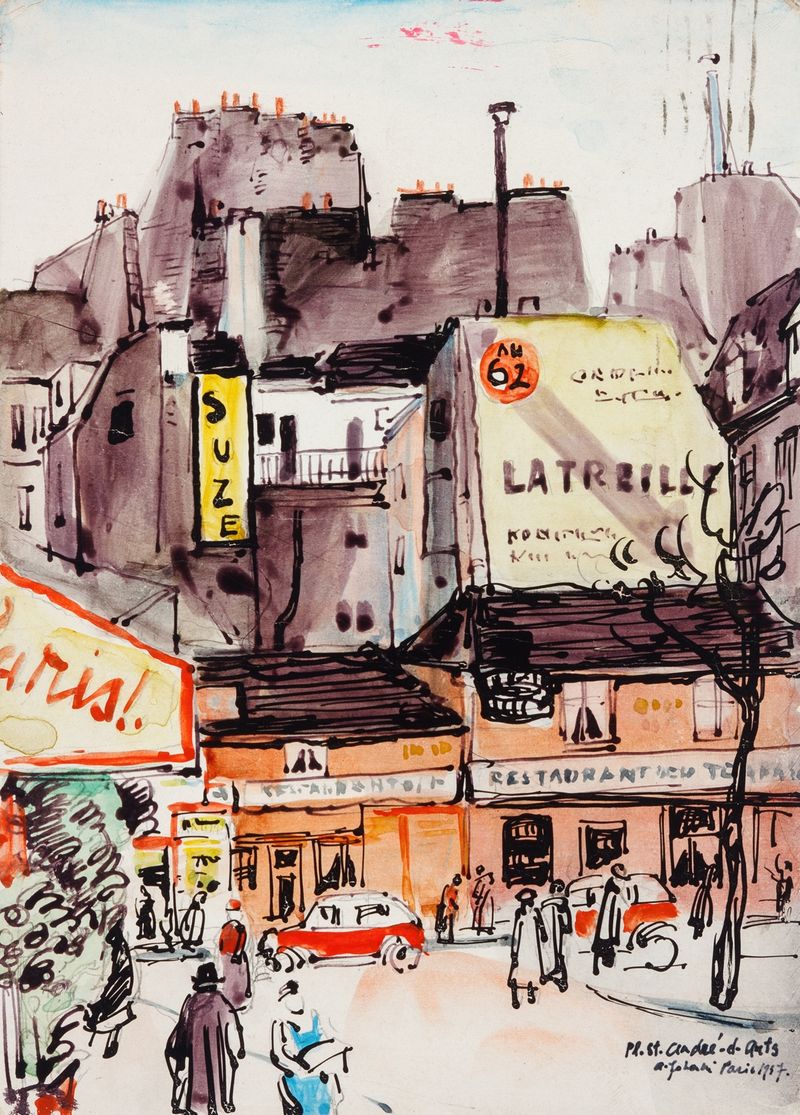
Did the painter know this moment would outlive them? In Pariisi vaade, the essence of creation lingers, capturing the vitality of life in vibrant strokes. Look to the center of the canvas where a Parisian street unfolds, alive with movement. The whimsical architecture rises, inviting the viewer to wander among the pastel hues that dance in the sunlight. Notice how the warm yellows and soft blues intermingle, while splashes of red punctuate the scene, guiding your eye through the bustling life below.
The artist’s brushwork is both spirited and free, embodying the energy of the city as it breathes and thrives. Amidst the lively atmosphere, there lies a subtle tension between the bustling crowd and the stillness of the architecture. Each figure is immersed in their own world, yet collectively they create an aura of connection—strangers bound by the city’s heartbeat. The interplay of shadows suggests unseen stories, evoking a sense of nostalgia and longing as viewers reflect on what it means to be part of something larger, yet so ephemeral. In 1937, Andrus Johani painted this work while in Paris, a city that had become a hub for artists and thinkers.
This period was marked by a vibrant exchange of ideas in the art world, as modernism flourished. Johani, navigating his own artistic journey, found inspiration in the lively streets of Paris, shaping his vision amidst the cultural currents of the time.
More Artworks by Andrus Johani
Browse all →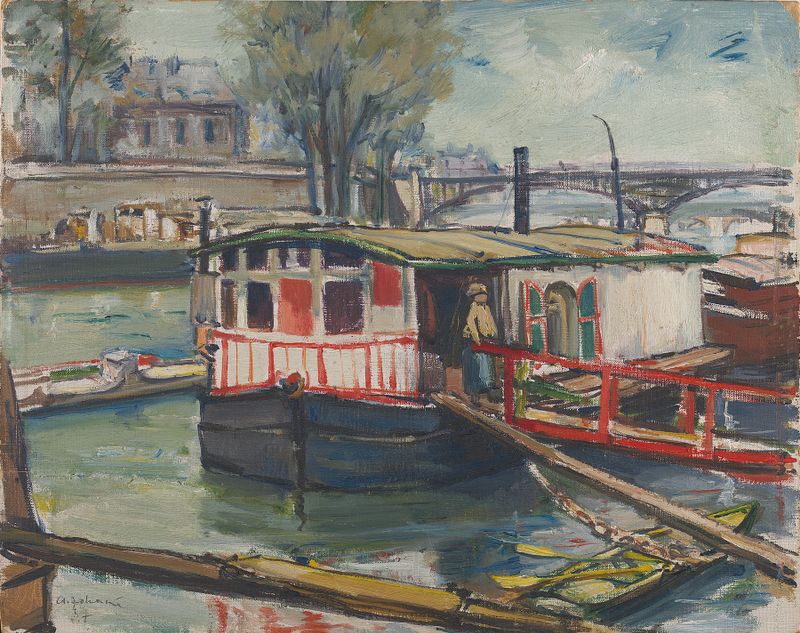

More Architecture Art
Browse all →
The statue of Liberty
Frédéric Auguste Bartholdi

View of Houses in Delft, Known as ‘The Little Street’
Johannes Vermeer

View of Houses in Delft, Known as ‘The Little Street’
Johannes Vermeer

The Cathedral in Rouen. The portal, Grey Weather
Claude Monet

The yellow house
Vincent van Gogh

The Church in Auvers-sur-Oise, View from the Chevet
Vincent van Gogh