Pesumajad Seine’il — History & Facts
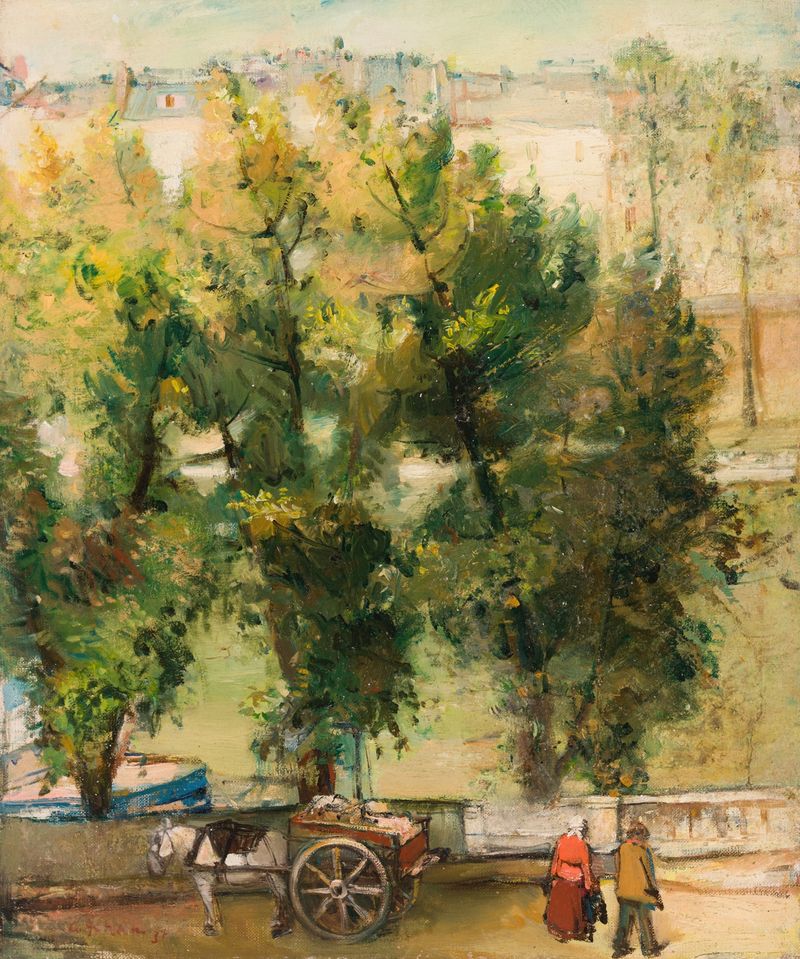
Did the painter know this moment would outlive them? The stillness captured in Pesumajad Seine’il elicits an unsettling sense of dread, rooted in the uncertainty of existence and the fragility of life. Look to the center where the figures stand, their bodies gently curved, poised in a silent interaction that feels both intimate and distant. Notice how the muted palette of grays and browns envelops them, contrasting with the sharp strokes that define their angular forms. The light, diffused yet palpable, casts elongated shadows that stretch beyond the edges of the canvas, hinting at an unseen depth.
This deliberate interplay of light and shadow not only emphasizes their isolation but also infuses the moment with an unbearable tension. As you explore further, small details begin to emerge: the tension in the figures’ hands, the way their gazes diverge, suggesting an unspoken conflict or fear that lingers in the air. The composition’s asymmetry draws the eye to the empty space around them, emphasizing the emotional weight of solitude. The artwork embodies a juxtaposition of tranquility and unease, where the serenity of the scene belies a lurking apprehension that perhaps something unseen threatens to intrude upon their quiet world. In 1937, Andrus Johani painted Pesumajad Seine’il during a turbulent period in Estonia's history, marked by growing political unrest.
Living in a post-World War I Europe, he navigated the artistic landscape as it began to shift towards modernism. This piece reflects not only the personal anxieties of the artist but also the collective fear of instability that permeated the society around him.