Paris motif (Landscape with a horse) — History & Facts
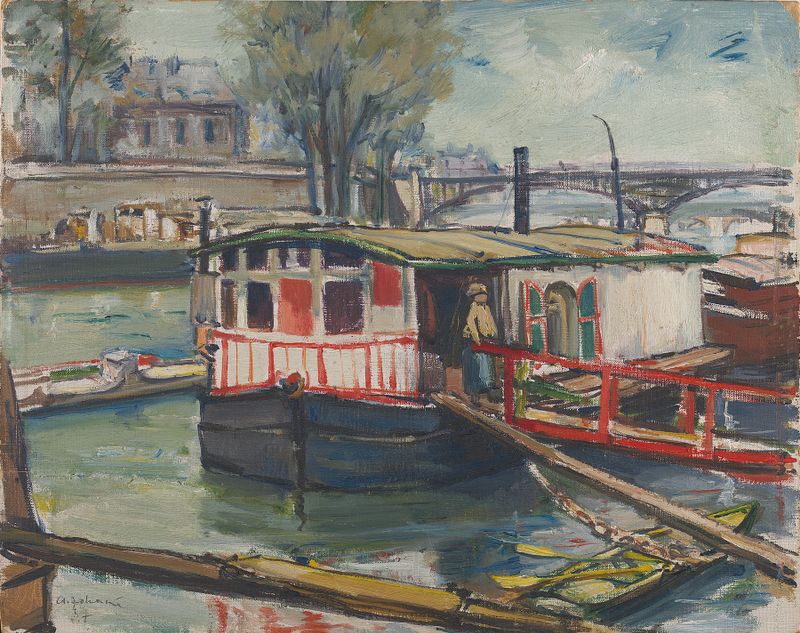
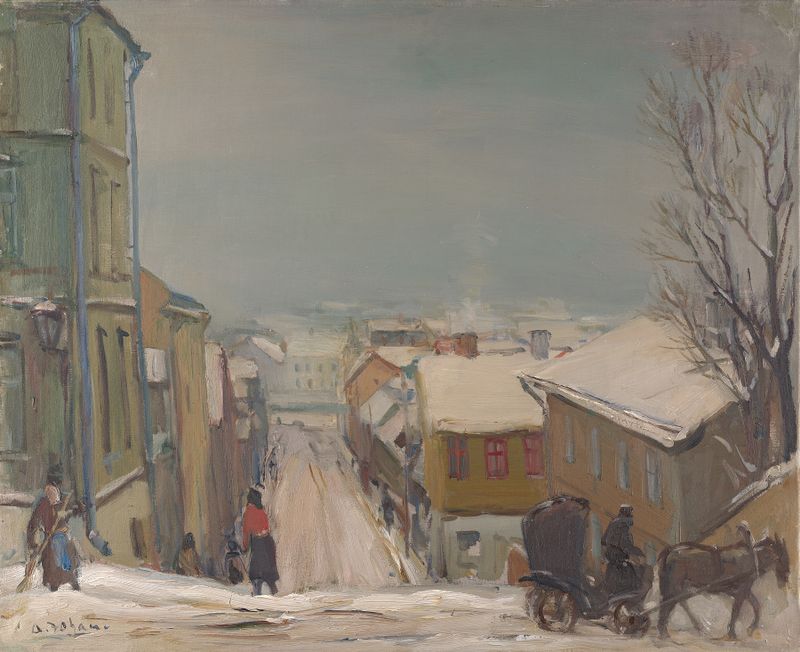
Is this a mirror — or a memory? The balance between beauty and nostalgia draws us into a delicate landscape that feels both immediate and timeless, inviting reflection on the nature of our perceptions. Look to the horizon where soft, sweeping strokes of blue and green merge, creating a serene backdrop. Notice how the gentle curves of the terrain cradle the central figure — a horse, poised with grace. Its coat, a warm chestnut, stands in striking contrast to the cool palette enveloping it, emphasizing its vitality against the landscape's calm.
The composition flows seamlessly, leading the eye from the luminous sky down to the earthy ground, where subtle hints of foliage suggest life and movement beneath the surface. In this work, the horse symbolizes freedom and wild beauty, while the muted tones evoke a sense of tranquility tinged with melancholy. The absence of human presence invites a dialogue between the viewer and nature, encouraging contemplation of what lies beyond the frame. Each brushstroke whispers stories of fleeting moments and memories, revealing an emotional richness that transcends the literal scene before us. Created in 1937, the artwork reflects Andrus Johani's exploration of landscapes during a time of significant change in art and society.
Residing in Europe, Johani was influenced by both traditional and modernist movements, seeking to capture the essence of beauty in nature as the world grappled with the shadows of looming conflict. This piece embodies his ability to evoke emotion through simplicity, celebrating the interplay of light and form amidst the complexities of the human experience.