
Paris, la rue Cortot, Montmartre — History & Facts
In the quiet embrace of Montmartre, the air hangs thick with reverence, as if the streets themselves are sacred pathways to divinity. Each brushstroke captures the essence of both place and spirit, inviting the viewer to step into a vibrant world where the mundane meets the ethereal. Look to the left at the gentle curve of the cobblestone street, winding like a secret whispered among the buildings. The warm ochres and soft blues blend harmoniously, creating an inviting atmosphere.
Notice how the dappled sunlight filters through the trees, casting a delicate lace of shadows that dance on the ground. This interplay of light and color not only guides the eye but also evokes a sense of nostalgia, drawing you deeper into the heart of this Parisian scene. In the foreground, figures meander about, their silhouettes suggestive of stories untold. The small details—the flower pots on the windowsill, the playful shadows—imbue the scene with life, hinting at the vibrancy of the local culture and the spiritual connection to the artistic history that suffuses Montmartre.
The juxtaposition of stillness and motion, of lightness and darkness, reveals an emotional tension that resonates with the viewer, as if the essence of the divine permeates every corner of this bustling neighborhood. In 1888, Guérard painted this scene during a period of transformation in the art world, as Impressionism was blossoming and artists were increasingly exploring modern life. Living in Paris, he was deeply influenced by his surroundings, capturing the spirit of a community where art and daily life intertwined. This work reflects not only his artistic vision but also the cultural vibrancy of the time, offering a glimpse into the soul of Montmartre.
More Artworks by Henri-Charles Guérard
Browse all →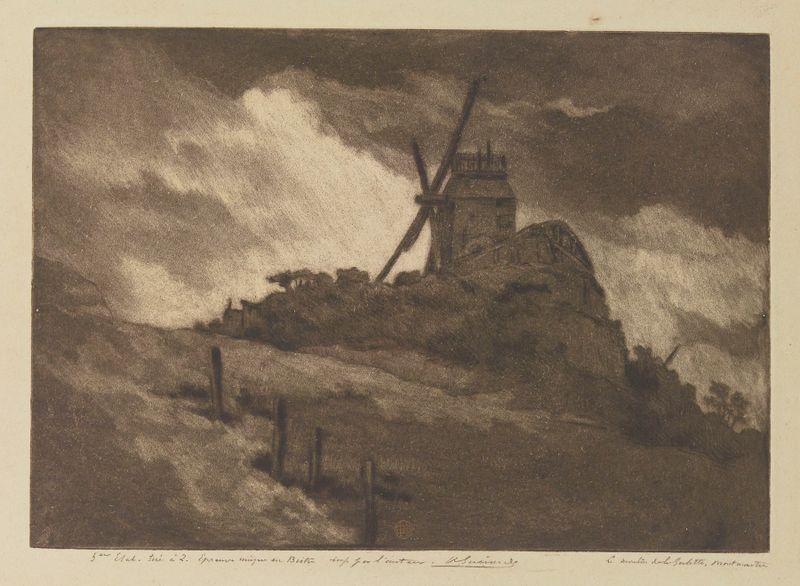
Le moulin de la Galette, Montmartre
Henri-Charles Guérard
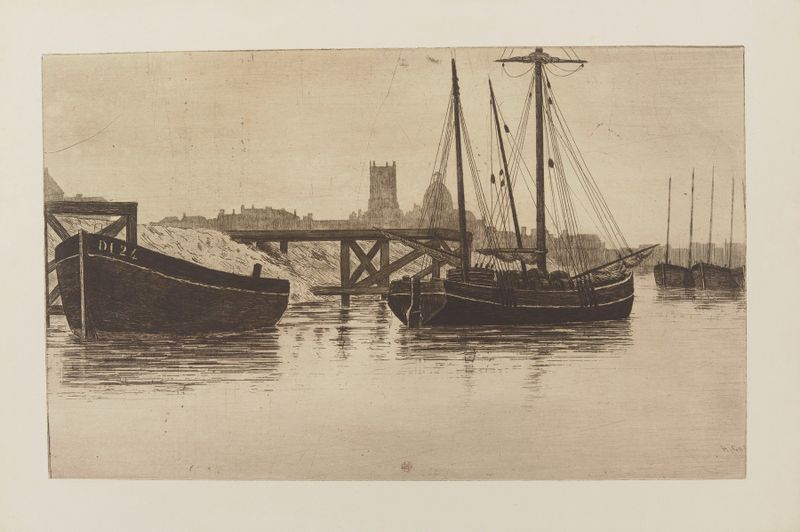
Débarquement de créosote, Retenue, Dieppe
Henri-Charles Guérard
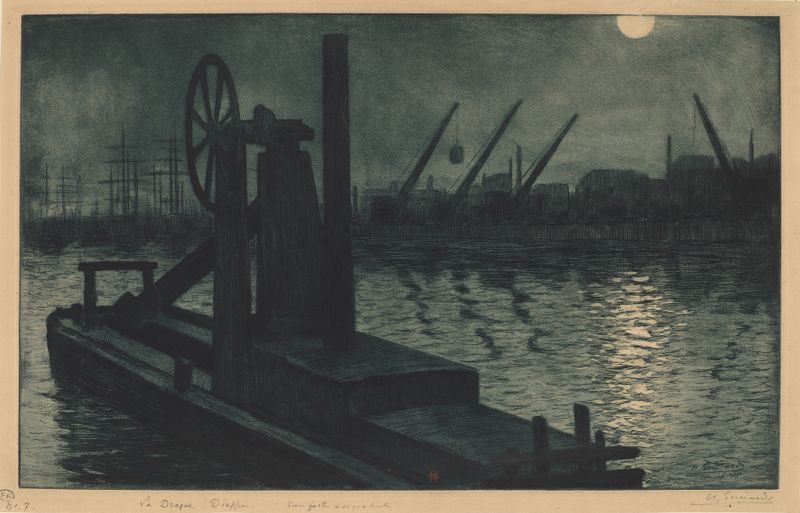
La Drague Dieppe (A Dredger in Dieppe Harbor by Moonlight)
Henri-Charles Guérard
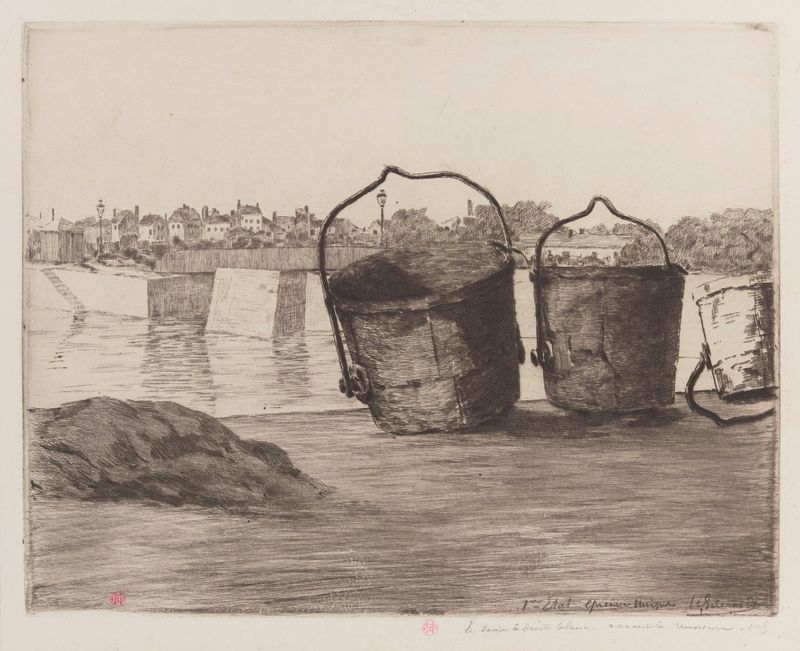
Quai au charbon, Honfleur
Henri-Charles Guérard
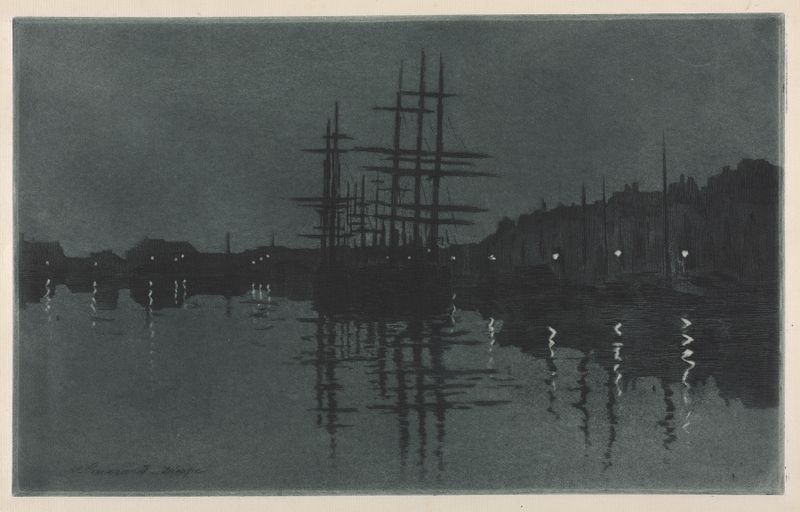
Effect of Moon at Dieppe
Henri-Charles Guérard

Escalier de la cale au Pollet, Dieppe
Henri-Charles Guérard

Venise (l’entrée du Grand canal, près de la Piazetta)
Henri-Charles Guérard

Le pêcheur au carrelet
Henri-Charles Guérard

Patineurs sur le lac d’Annecy
Henri-Charles Guérard
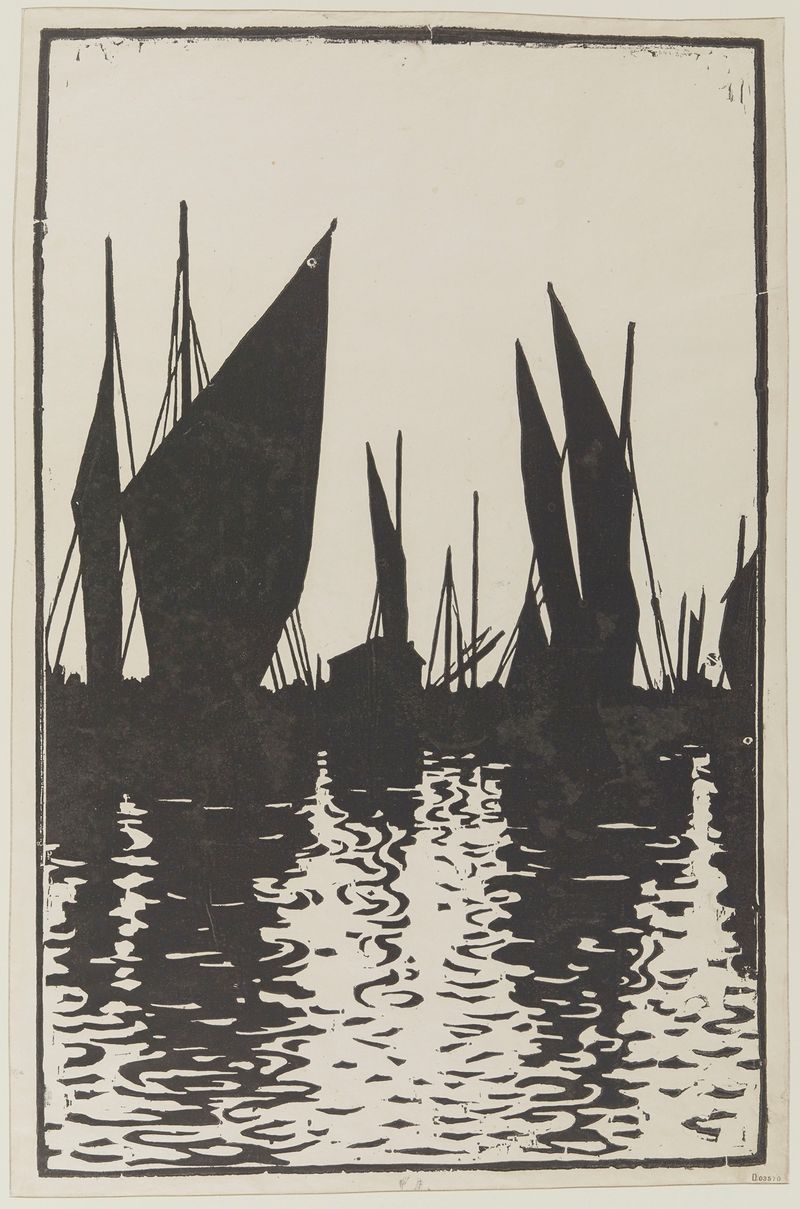
Soleil couchant, Honfleur
Henri-Charles Guérard





