
Effect of Moon at Dieppe — History & Facts
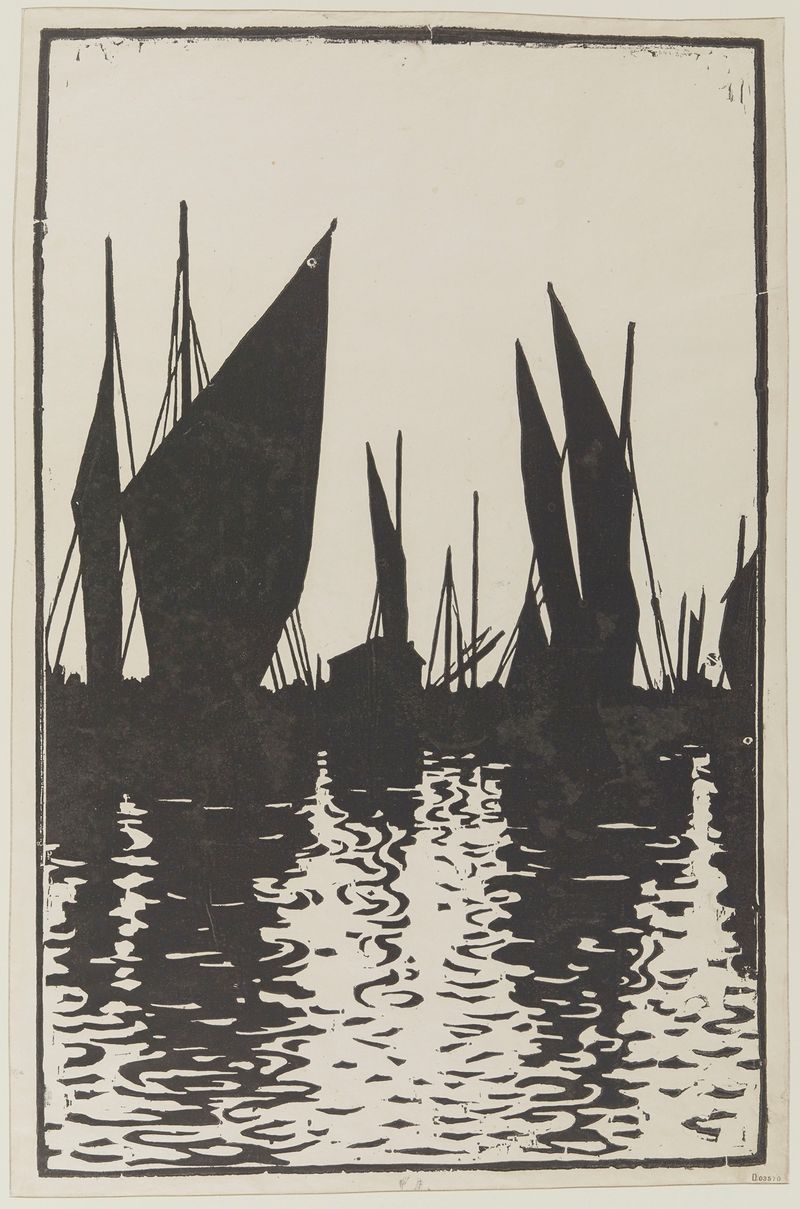
What if beauty was never meant to be finished? The illusion of perfection hangs like a whisper in the air, evoking a sense of longing in every gaze. Look to the left at the tranquil azure seas, where the moon spills its silver light across the water, creating a ribbon of luminescence that dances upon the waves. Notice the soft but deliberate brushstrokes that render the clouds, each swirl capturing a fleeting moment in time. The contrast between the cool shades of blue and the warmer tones of the moonlight invokes an ethereal atmosphere, a realm where night seems alive with possibility and the horizon beckons with secrets yet to be unveiled. Delve deeper, and you’ll discover the emotional ecstasy that lingers in the painting.
The gentle ripples on the water mirror the stirrings of the soul, reflecting not just what is seen but what is felt — the transcendence of a tranquil moment. The interplay of light and shadow hints at an underlying tension between dreams and reality, where the allure of the night suggests both freedom and melancholy intertwined. In the mid-1880s, Guérard painted this work as he navigated the evolving art scene, a time marked by Impressionism's rise and the exploration of light and color. Living in Paris, he was influenced by his contemporaries while seeking his distinct voice.
This piece exemplifies his fascination with atmospheric effects, encapsulating a moment that speaks to the heart of the human experience amidst an ever-changing world.
More Artworks by Henri-Charles Guérard
Browse all →
Paris, la rue Cortot, Montmartre
Henri-Charles Guérard
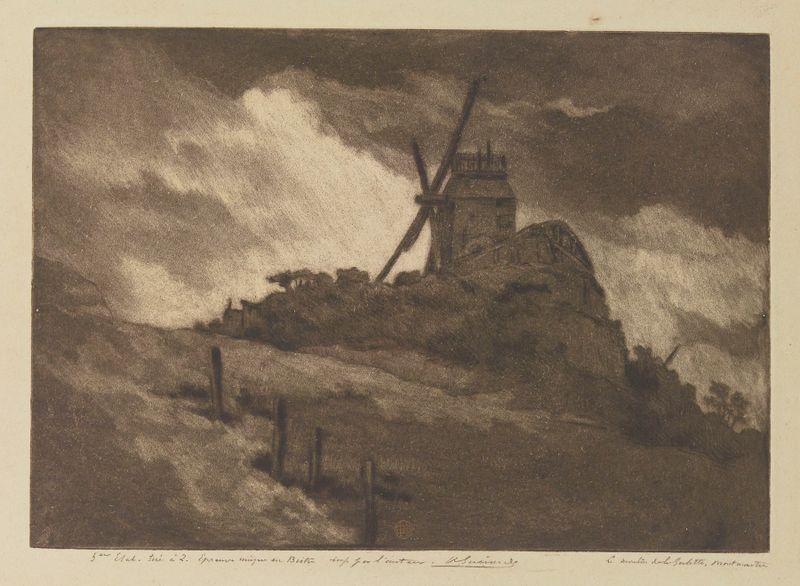
Le moulin de la Galette, Montmartre
Henri-Charles Guérard
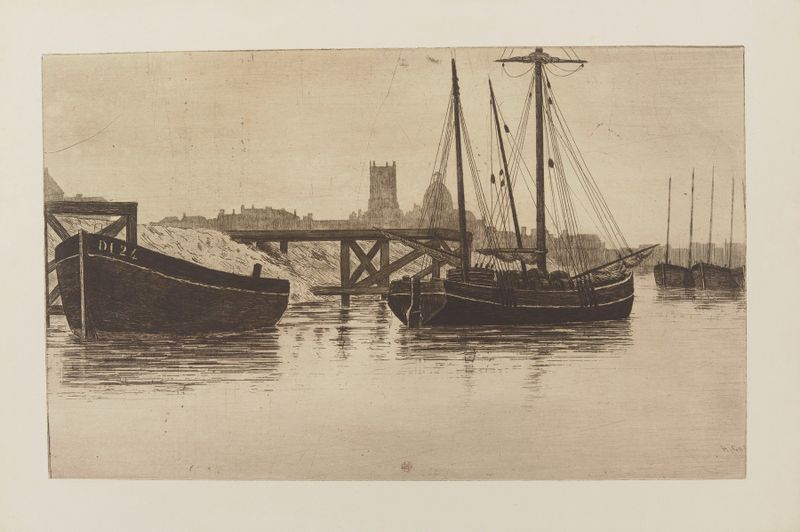
Débarquement de créosote, Retenue, Dieppe
Henri-Charles Guérard
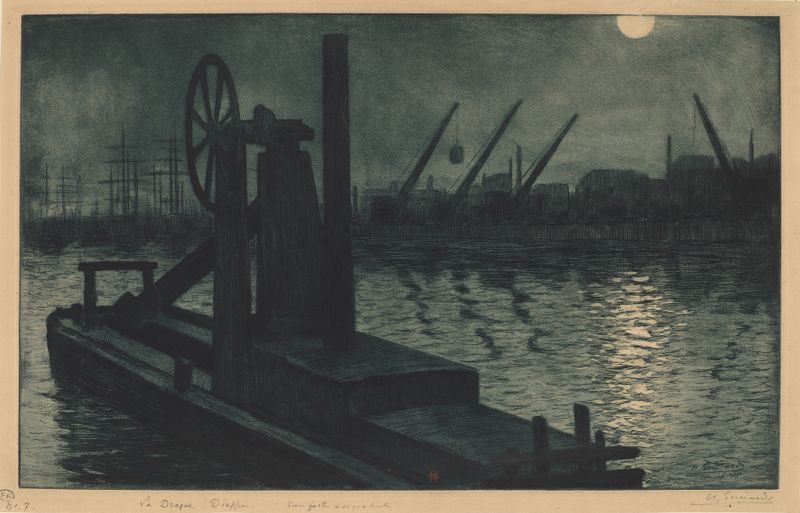
La Drague Dieppe (A Dredger in Dieppe Harbor by Moonlight)
Henri-Charles Guérard
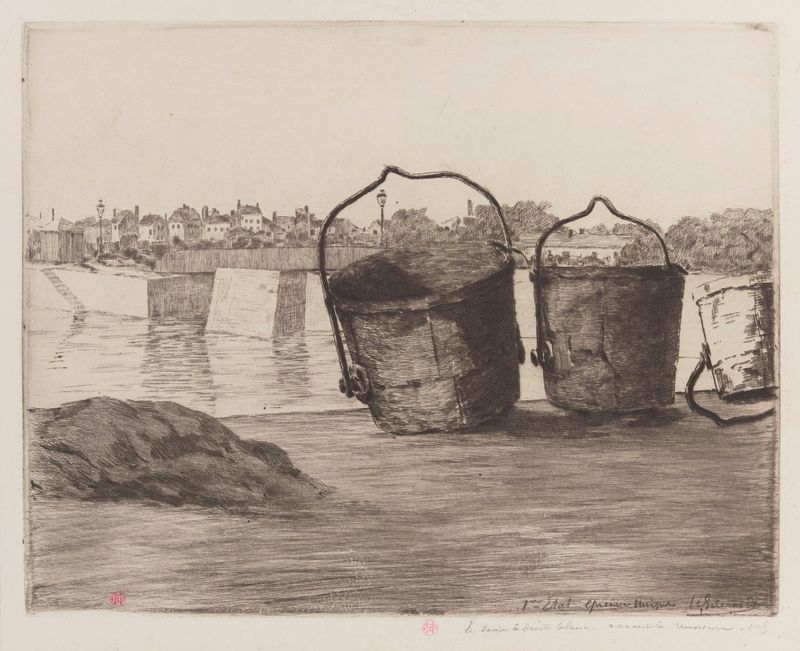
Quai au charbon, Honfleur
Henri-Charles Guérard

Escalier de la cale au Pollet, Dieppe
Henri-Charles Guérard

Venise (l’entrée du Grand canal, près de la Piazetta)
Henri-Charles Guérard

Le pêcheur au carrelet
Henri-Charles Guérard

Patineurs sur le lac d’Annecy
Henri-Charles Guérard
Soleil couchant, Honfleur
Henri-Charles Guérard





