
Quai au charbon, Honfleur — History & Facts
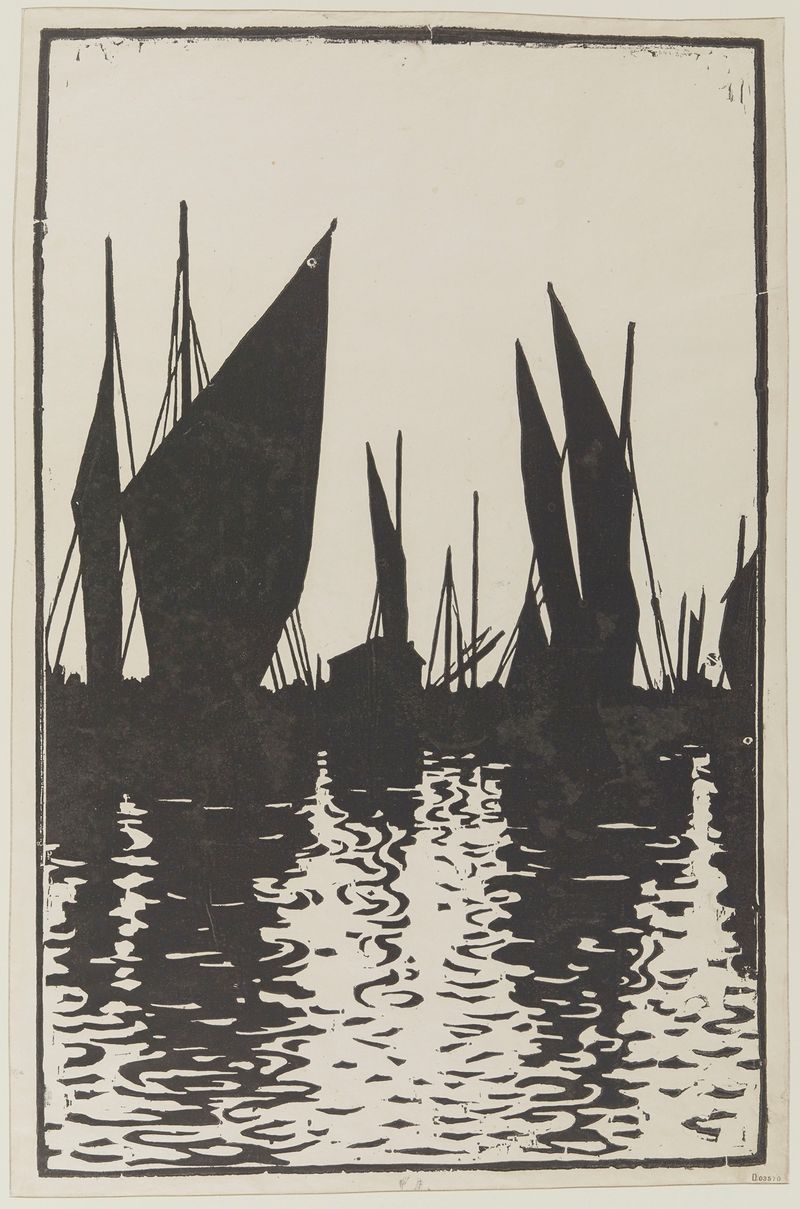
In a world where quietude often speaks louder than words, the canvas breathes a moment suspended in time—an awakening to life’s subtle intricacies. Look to the left at the gentle curve of the harbor, where boats sit nestled against the water’s edge, their reflections quivering with the soft whispers of the tide. The muted palette of blues and grays contrasts starkly with the warmth of the buildings, inviting you to absorb both the vibrancy and the serenity of the scene. The play of light across the water captures the fleeting nature of daybreak, drawing your gaze to the way it dances upon the surface, both illuminating and concealing, revealing a world on the cusp of waking. Yet, amidst this tranquility, the tension of human presence lingers.
Notice the distant figures, perhaps fishermen or traders, their postures embodying a weary resilience as they prepare for the day ahead. The stillness of the water is pregnant with potential, evoking a sense of yearning for what lies beyond the horizon. The soft brushstrokes convey not just a scene, but an emotional landscape—one that reflects both hope and hesitation. In 1888, Henri-Charles Guérard found himself in a France grappling with the changing tides of modernity and tradition.
Painting Quai au charbon, Honfleur during a time when Impressionism was taking root, he was influenced by the movement's focus on light and atmosphere. Living and working in Paris, he was part of an artistic milieu that sought to capture fleeting moments of daily life, blending the real with the ephemeral, ultimately transforming the way scenes were interpreted on canvas.
More Artworks by Henri-Charles Guérard
Browse all →
Paris, la rue Cortot, Montmartre
Henri-Charles Guérard
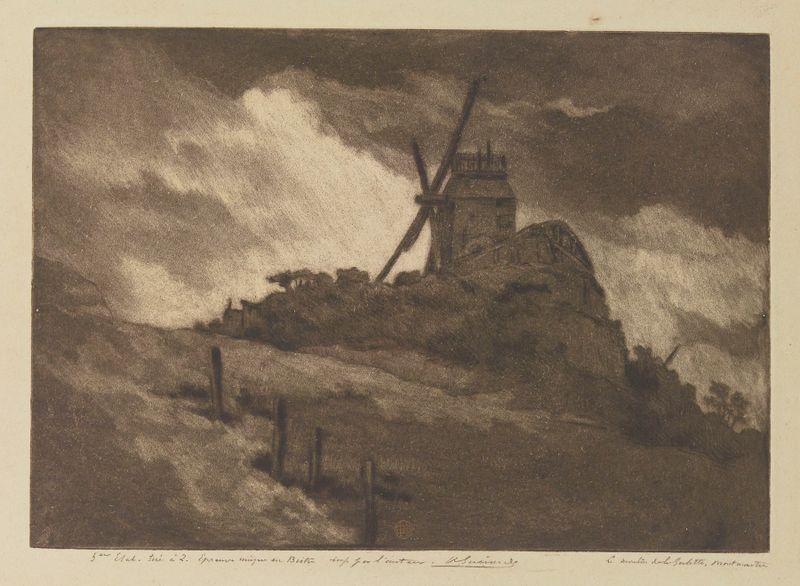
Le moulin de la Galette, Montmartre
Henri-Charles Guérard
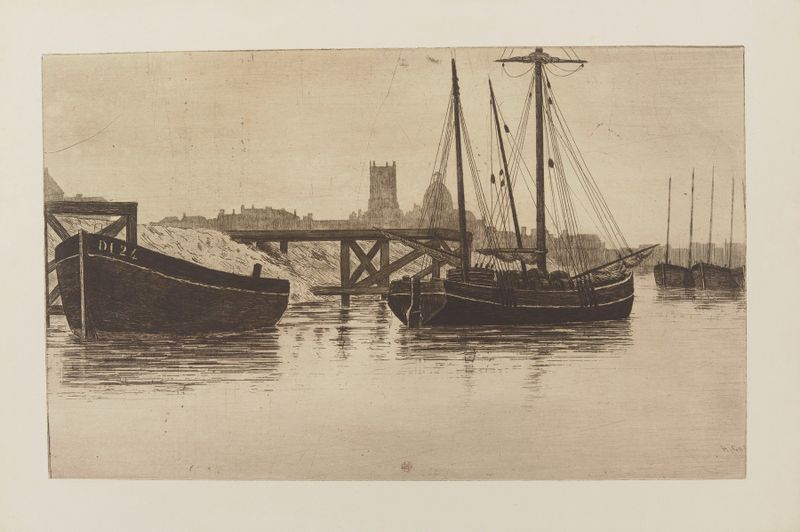
Débarquement de créosote, Retenue, Dieppe
Henri-Charles Guérard
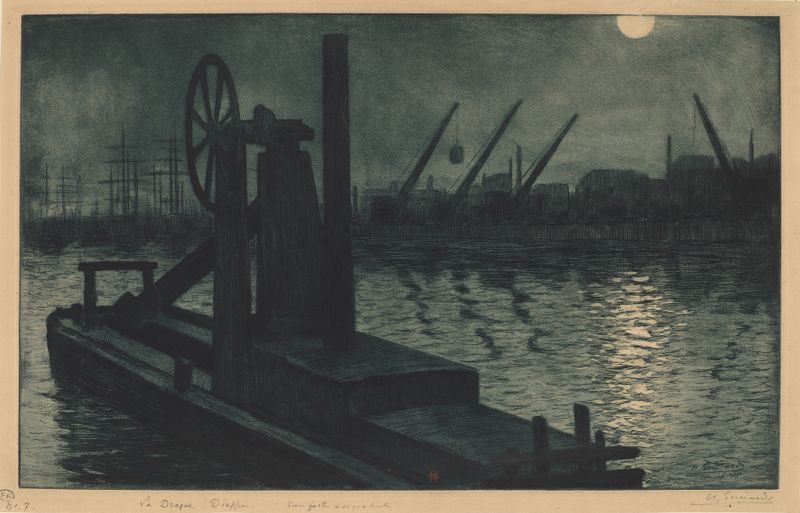
La Drague Dieppe (A Dredger in Dieppe Harbor by Moonlight)
Henri-Charles Guérard
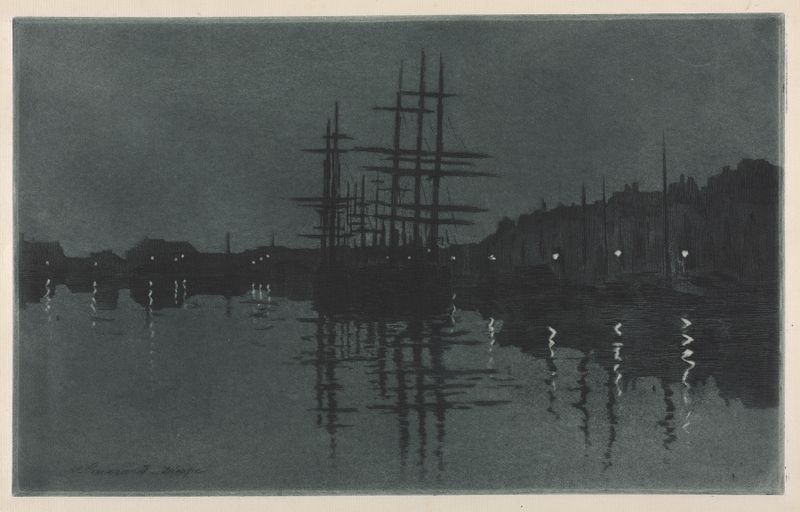
Effect of Moon at Dieppe
Henri-Charles Guérard

Escalier de la cale au Pollet, Dieppe
Henri-Charles Guérard

Venise (l’entrée du Grand canal, près de la Piazetta)
Henri-Charles Guérard

Le pêcheur au carrelet
Henri-Charles Guérard

Patineurs sur le lac d’Annecy
Henri-Charles Guérard
Soleil couchant, Honfleur
Henri-Charles Guérard





