
Pastime Stories — History & Facts
What first catches the eye in Pastime Stories by Edward Penfield is the stark, almost theatrical isolation of the figure against a field of unbroken cream. The man, rendered in Penfield’s signature economy of line, stands absorbed in the act of reading, his dark hands and face emerging from a crisply outlined white suit and a vivid red waistcoat that draws the gaze. The poster’s composition is a study in contrasts: the warmth of the red, the cool reserve of the grey, the lively engagement of the reader set against the stillness of the surrounding space.
Every detail is purposeful—the slightly hunched shoulders, the careful grip on the paper, the attentive eyes—inviting us to wonder about the story that has captured his attention, and about the stories promised by the bold, red title above. This work belongs to the world of American poster art in the 1890s, a time when publishers and advertisers turned to artists like Edward Penfield to create striking, modern images that would command attention in bustling urban spaces. Penfield, often called the father of the American poster, was known for his bold outlines and flat areas of color, a style influenced by the Art Nouveau movement and the innovations of French poster artists. Created in 1894 for Harper & Brothers, this print was part of a new visual language that made books and magazines objects of desire in themselves.
History has kept few traces of the individual journeys of such posters, but their impact is still felt in the way they distilled a story, a mood, and a promise into a single, unforgettable glance—just as this figure, lost in his reading, invites us to linger and imagine.
More Artworks by Edward Penfield

The Girl on the Land Serves the Nation's Need; apply Y.W.C.A. Land Service Committee
Edward Penfield
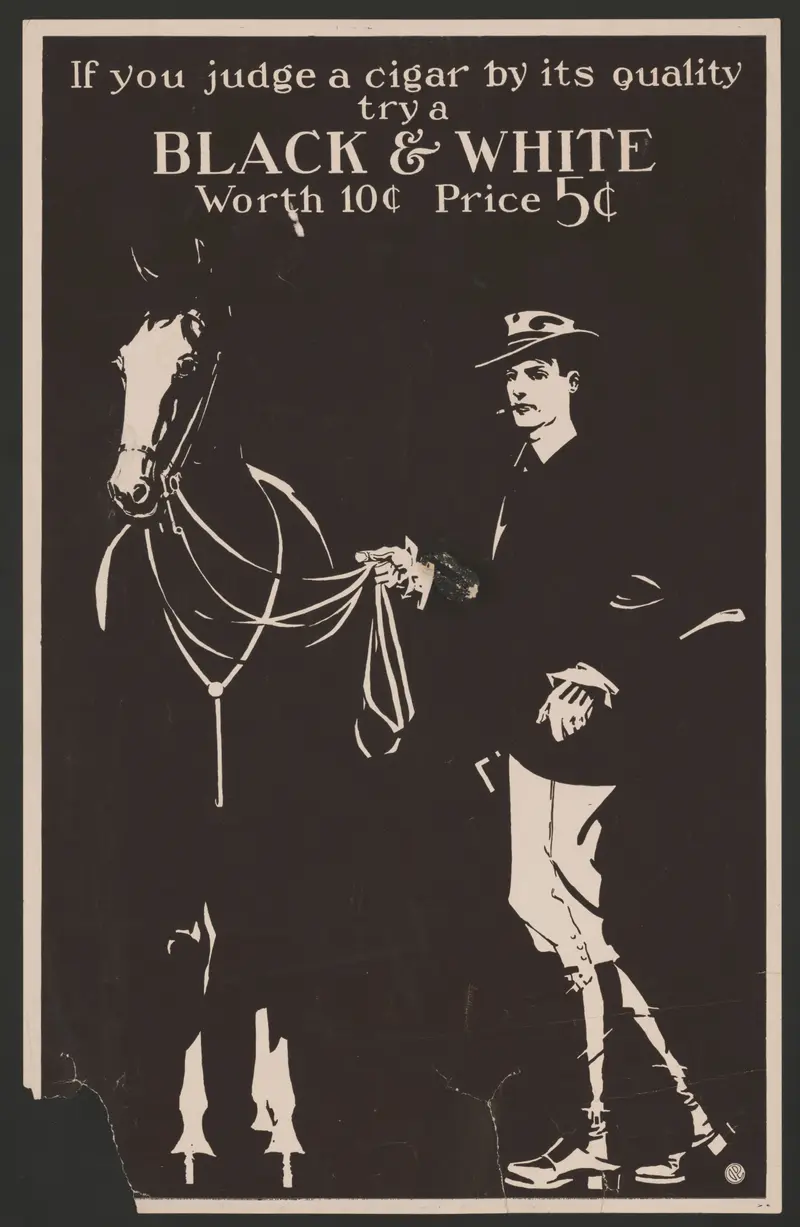
Black & White Cigar
Edward Penfield
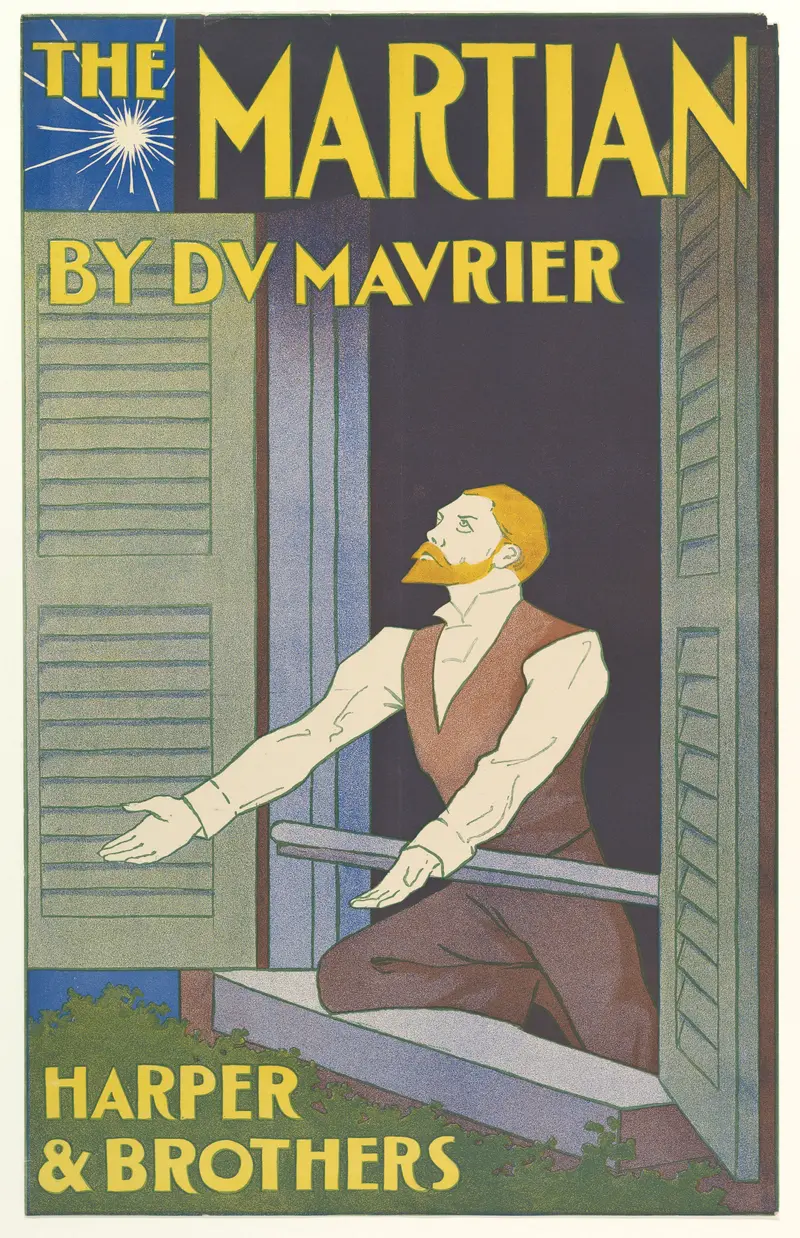
The Martian
Edward Penfield
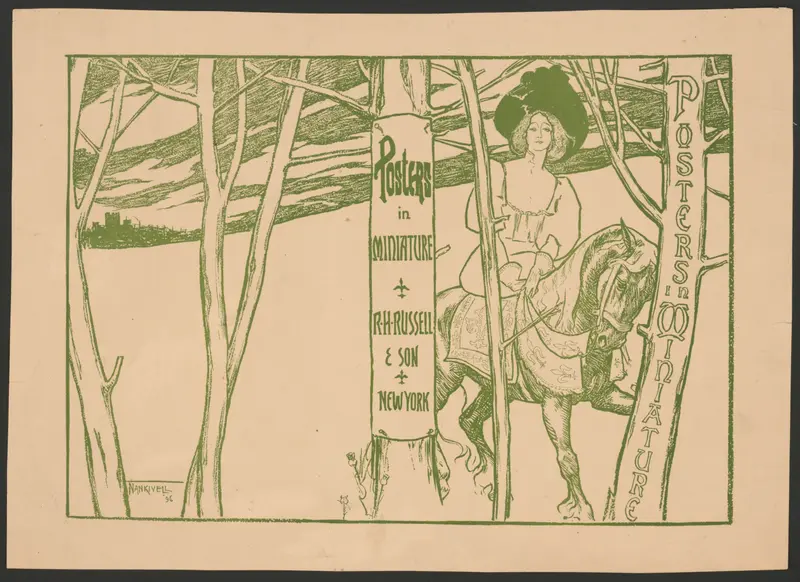
Posters in Miniature
Edward Penfield
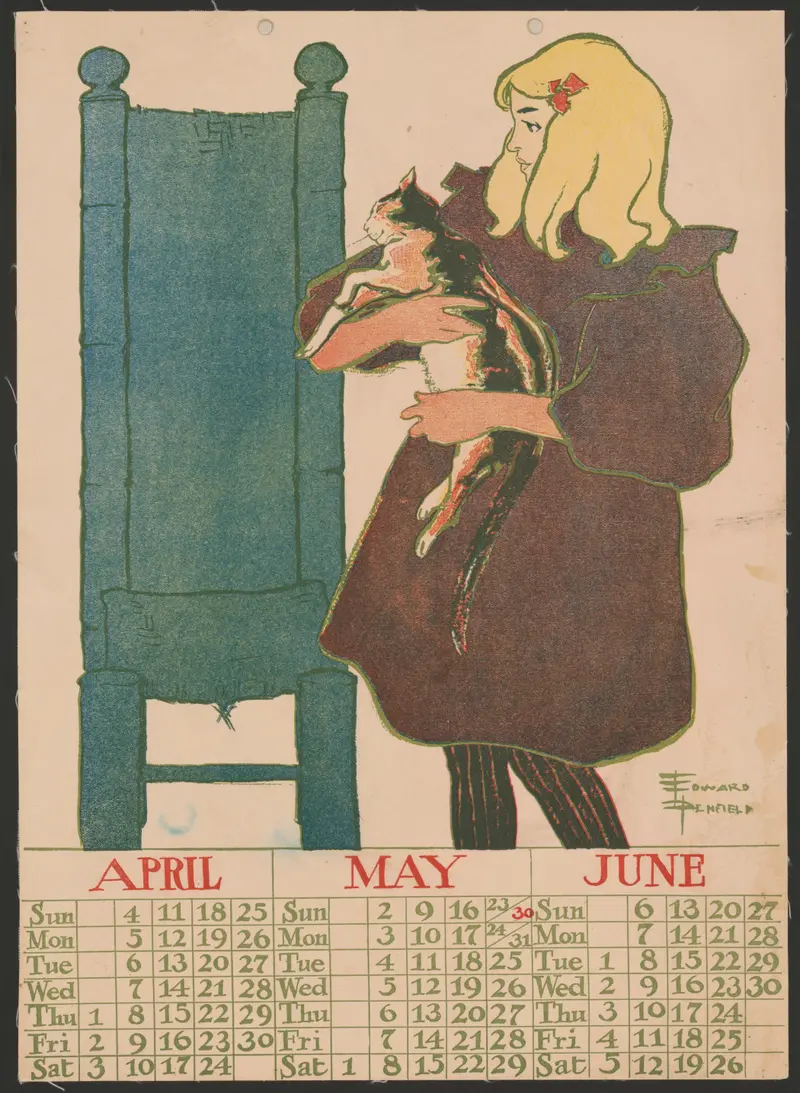
Calendar: April, May, June 1897
Edward Penfield
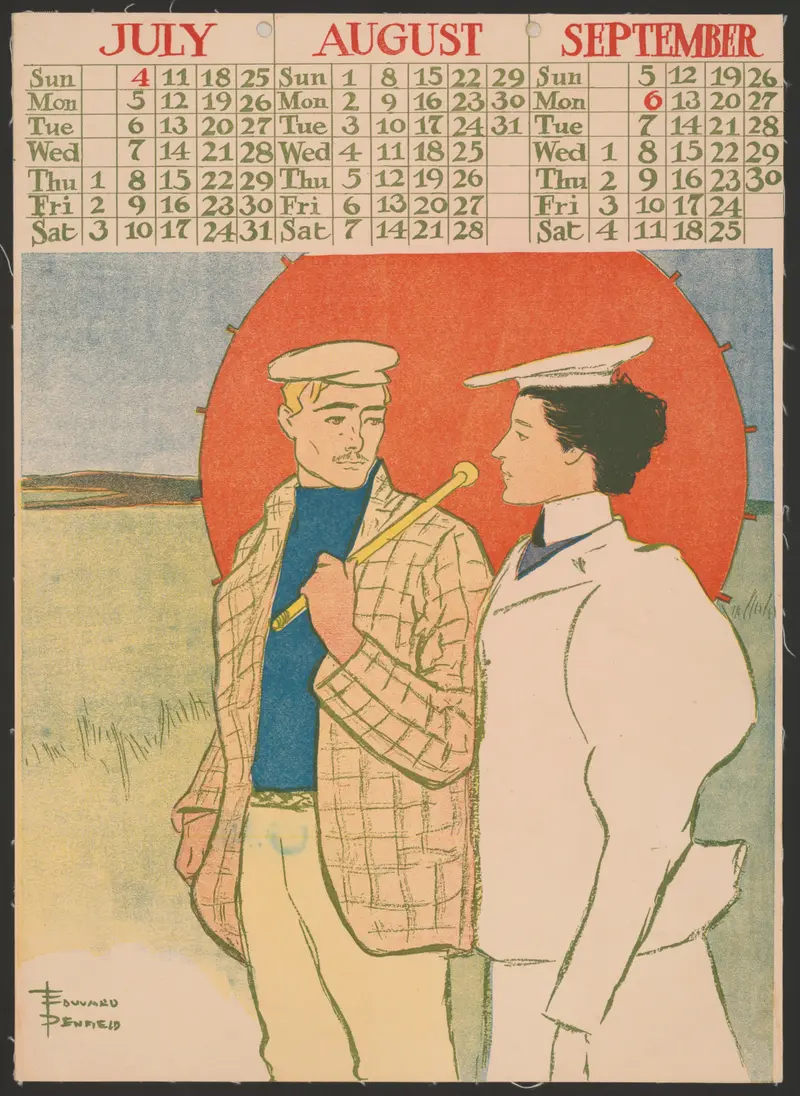
Calendar: July, August, September 1897
Edward Penfield
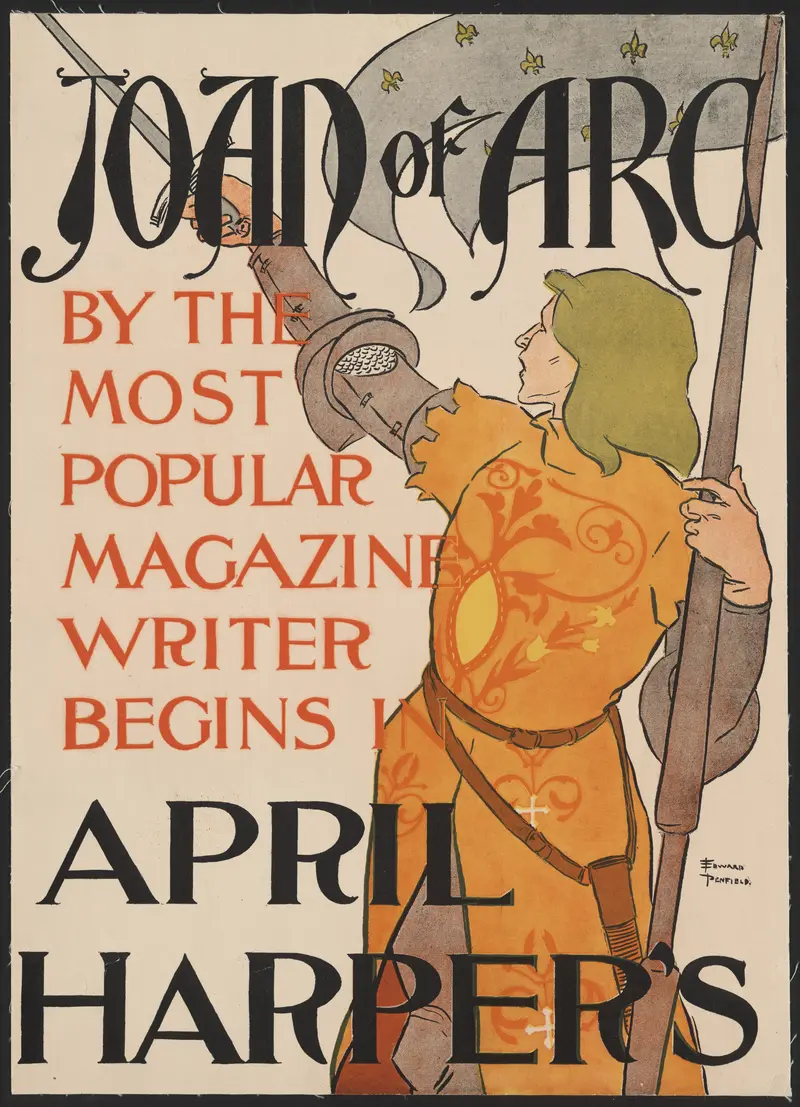
Joan of Arc in Harper's April
Edward Penfield
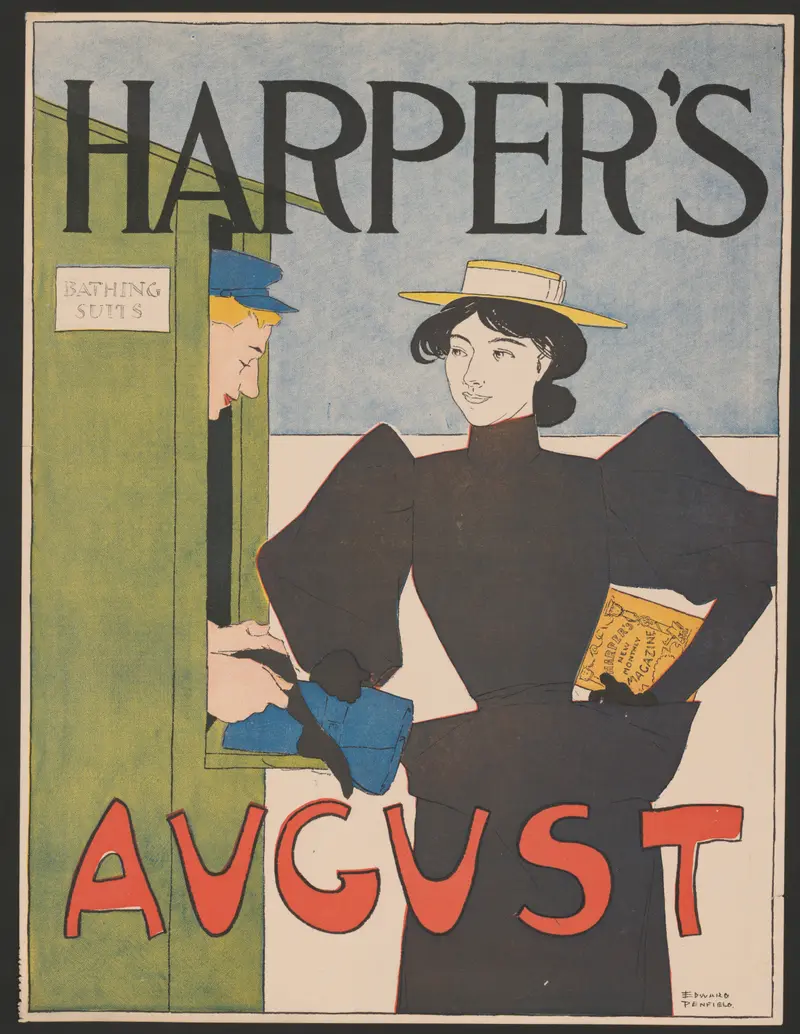
Harper's August 1894
Edward Penfield
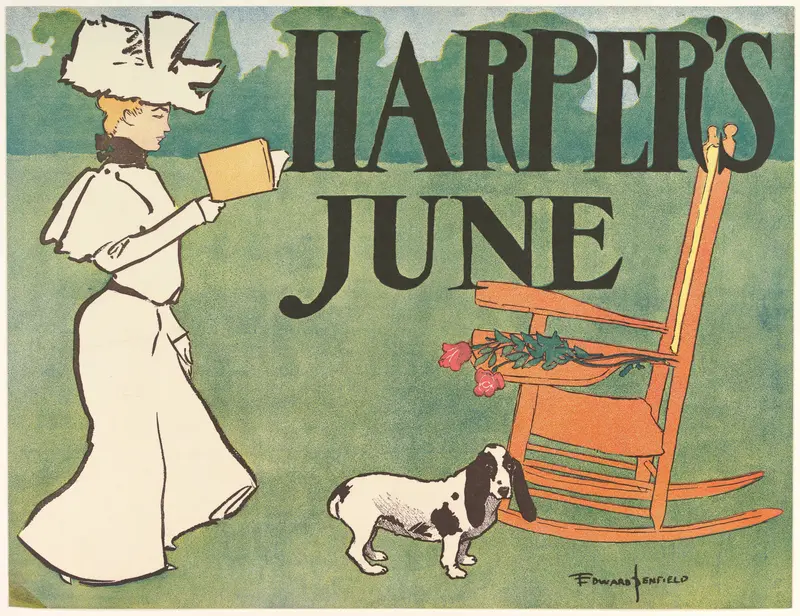
Harper's June 1897
Edward Penfield
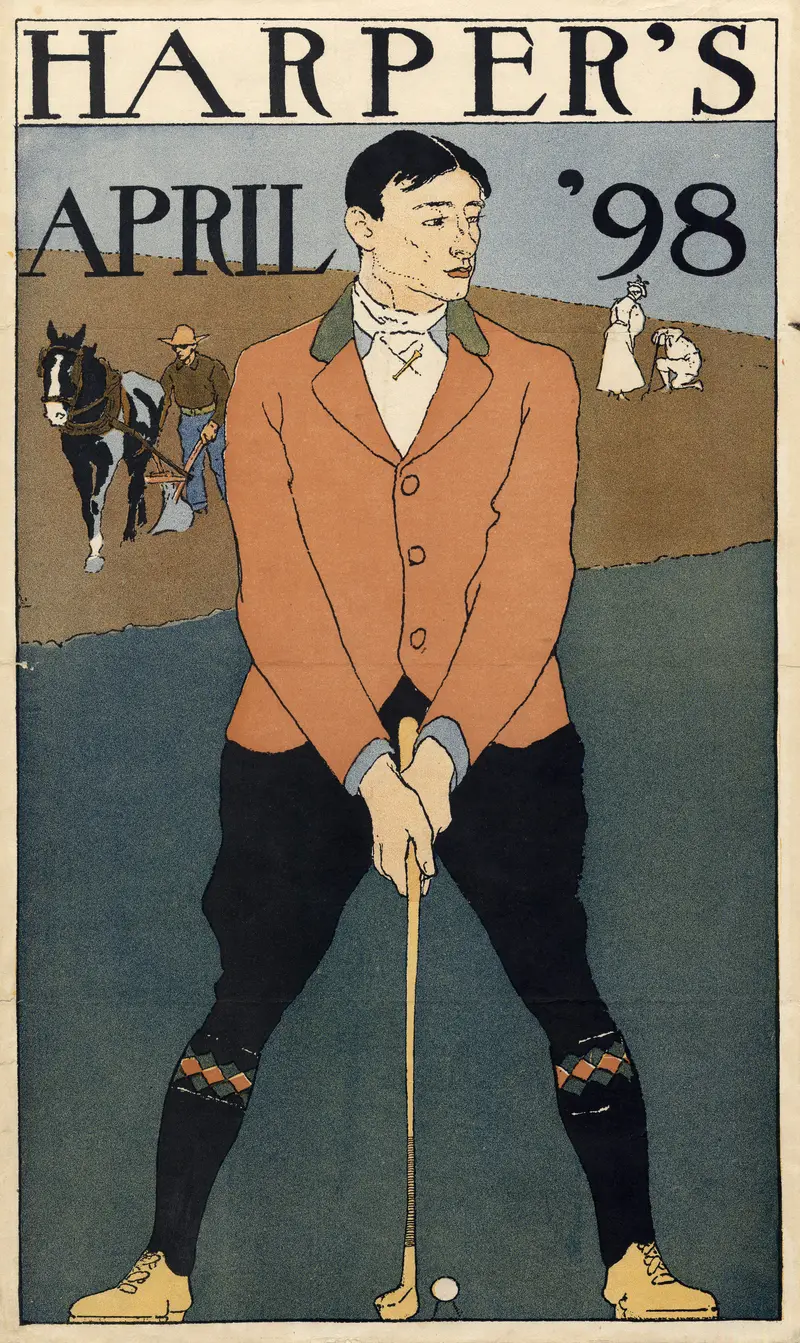
Harper's April 1898
Edward Penfield
More Genre Scene Art

Banquet of the Officers of the St George Civic Guard
Frans Hals

Rembrandt and Saskia in the Scene of the Prodigal Son
Rembrandt van Rijn

Bal du moulin de la Galette
Pierre-Auguste Renoir

Quadrille at the Moulin Rouge
Henri de Toulouse-Lautrec

A Burial at Ornans
Gustave Courbet

When Will You Marry?
Paul Gauguin