
Restaurant Bernard in Estaque — History & Facts
Did the painter know this moment would outlive them? In Restaurant Bernard in Estaque, an eternal stillness holds sway, a fleeting yet profound capture of life that resonates through time. Focus on the vibrant brushstrokes that breathe life into the canvas. Look to the left, where the restaurant's façade is awash in radiant yellows and whites, creating a luminous contrast against the deep blues of the surrounding sea. The dappled sunlight dances across the tables, each one carefully set, while shadows stretch languidly, suggesting both warmth and a hint of lingering melancholy.
Notice how the artist's thick application of paint creates a tactile quality that almost invites you to reach out and feel the atmosphere. Beneath the surface of this seemingly idyllic scene lies a complex interplay of light and shadow, where joy coexists with a sense of solitude. The patrons, though gathered, seem isolated in their own moments, each face telling a story of longing or introspection. The stark shadow cast by the awning could symbolize time's unrelenting passage, inviting viewers to ponder the transient nature of happiness and the fleeting moments that define our lives. In 1880, when this piece was created, Monticelli was living in Paris, at a time when Impressionism was gaining traction.
His unique style—characterized by bold colors and energetic brushwork—was both a reflection of and a departure from the prevailing artistic trends. As he embraced the vibrant light of southern France, Monticelli was carving his own niche, bridging the gap between the traditional and the modern, and leaving a legacy that continues to resonate today.
More Artworks by Adolphe Monticelli
Browse all →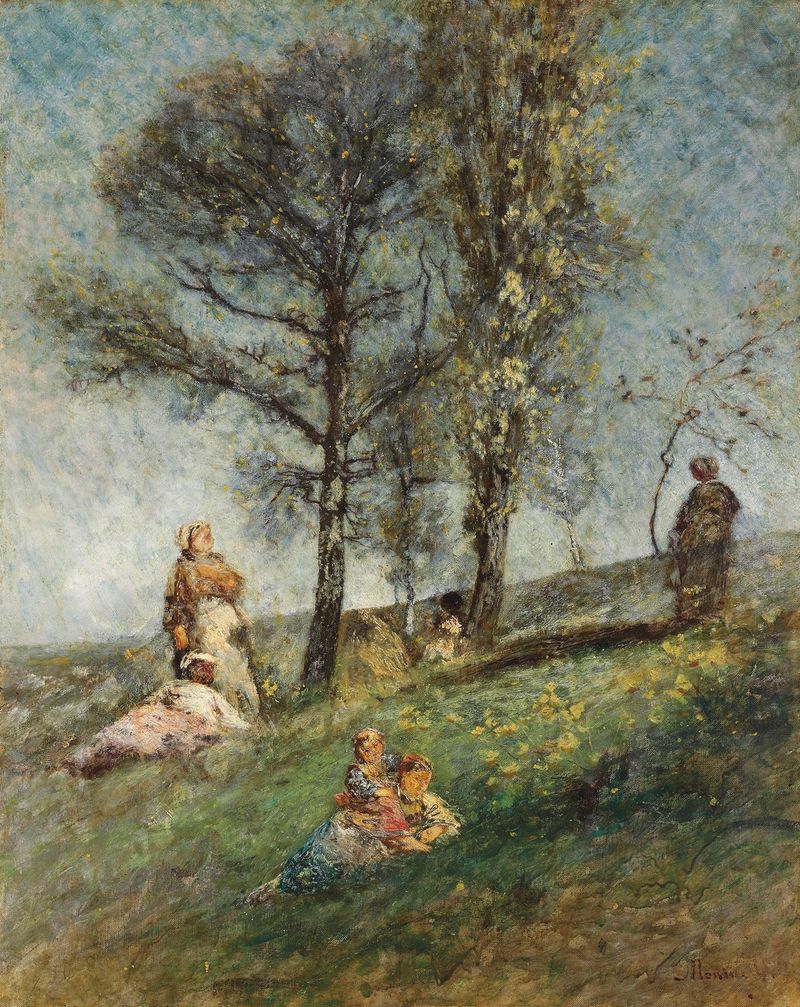
A Young Family Under Trees On A Hill
Adolphe Monticelli
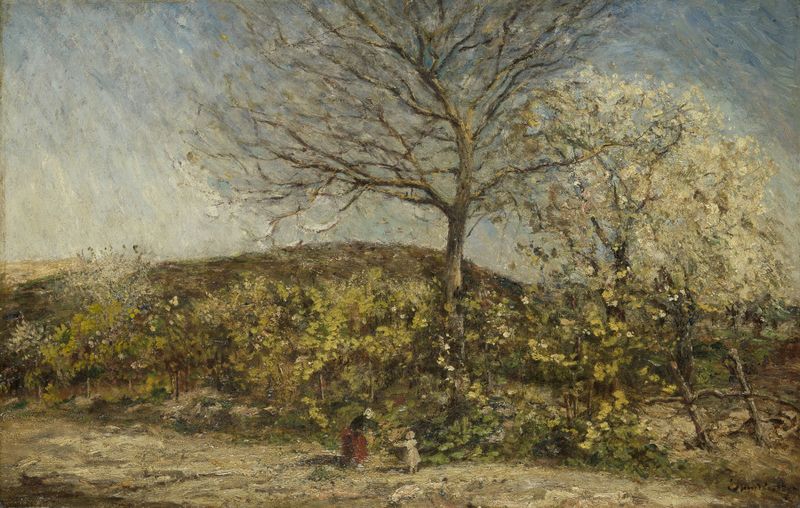
Landschap met bloeiende boomgaard
Adolphe Monticelli

Paysage
Adolphe Monticelli
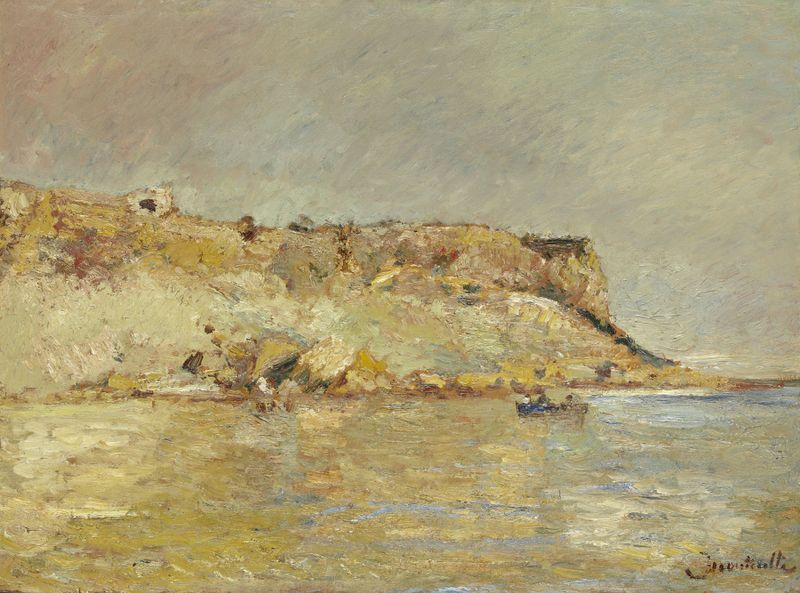
Coastal Mountains
Adolphe Monticelli

Landscape
Adolphe Monticelli

Landscape with Figures
Adolphe Monticelli
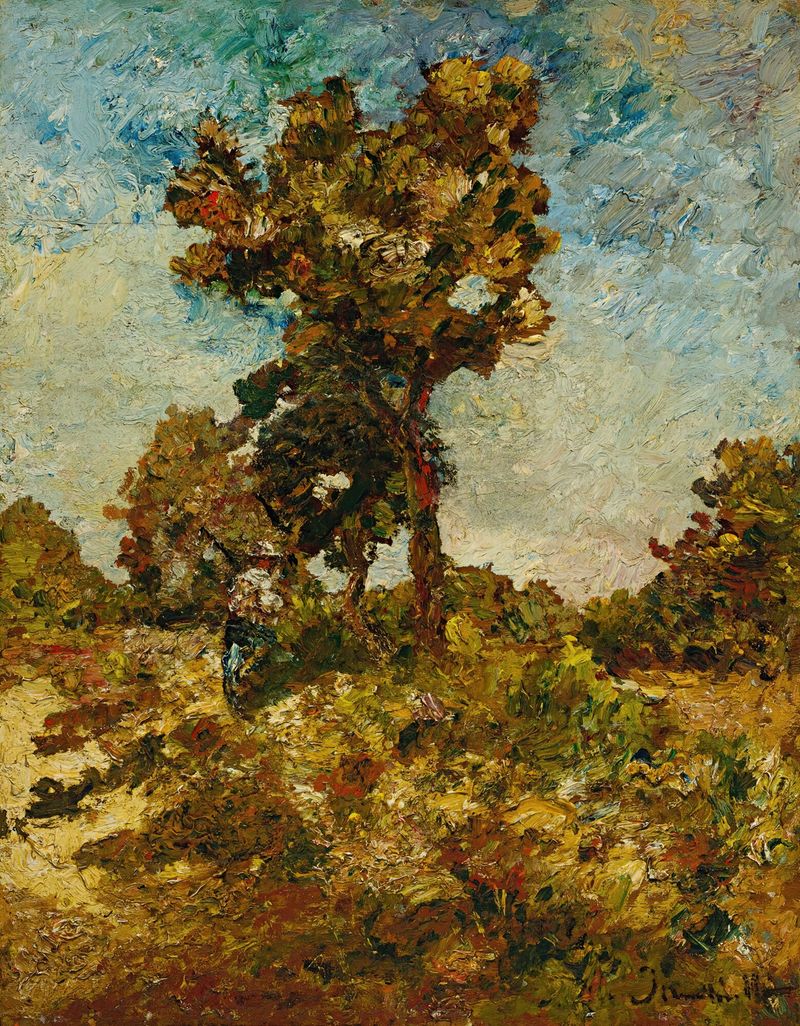
Les Arbres
Adolphe Monticelli

Paysage animé de petits personnages
Adolphe Monticelli
Au Bord De La Rivière, Marseilles
Adolphe Monticelli

Autumn
Adolphe Monticelli
More Architecture Art
Browse all →
The statue of Liberty
Frédéric Auguste Bartholdi

View of Houses in Delft, Known as ‘The Little Street’
Johannes Vermeer

View of Houses in Delft, Known as ‘The Little Street’
Johannes Vermeer

The Cathedral in Rouen. The portal, Grey Weather
Claude Monet

The yellow house
Vincent van Gogh

The Church in Auvers-sur-Oise, View from the Chevet
Vincent van Gogh