
Paysage givré de la Brume — History & Facts
In Paysage givré de la Brume, Gustave Loiseau presents a winter landscape filled with soft, muted colors. The scene is dominated by frosty trees and a misty atmosphere that envelops the horizon. Shades of blue and gray create a tranquil mood, while hints of white suggest the presence of snow.
The absence of human figures emphasizes the solitude of the winter setting. The painting is executed in oil on canvas, showcasing Loiseau's Impressionist style. The brushwork is loose and fluid, allowing the colors to blend seamlessly into one another. The composition draws the viewer's eye through the misty landscape, creating a sense of depth and distance.
The overall effect is one of calmness and reflection, inviting viewers to immerse themselves in the scene. Gustave Loiseau was part of the French Impressionist movement, known for his landscapes that capture the changing effects of light and atmosphere. This work, created around the early 1900s, reflects his fascination with winter scenes. Interestingly, Loiseau often painted en plein air, directly from nature, which allowed him to capture the nuances of light and color in his landscapes.
Paysage givré de la Brume exemplifies his ability to convey the beauty of a quiet winter day.
More Artworks by Gustave Loiseau

Rue de village en Normandie
Gustave Loiseau
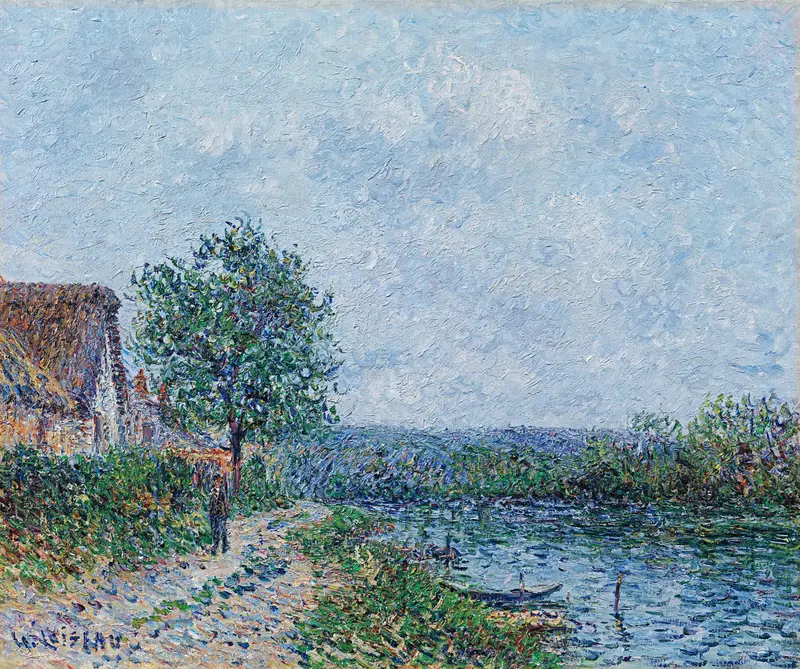
Bord de rivière, la Seine à Porte-Joie
Gustave Loiseau

La Cathédrale de Rouen
Gustave Loiseau
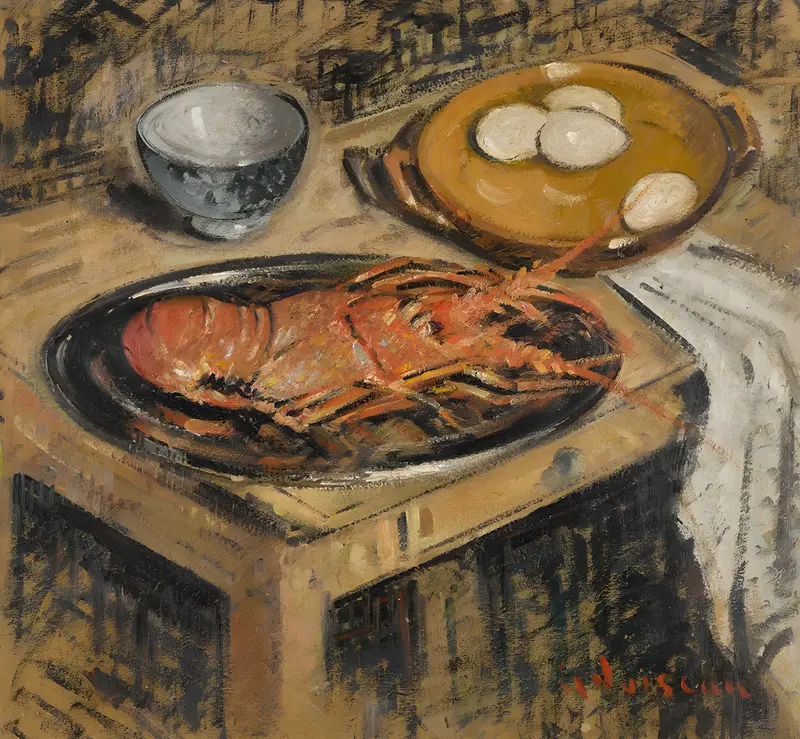
Langouste du Portugal
Gustave Loiseau
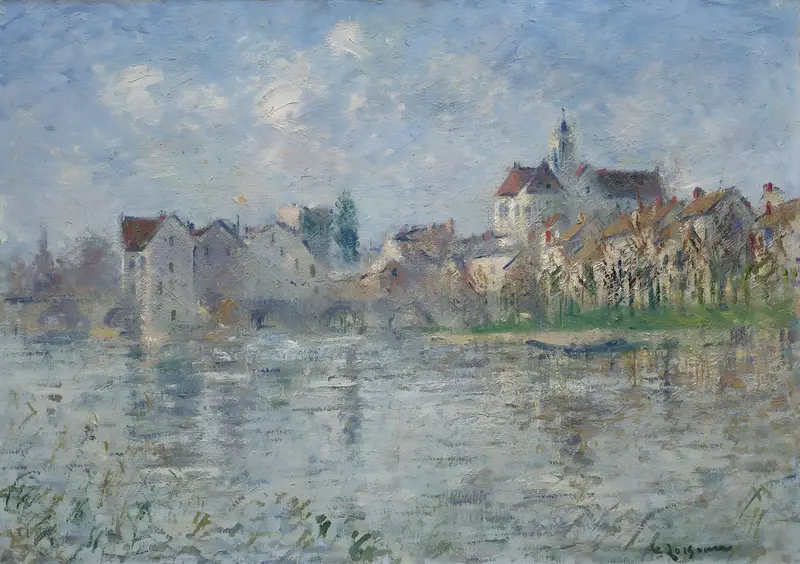
Moret-sur-Loing
Gustave Loiseau
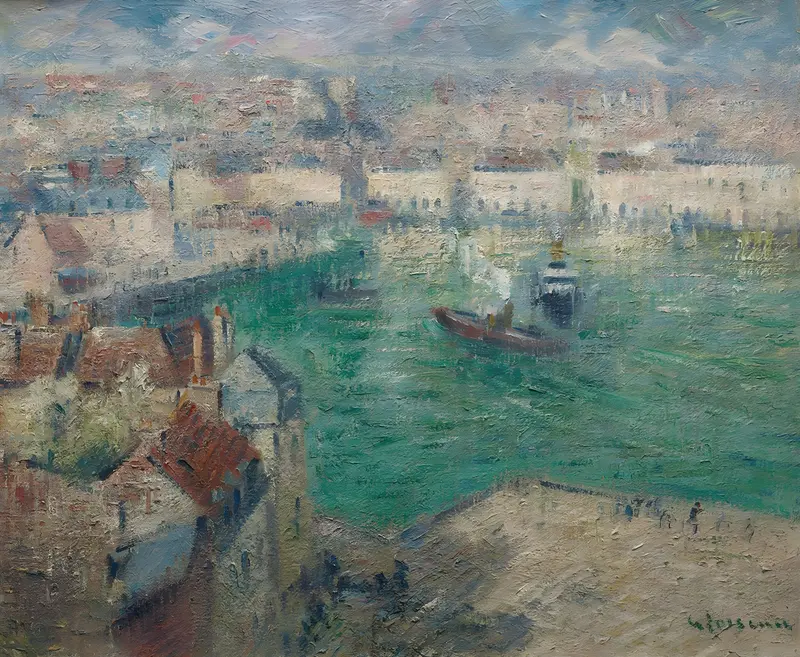
Dieppe
Gustave Loiseau
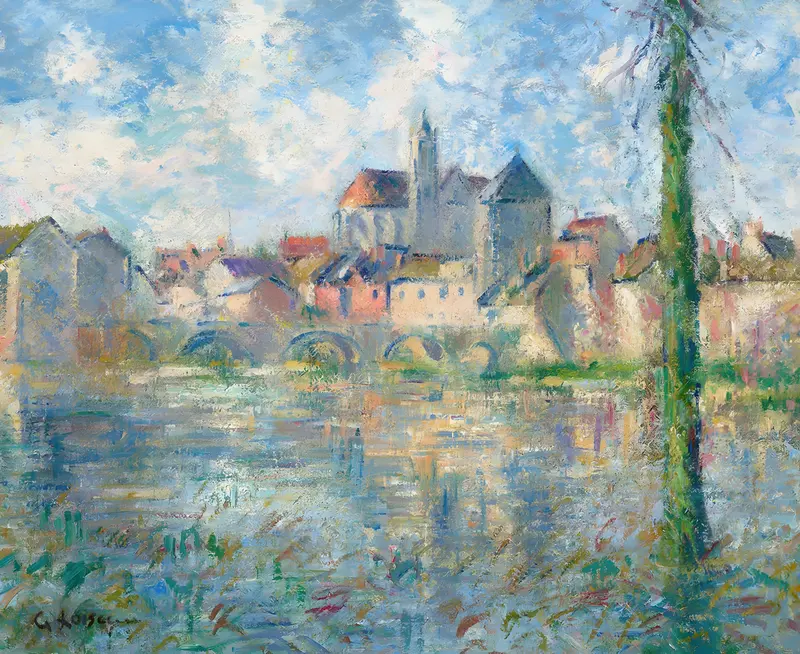
Moret-sur-Loing
Gustave Loiseau
Moret-sur-Loing
Gustave Loiseau
Moret-sur-Loing
Gustave Loiseau
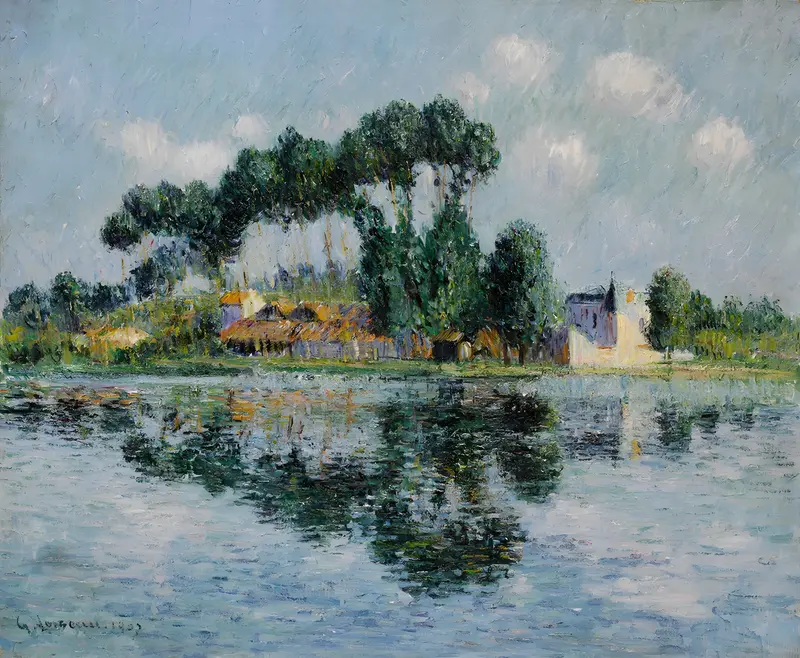
Peupliers sur les bords de l’Yonne
Gustave Loiseau
More Landscape Art

The Starry Night
Vincent van Gogh

View of Delft
Johannes Vermeer

Water Lilies
Claude Monet

The Grand Canal, Venice, looking north-west from the Ca' Corner to the Ca' Contarini degli Scrigni, with the campanile of Santa Maria della Carità
Canaletto

Windsor Castle
Canaletto

The Grand Canal looking North-East from the Palazzo Dolfin-Manin to the Rialto Bridge
Canaletto