
Paysage à la lavandière et au moulin, Hollande — History & Facts
In the stillness of this landscape, whispers of everyday life resonate beneath the surface, inviting contemplation of the unseen narratives entwined within nature’s embrace. Look to the center of the canvas where a serene river flows, its gentle curves guiding your gaze toward a distant, quaint mill nestled among lush greenery. The muted tones—soft blues, vibrant greens, and the delicate interplay of light and shadow—create a tranquil ambiance that enchants the viewer. Notice how the soft brushstrokes evoke a sense of harmony, with dappled sunlight filtering through the branches, illuminating the scene in a gentle caress. Delve deeper, and you’ll uncover the emotional currents at play.
The juxtaposition of the flowing water and the steadfast mill captures a tension between transience and permanence, hinting at the passage of time. The figures, though small, stand quietly engaged in their tasks, their actions almost reverent against the backdrop of vast nature, highlighting the theme of coexistence between humanity and the environment. Each element, from the trees to the distant horizon, speaks of an unspoken bond, a shared silence that transcends words. In this period of his life, Trouillebert painted this work in the late 19th century, during a time when the Barbizon School's influence was reshaping landscape art.
Living in France, he was immersed in a vibrant artistic community that sought to capture the beauty of nature with realism and emotional depth, responding to a world rapidly changing with industrialization. This painting reflects his dedication to portraying serene moments in rural existence, emphasizing the beauty found in simplicity and stillness.
More Artworks by Paul Désiré Trouillebert
Browse all →
Paysage aux lavandières
Paul Désiré Trouillebert
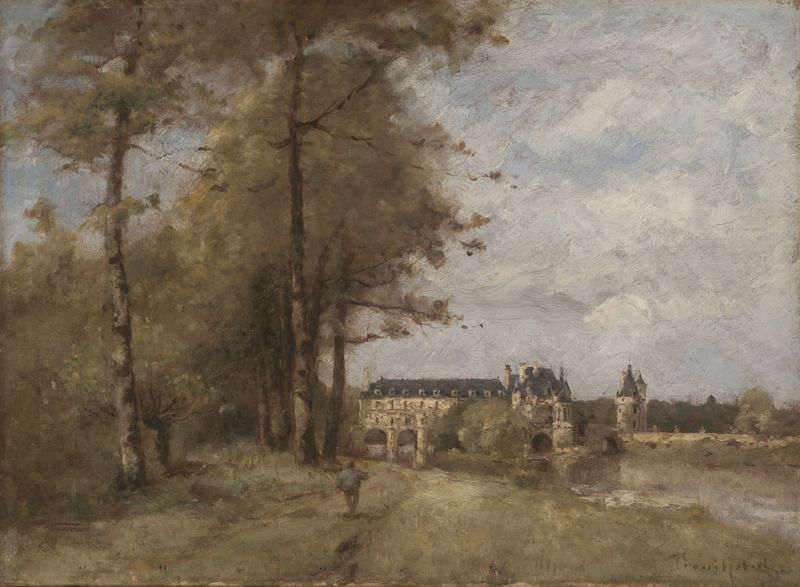
El castillo de Chenonceaux
Paul Désiré Trouillebert
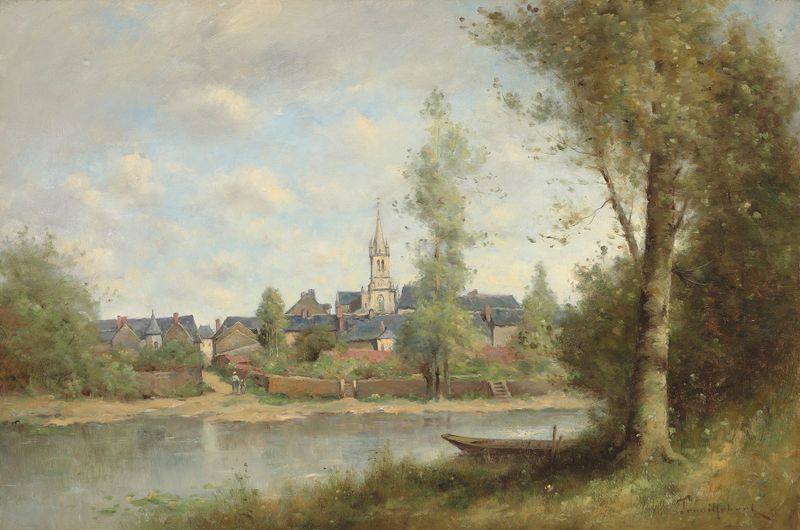
Vue De La Flèche
Paul Désiré Trouillebert

Heimweg am Fluss
Paul Désiré Trouillebert
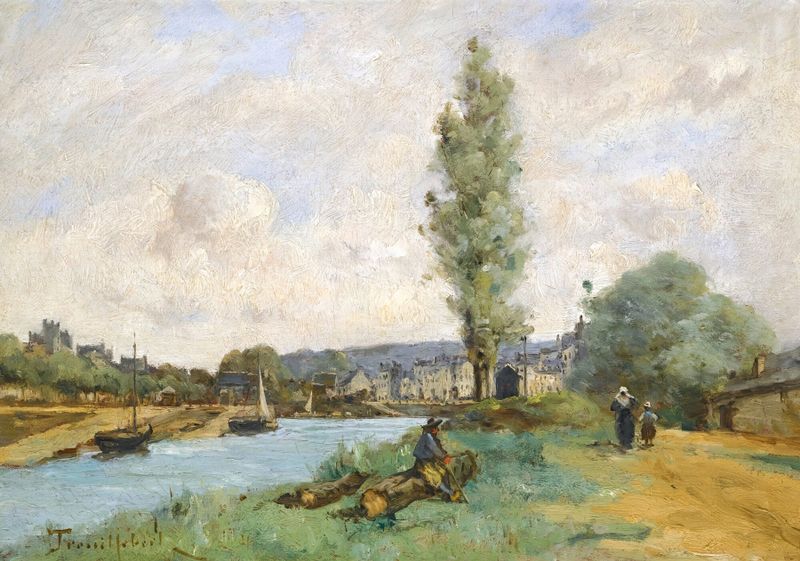
Le Pont De Landernau, Finistere
Paul Désiré Trouillebert
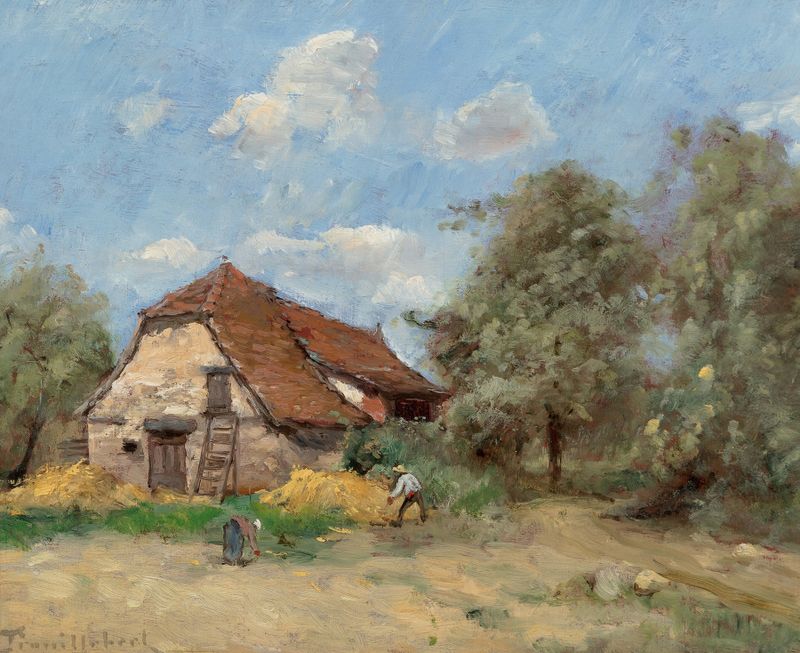
Le faucheur près de la ferme
Paul Désiré Trouillebert
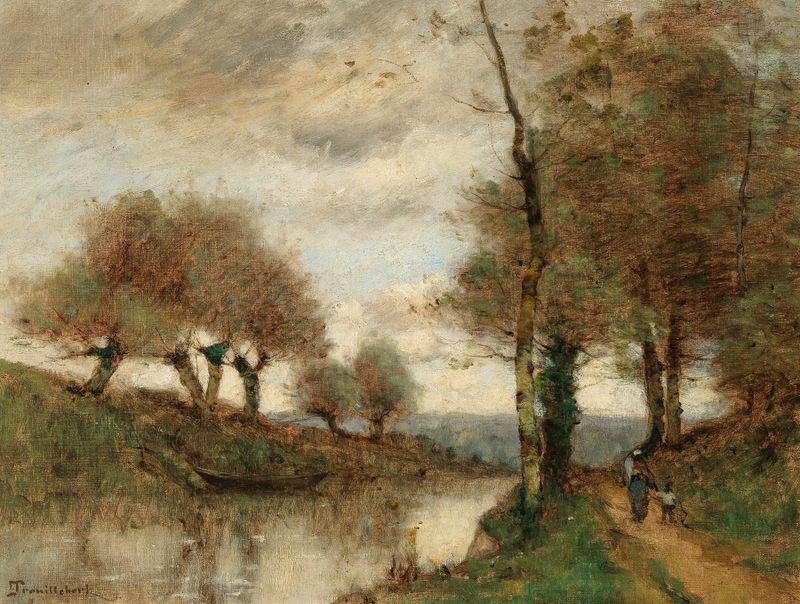
Returning Home along the River
Paul Désiré Trouillebert

Les Fagoteuses Au Bord De L’eau
Paul Désiré Trouillebert
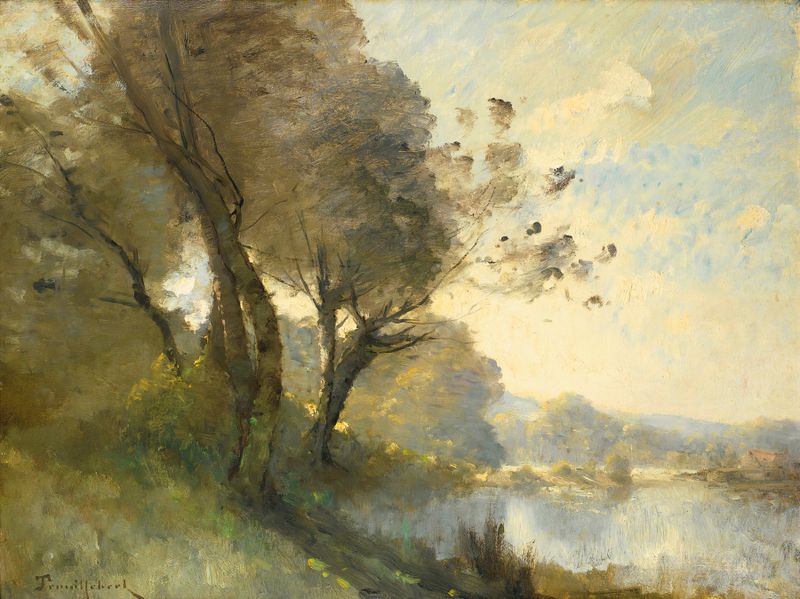
Barrage En Ruine Sur La Vienne
Paul Désiré Trouillebert
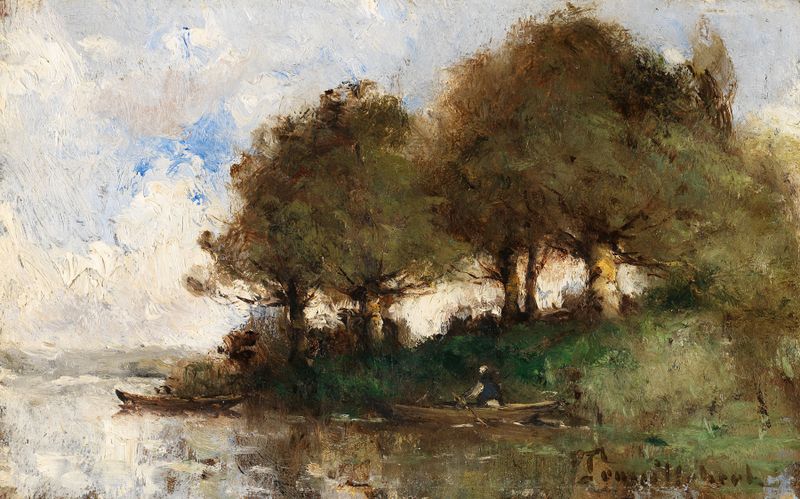
Flussufer
Paul Désiré Trouillebert





